Chassis 408383 Kommission no. 317029
- Believed to be the last 540 K Special Roadster completed, delivered to Rolf Horn on August 1, 1939
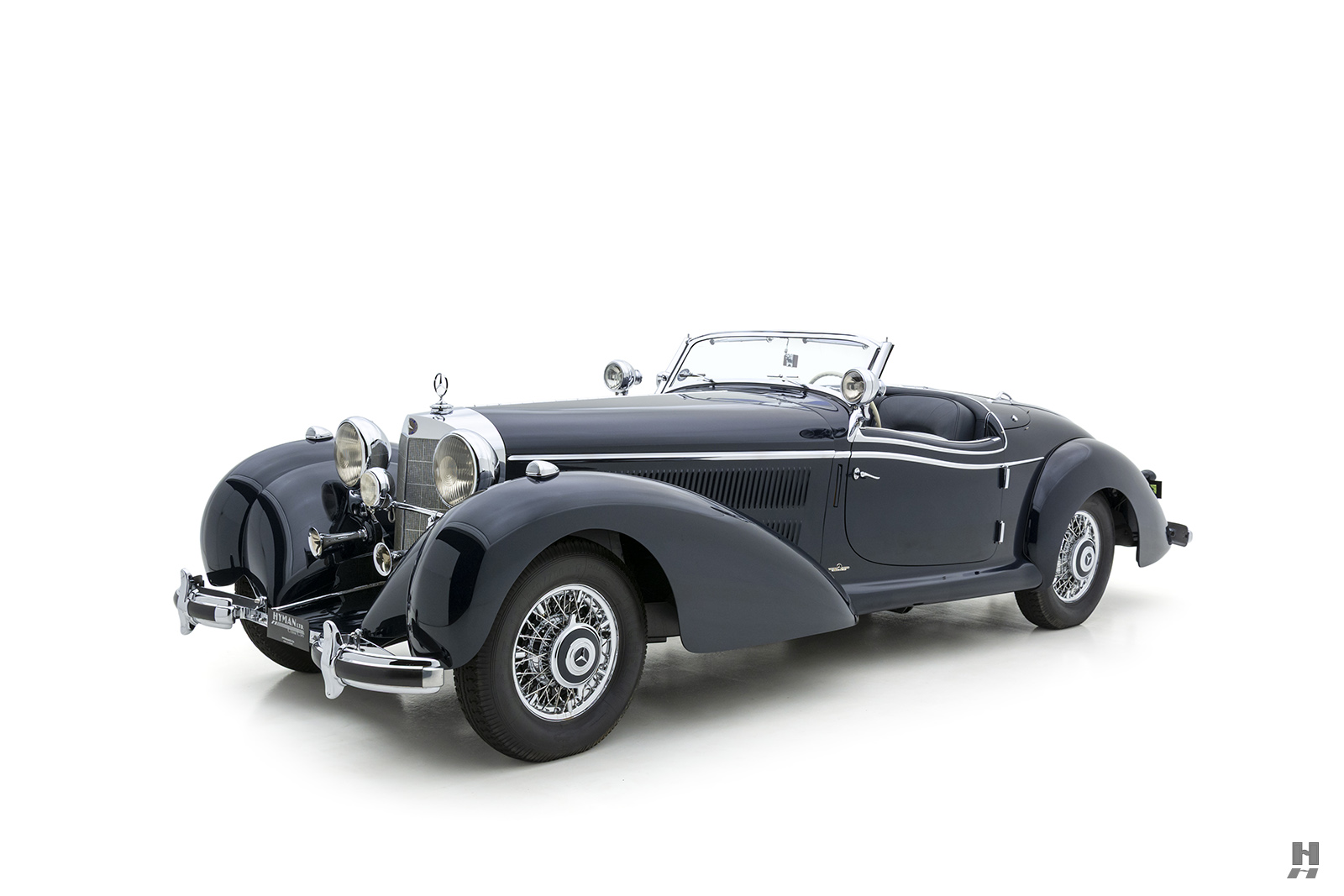
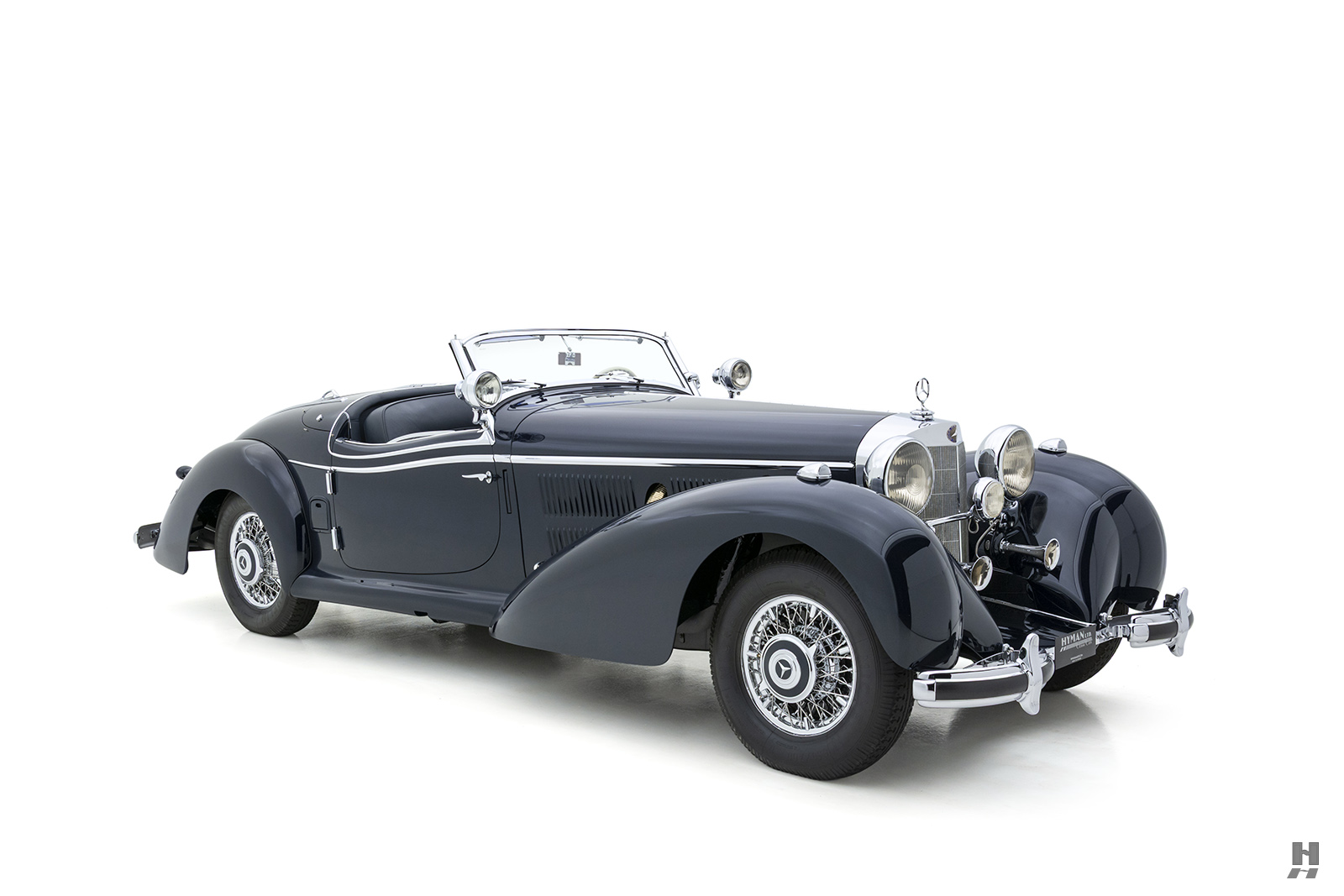
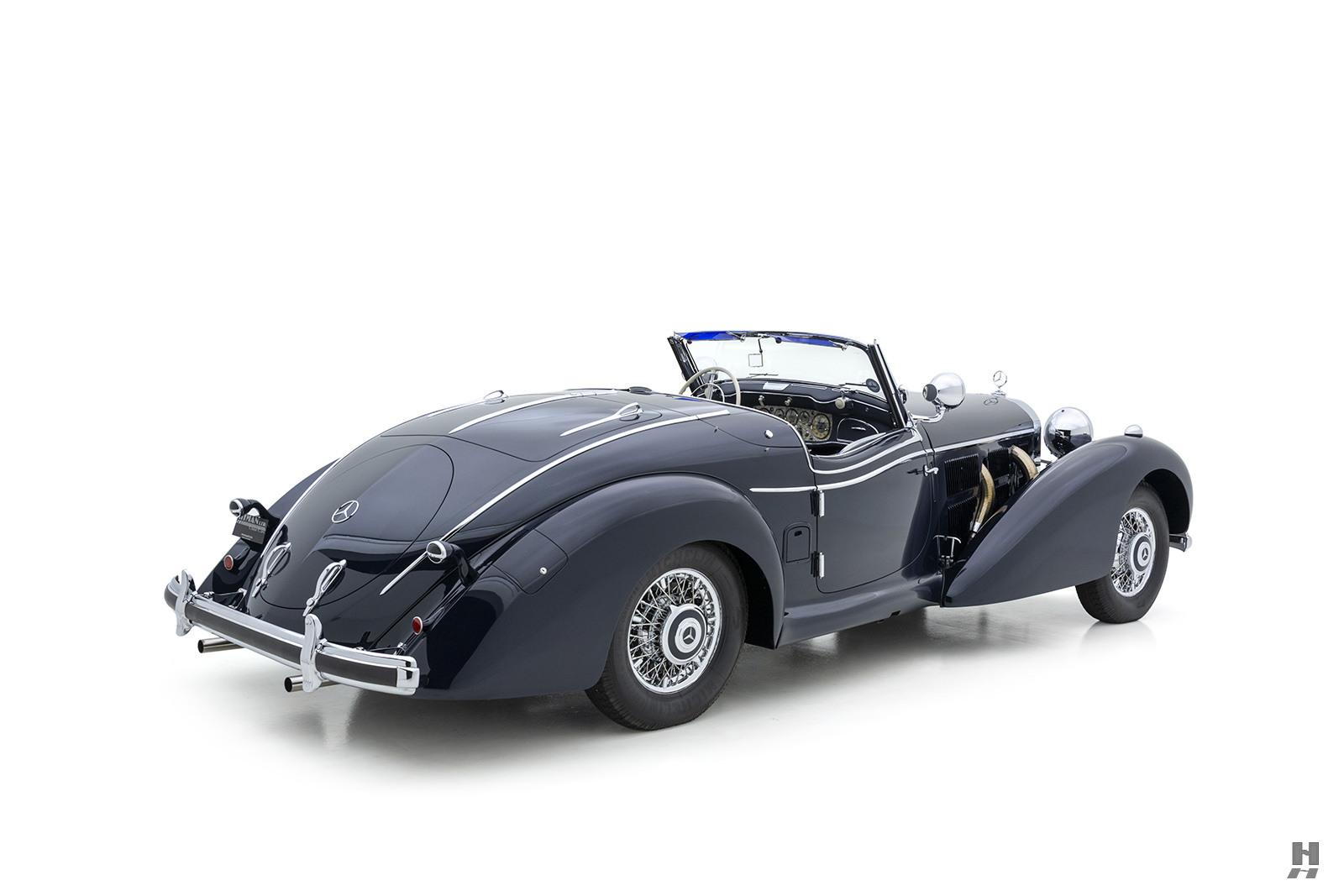
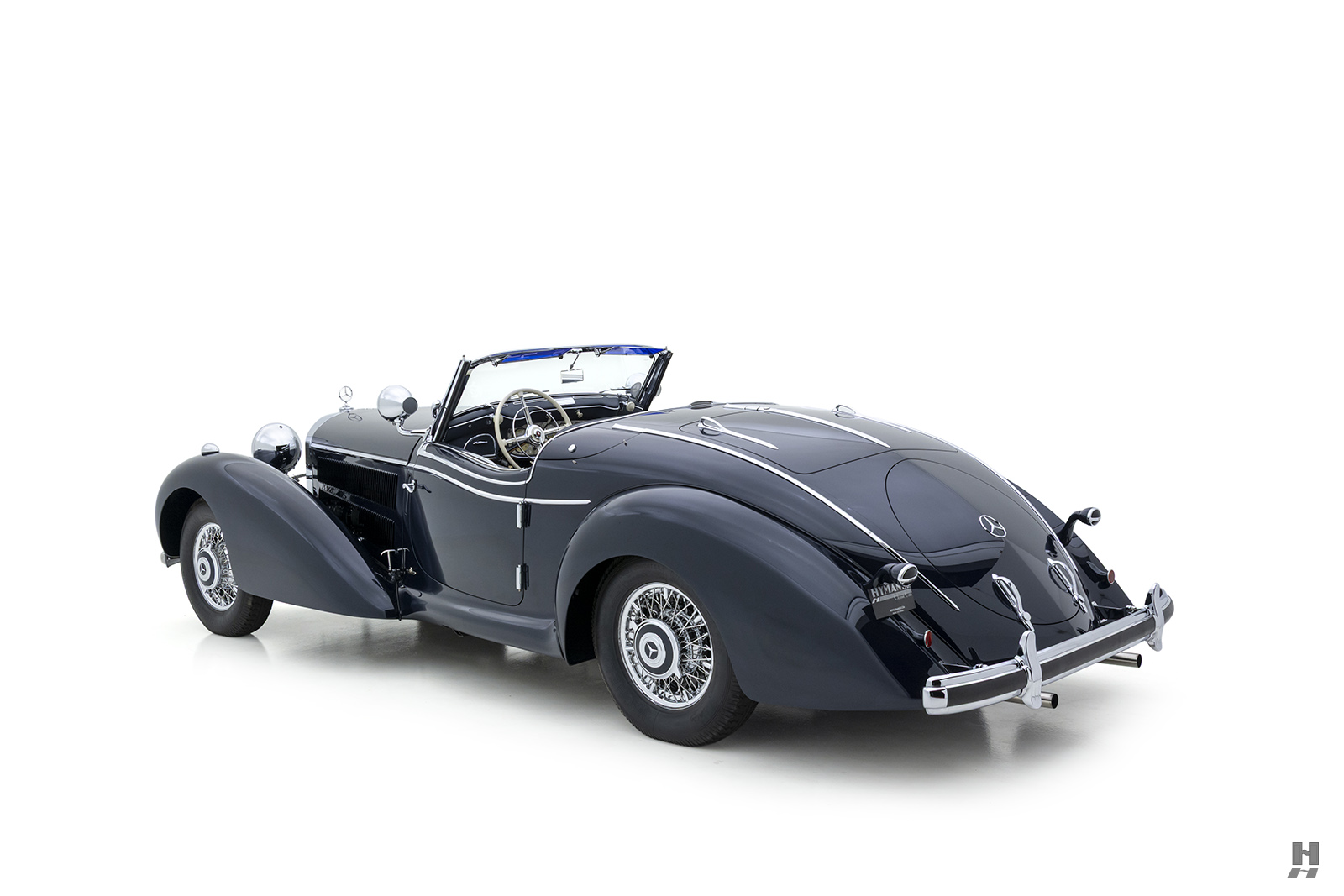
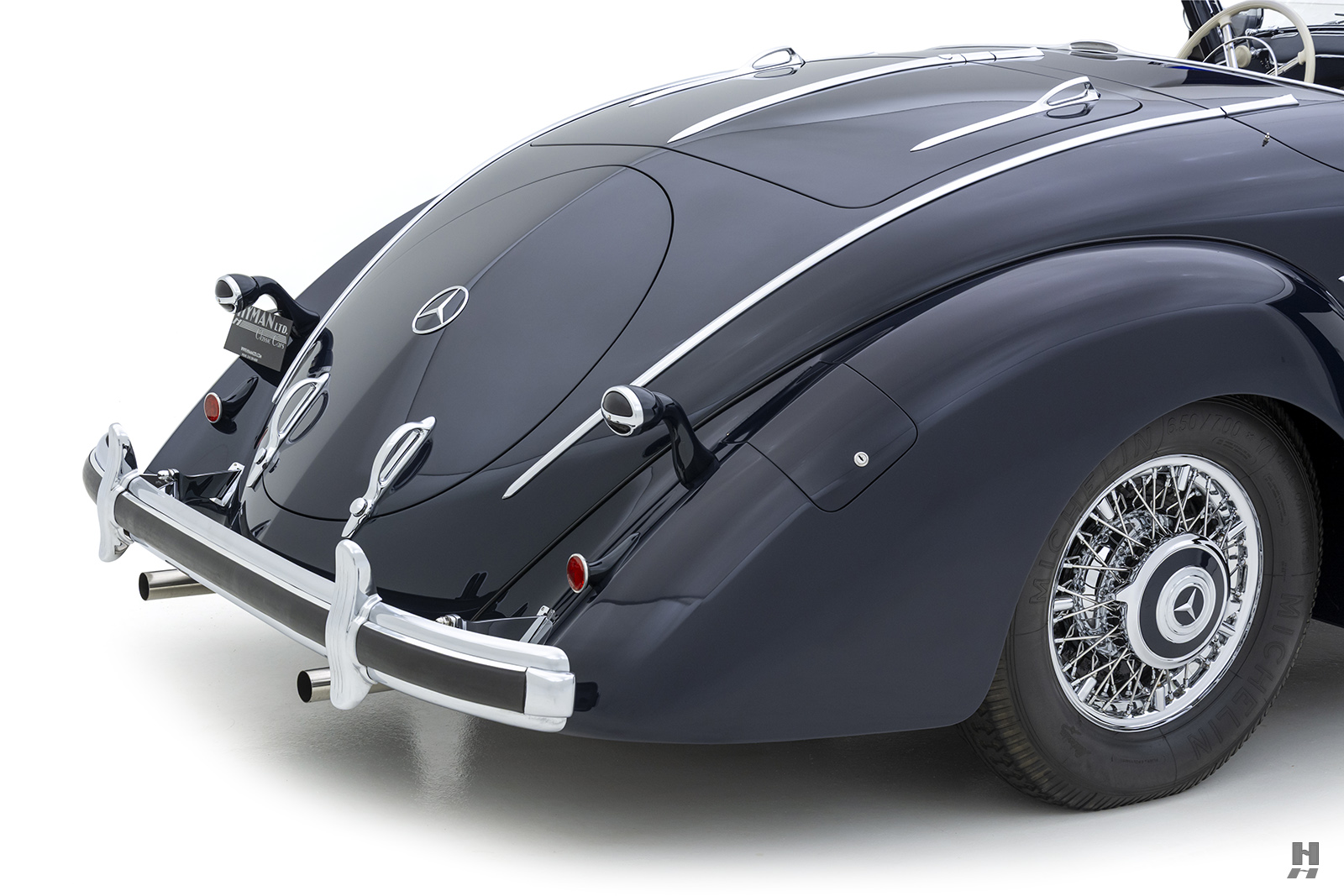
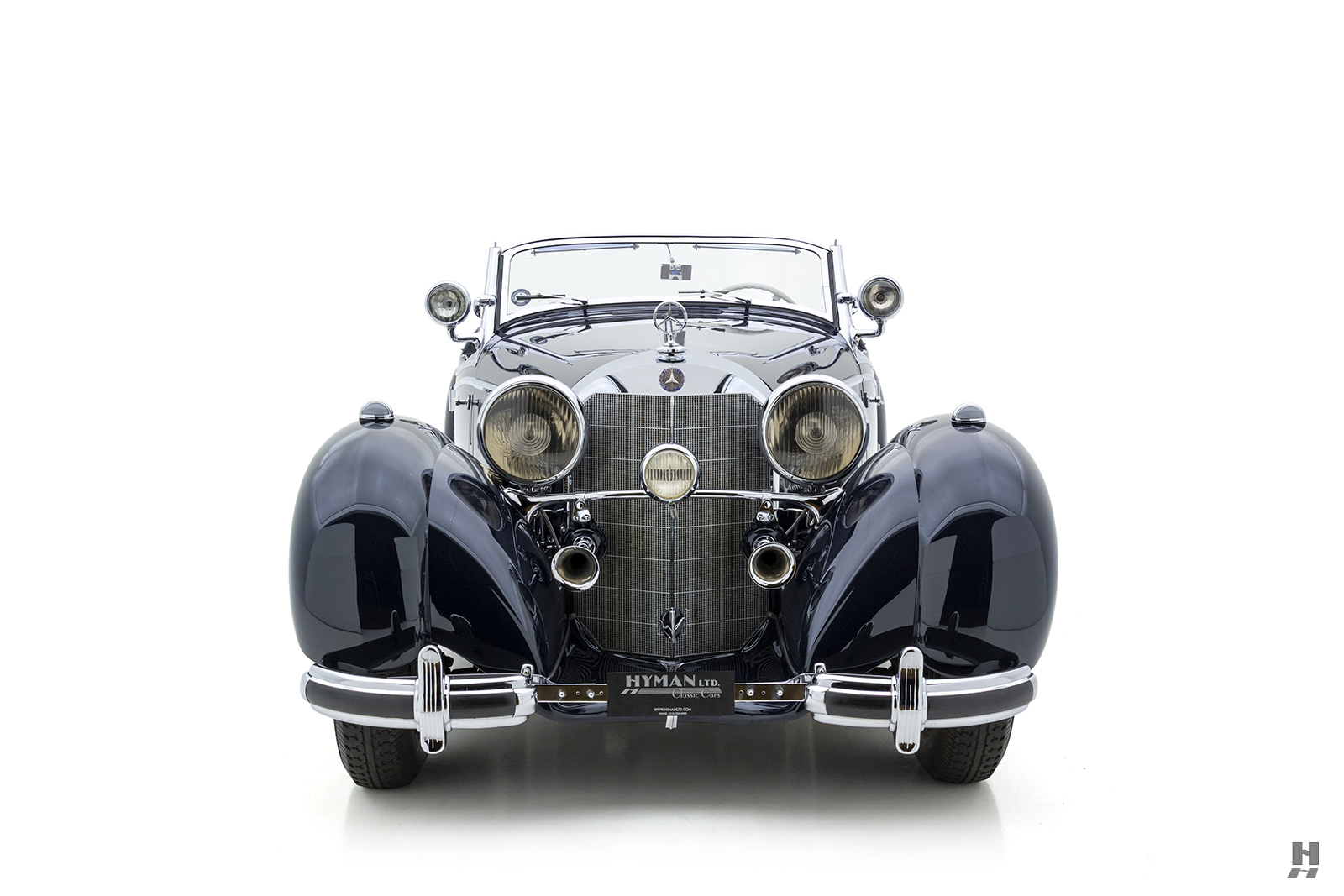
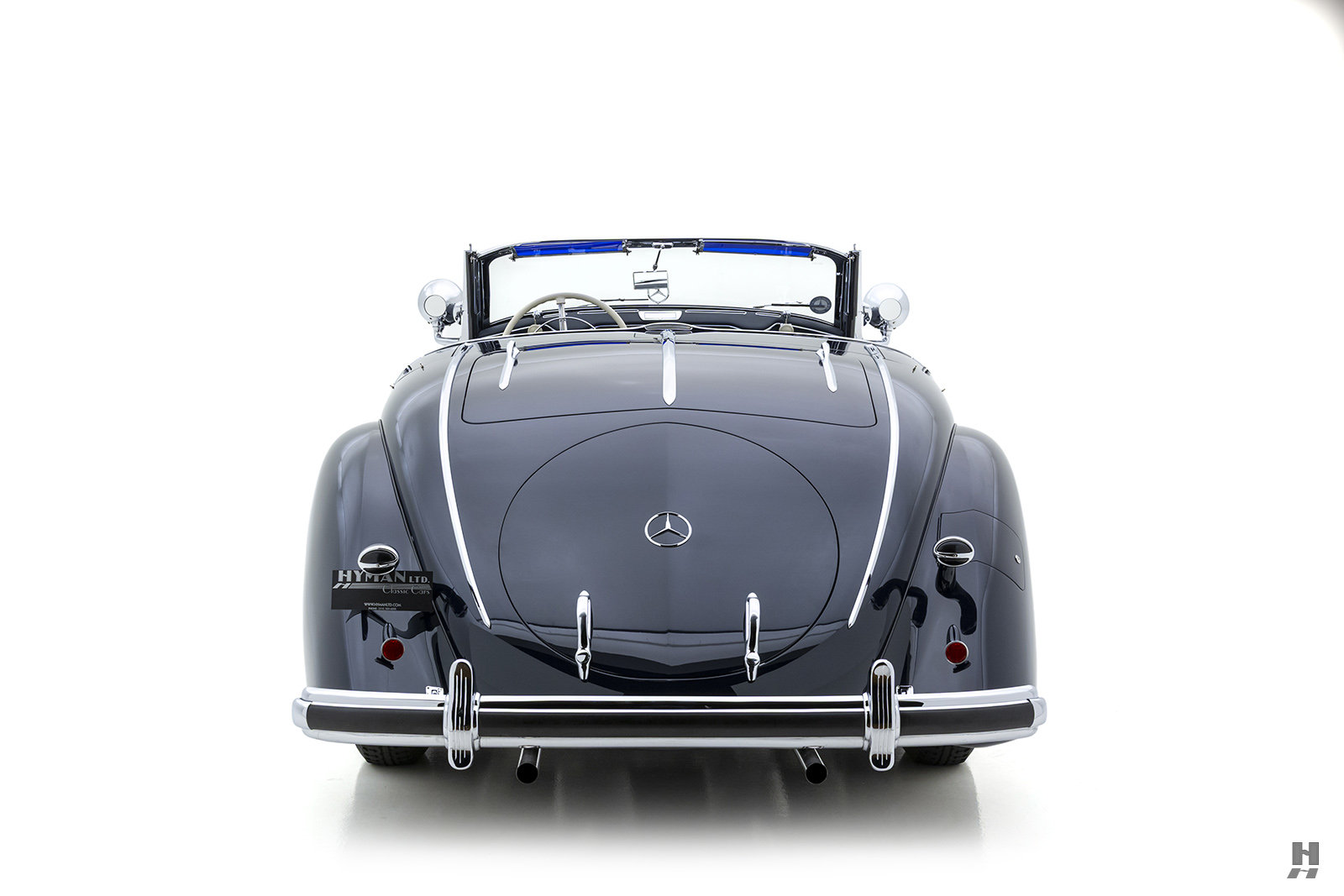
- One-off Sindelfingen coachwork with fully skirted fenders, cut-down doors, deleted running boards, disappearing top, and unique streamlined detailing
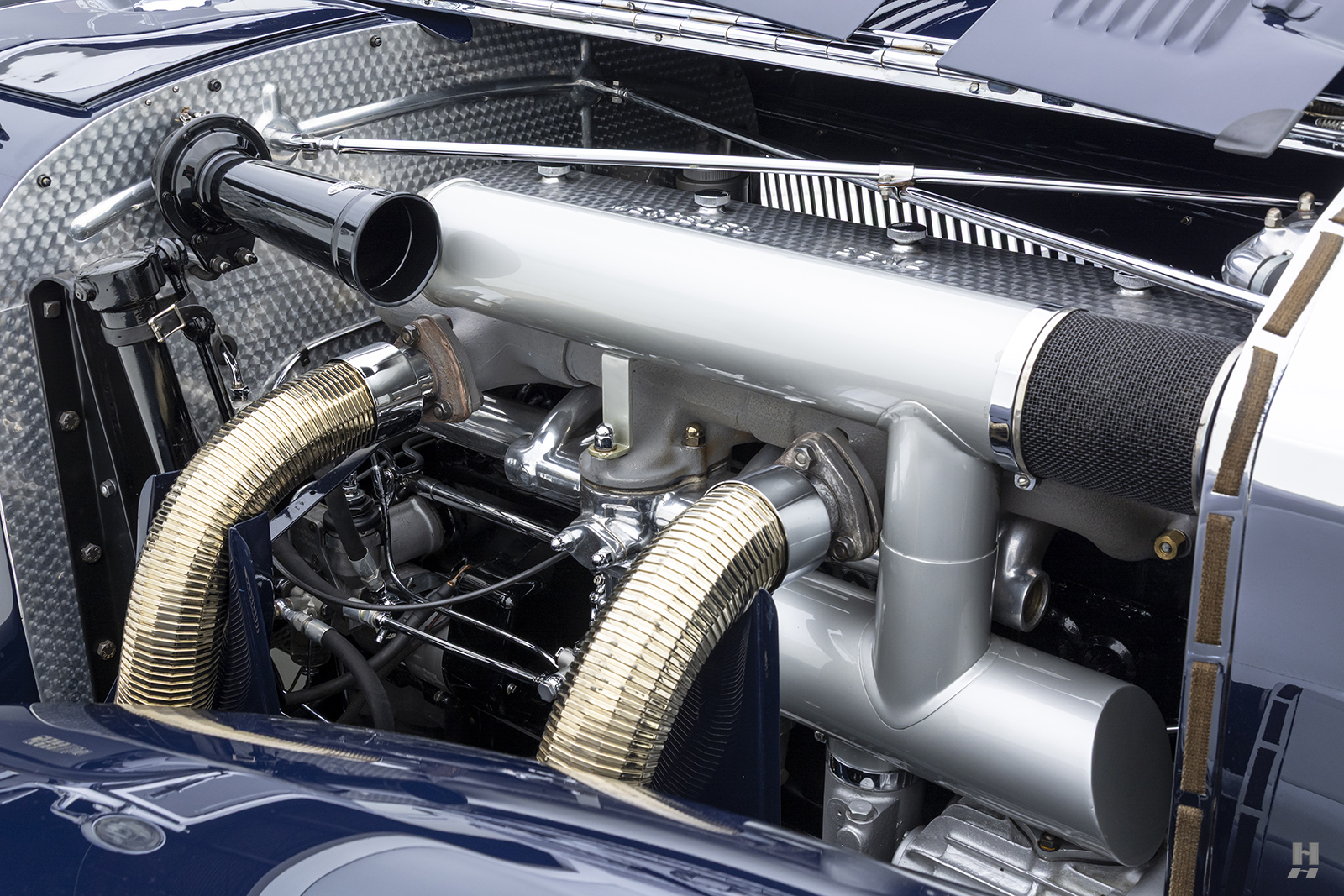
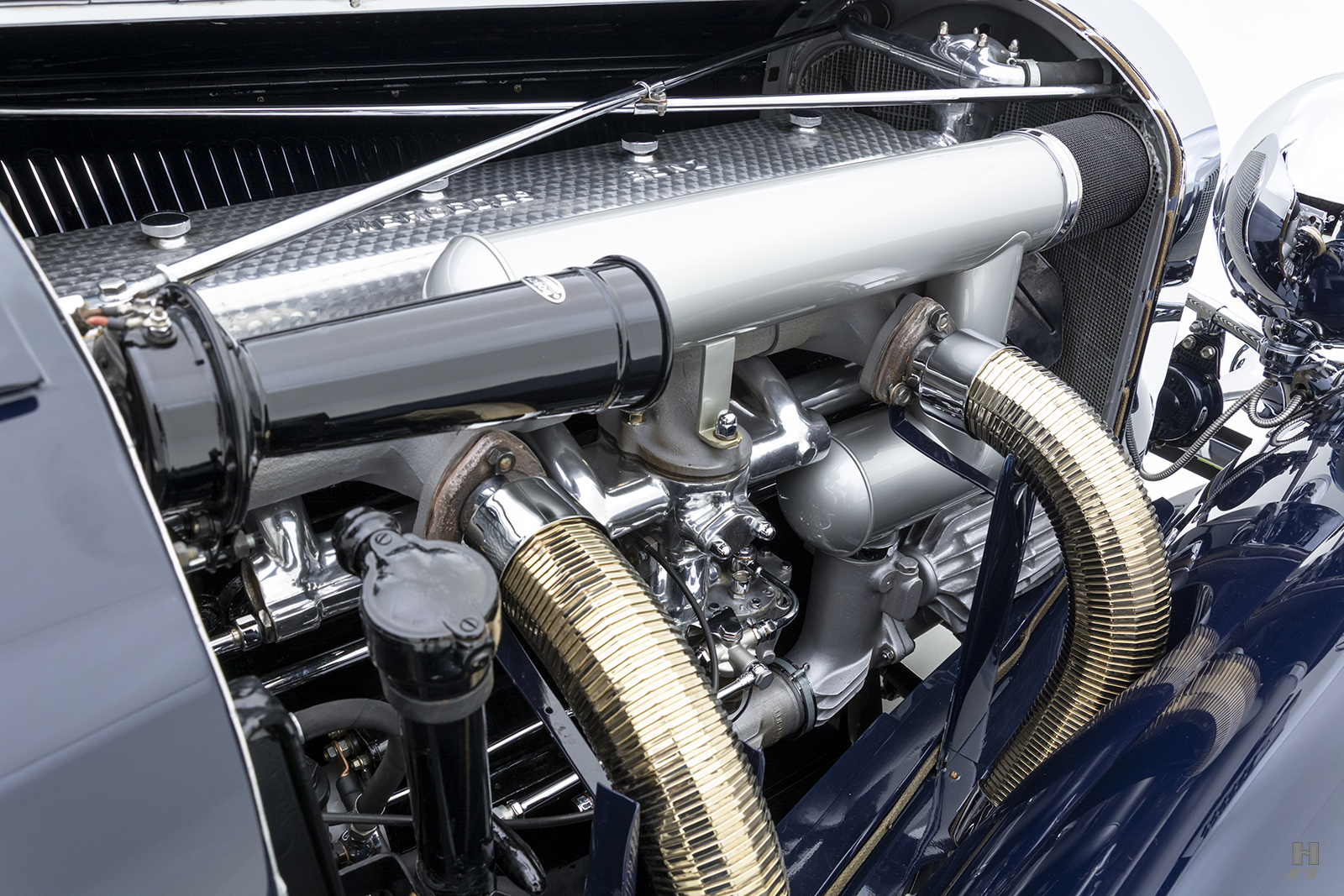
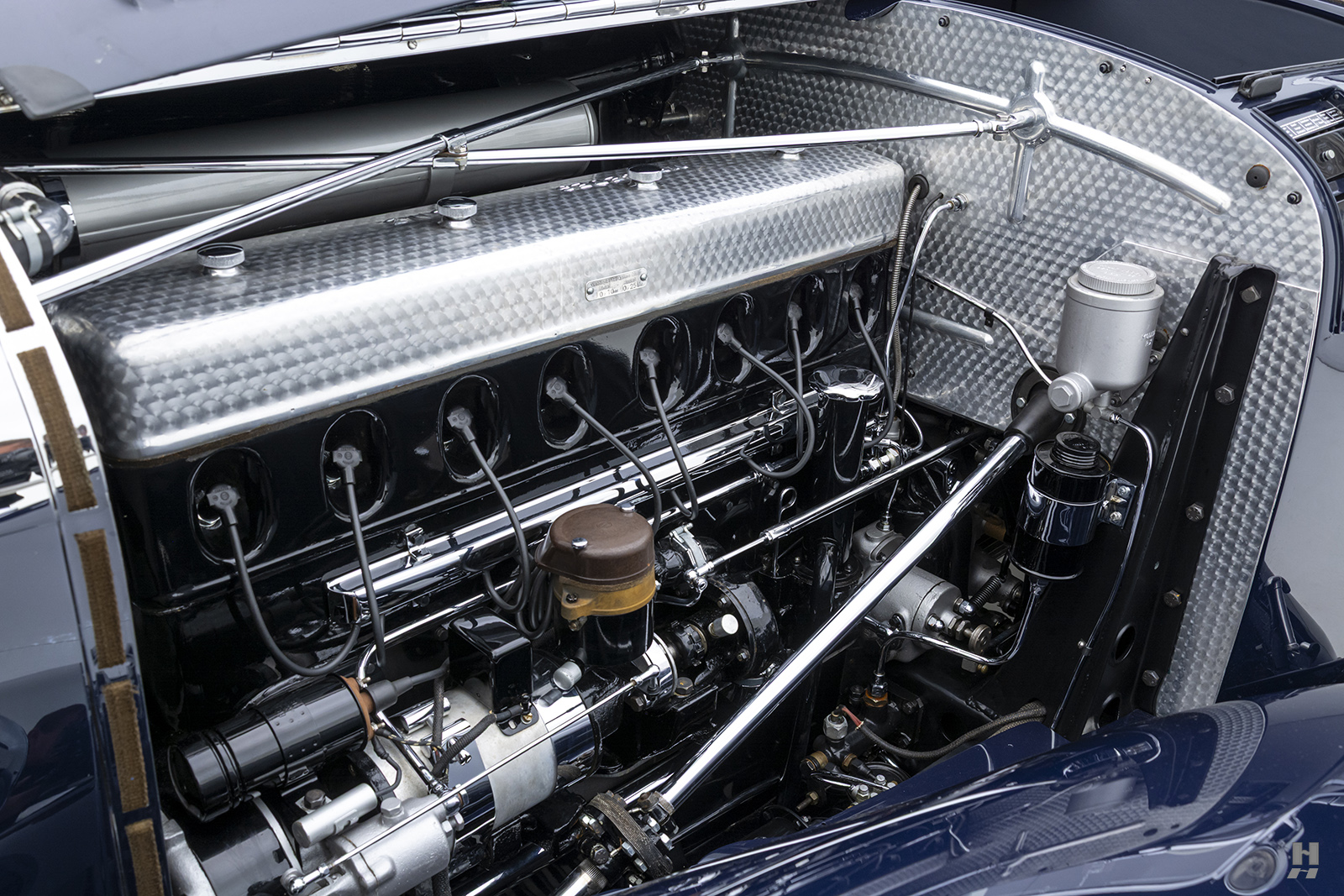
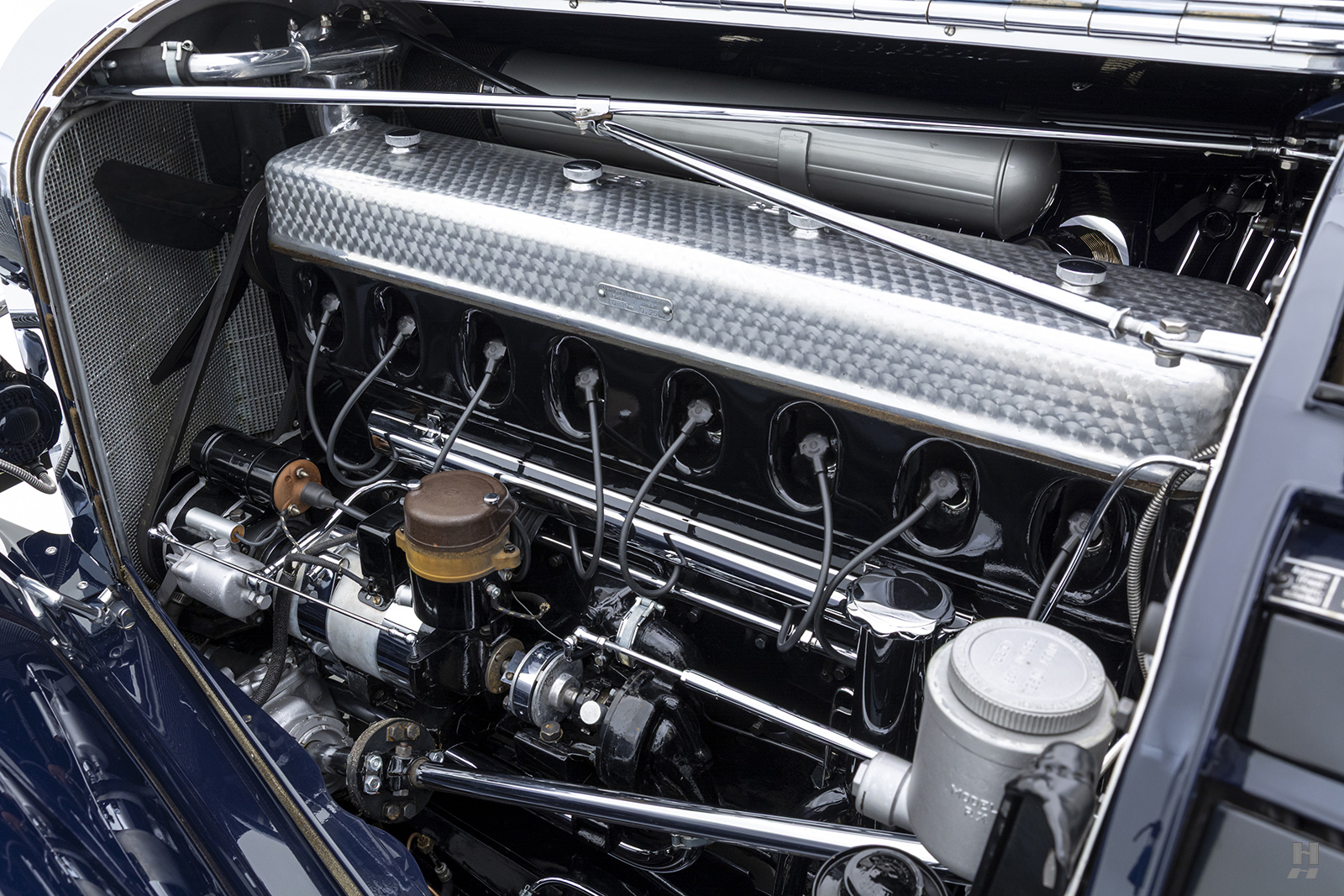
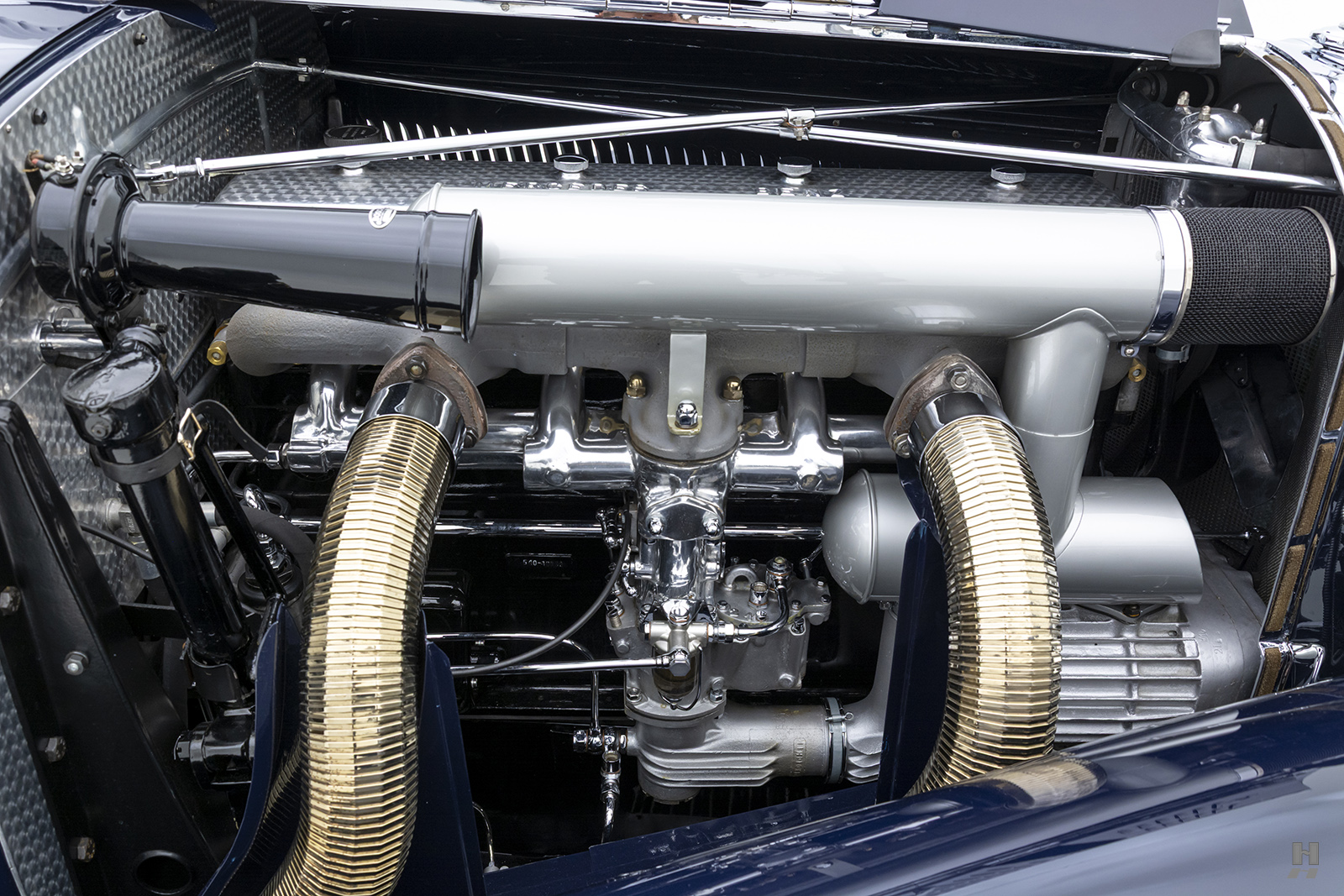
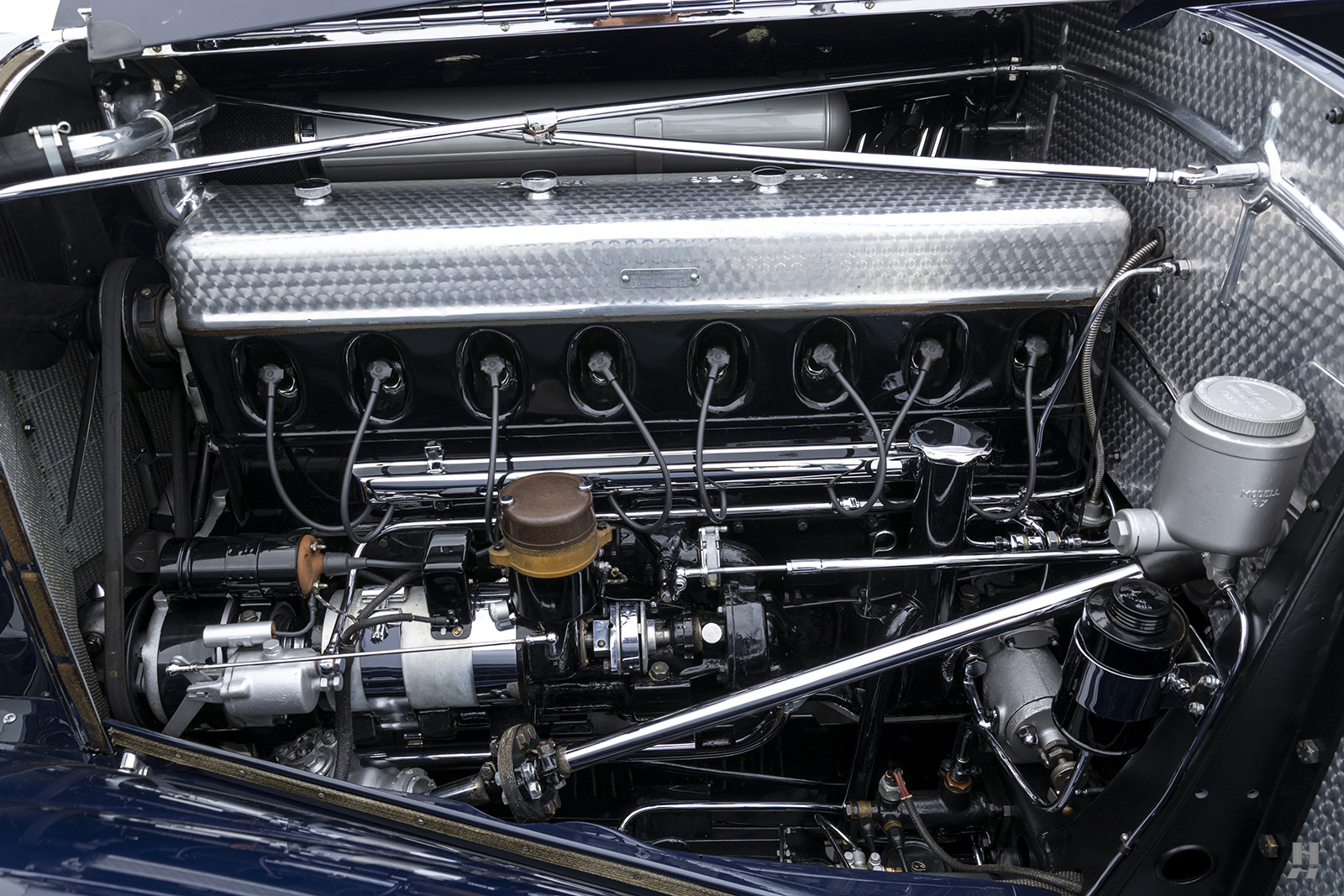
- Late five-speed 540 K chassis with set-back radiator and supercharged 5.4-liter straight-eight
- Extraordinary postwar history including Soviet diplomatic use, years in Moscow, and an overland escape to Sweden in 1967
- Restored by marque specialist Jim Friswold and retaining extensive original factory identifiers, numbered components, and documentation
- Accompanied by a recently completed report by marque expert Jonathan Sierakowski
The great supercharged Mercedes-Benz automobiles of the 1930s occupy a place apart even among the finest cars of the Classic Era. They combined immense engineering sophistication with coachwork of extraordinary presence, and nowhere was that union more complete than in the 540 K Spezial-Roadster. Long, low, powerful, and built in tiny numbers for a clientele accustomed to having virtually anything made to order, it was one of the most extravagant automobiles money could buy.
By the time the 540 K arrived in 1936, Mercedes-Benz had already refined the formula through the earlier 380 K and 500 K. The new 5.4-liter eight-cylinder engine produced 115 horsepower in normal running and 180 horsepower with the supercharger engaged, giving the substantial chassis the ability to cruise at remarkable speed while carrying the elaborate coachwork for which Sindelfingen had become famous. Of the 419 540 K chassis produced, only a small fraction left the factory as bare chassis; Mercedes-Benz’s own coachbuilding works supplied the overwhelming majority of bodies, and the Spezial-Roadster sat at the very top of the range.
That factory, however, was capable of far more than series coachwork.
Within the vast Sindelfingen complex was the Sonderwagenbau, or Special Vehicles Department, where one-off and extremely low-production bodies were created for the marque’s most demanding clients. Led by Hermann Ahrens and staffed by some of the finest craftsmen in the works, the department could adapt an existing design or begin almost entirely from scratch. Coachwork was laboriously developed through drawings and scale models before skilled woodworkers and metal craftsmen turned those ideas into finished bodies. The results were among the most accomplished factory-built automobiles of the period.
Rolf Horn was exactly the sort of client for whom such a department existed.
Together with his brother, Horn operated one of Berlin’s most exclusive fashion houses and was also a serious collector of German Expressionist art. His livelihood and interests placed him squarely within the worlds of design, taste, and aesthetics, and when he ordered a new 540 K in January 1939, he appears to have taken full advantage of Sindelfingen’s ability to create something personal.
His order, Kommission number 317029, was assigned chassis and engine number 408383, with the Spezial-Roadster body receiving number 200641. The completed chassis was sent to Sindelfingen in March, the coachwork was finished in July, and the completed car was delivered to Horn in Berlin on August 1, 1939. Just one month later, Europe was at war.
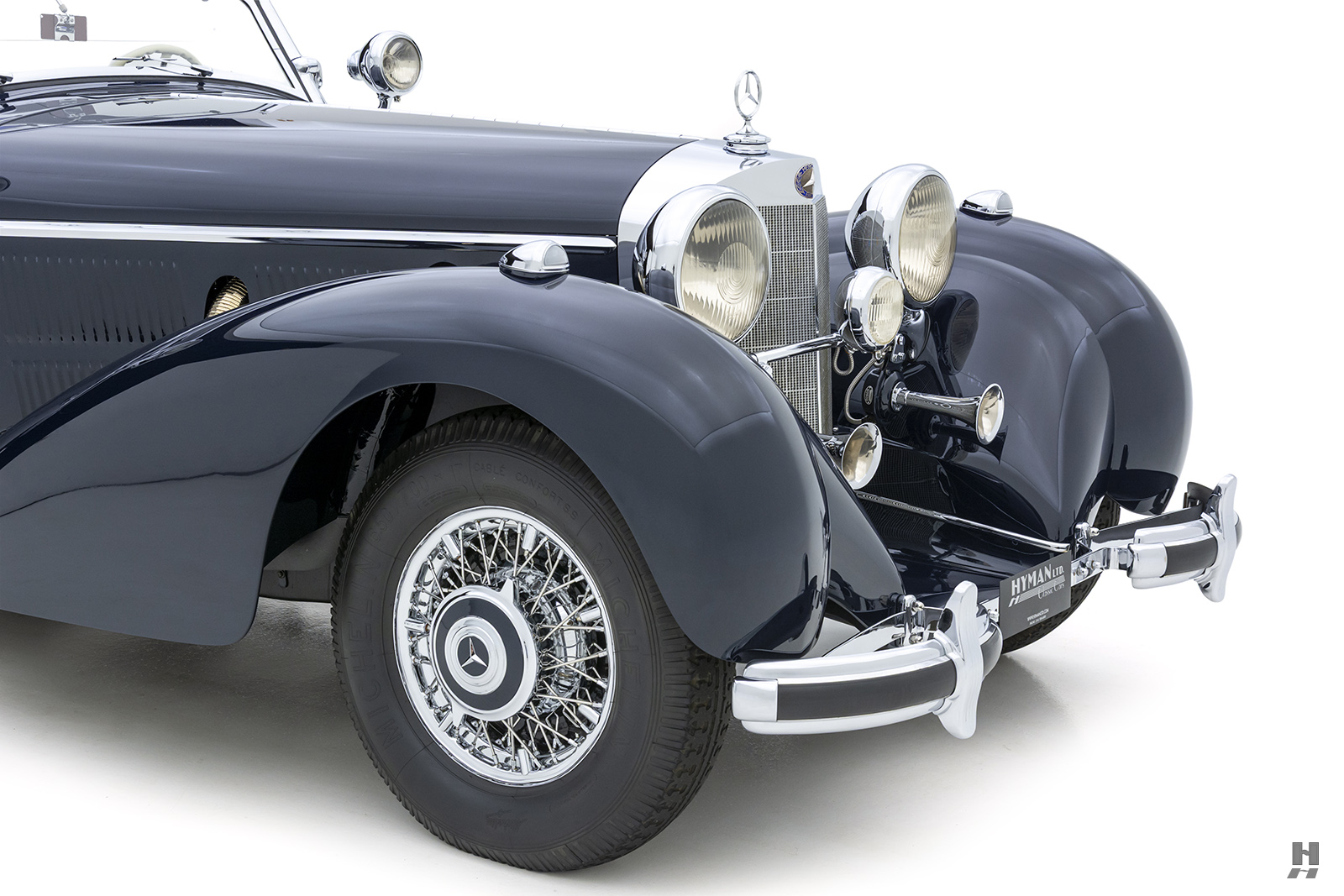
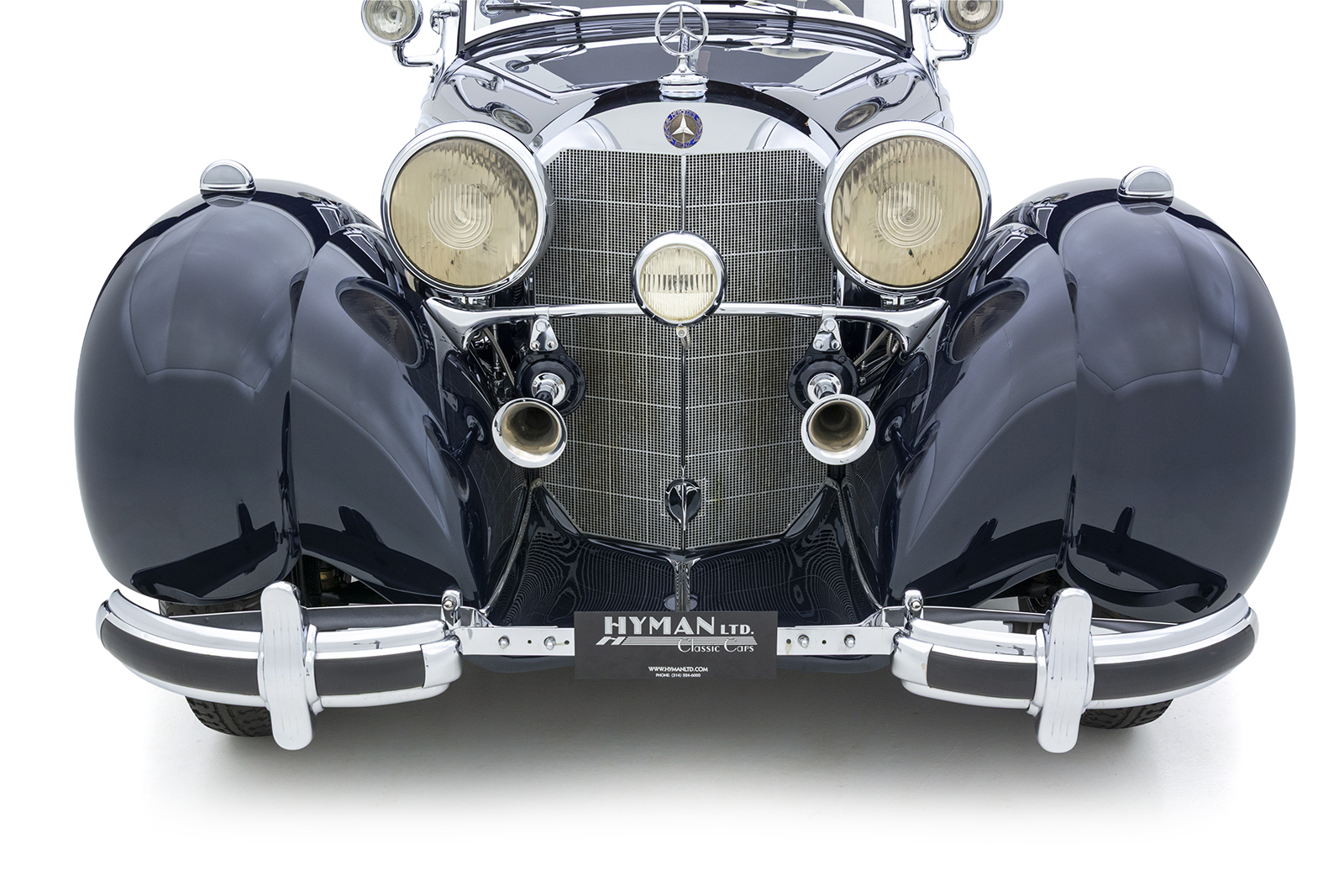
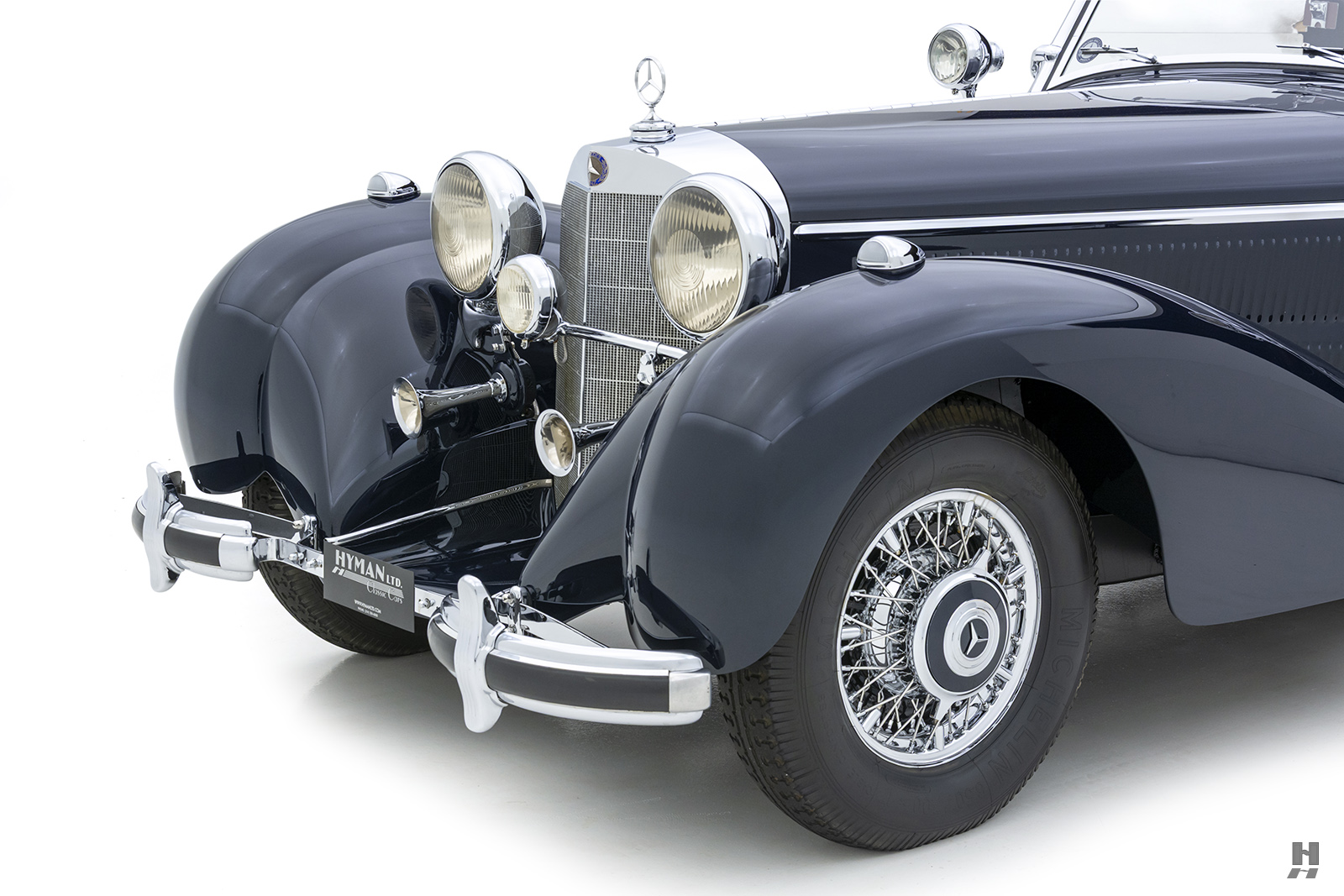
As a late-production 540 K, chassis 408383 benefited from several important mechanical developments. It was equipped with the desirable five-speed transmission, an improvement over the earlier four-speed unit, and constructed on the so-called set-back radiator chassis. Intended especially for open cars and roadsters, this configuration moved the radiator, drivetrain, and body rearward relative to the front axle, creating a longer, lower, and more aggressive stance. The effect is immediately apparent here, where the immense bonnet and sweeping front fenders seem to stretch the car almost impossibly far ahead of the cockpit.
Yet Horn’s car was far more than a late Special Roadster with desirable mechanical specifications. It was a distinctly personal interpretation of the form.
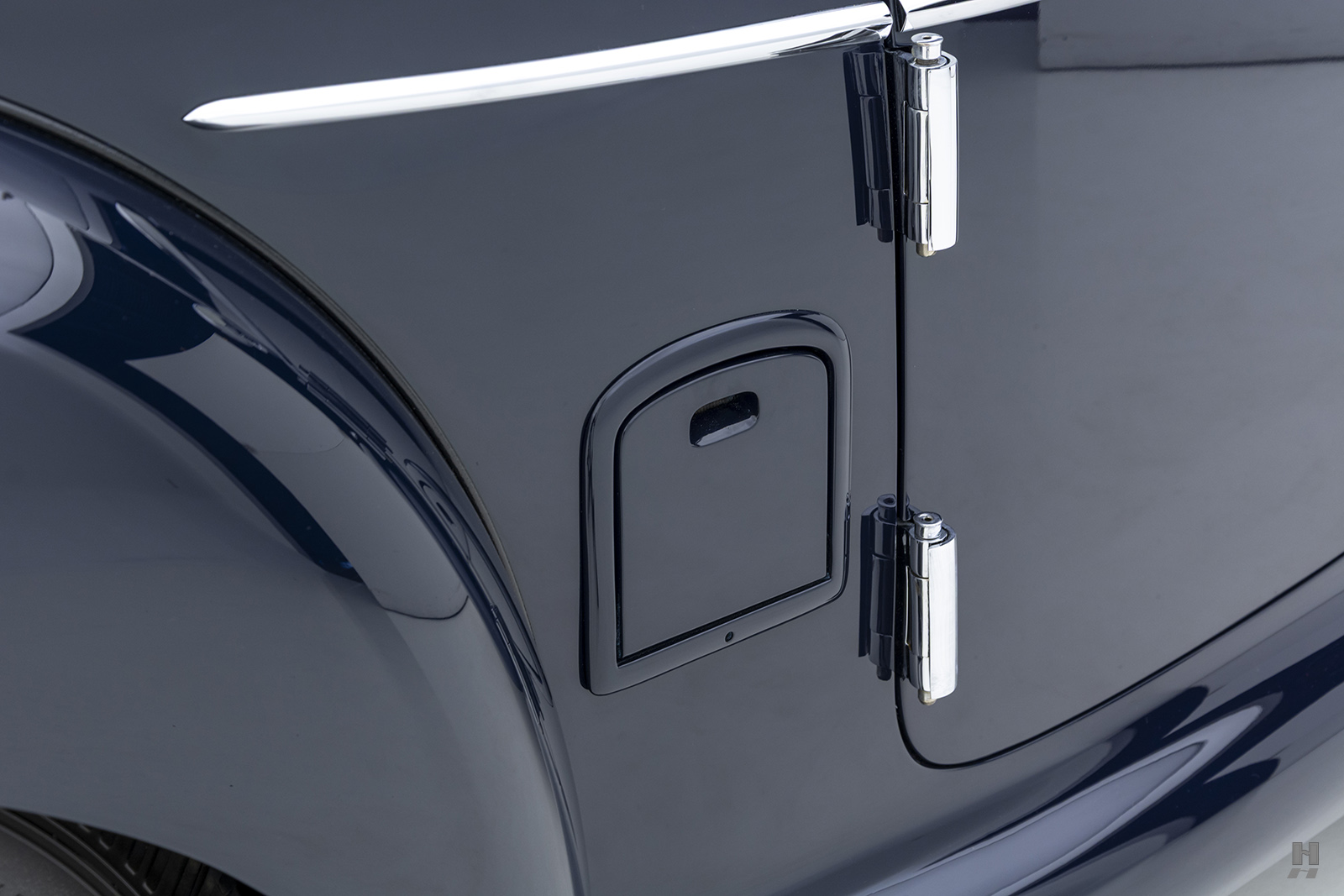
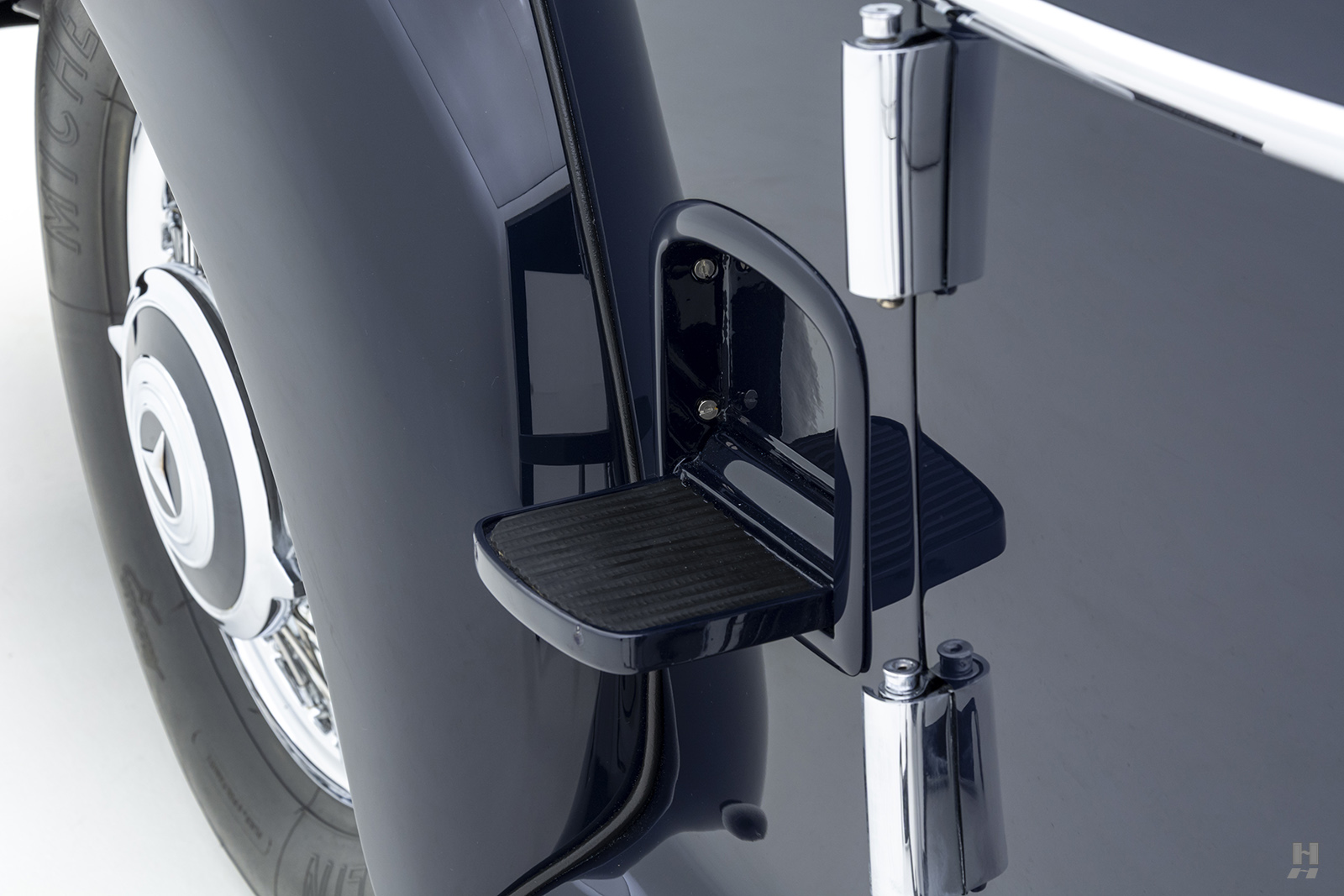
Its fully skirted aerodynamic fenders recall the great Mercedes-Benz Autobahnkurier and reflect the growing influence of streamlining on European automobile design. The front fenders flow rearward in an almost unbroken sweep, free of sidemounted spare wheels that might interrupt their length. The familiar running boards were eliminated, leaving only sculpted frame covers and giving the body a cleaner, more modern profile.
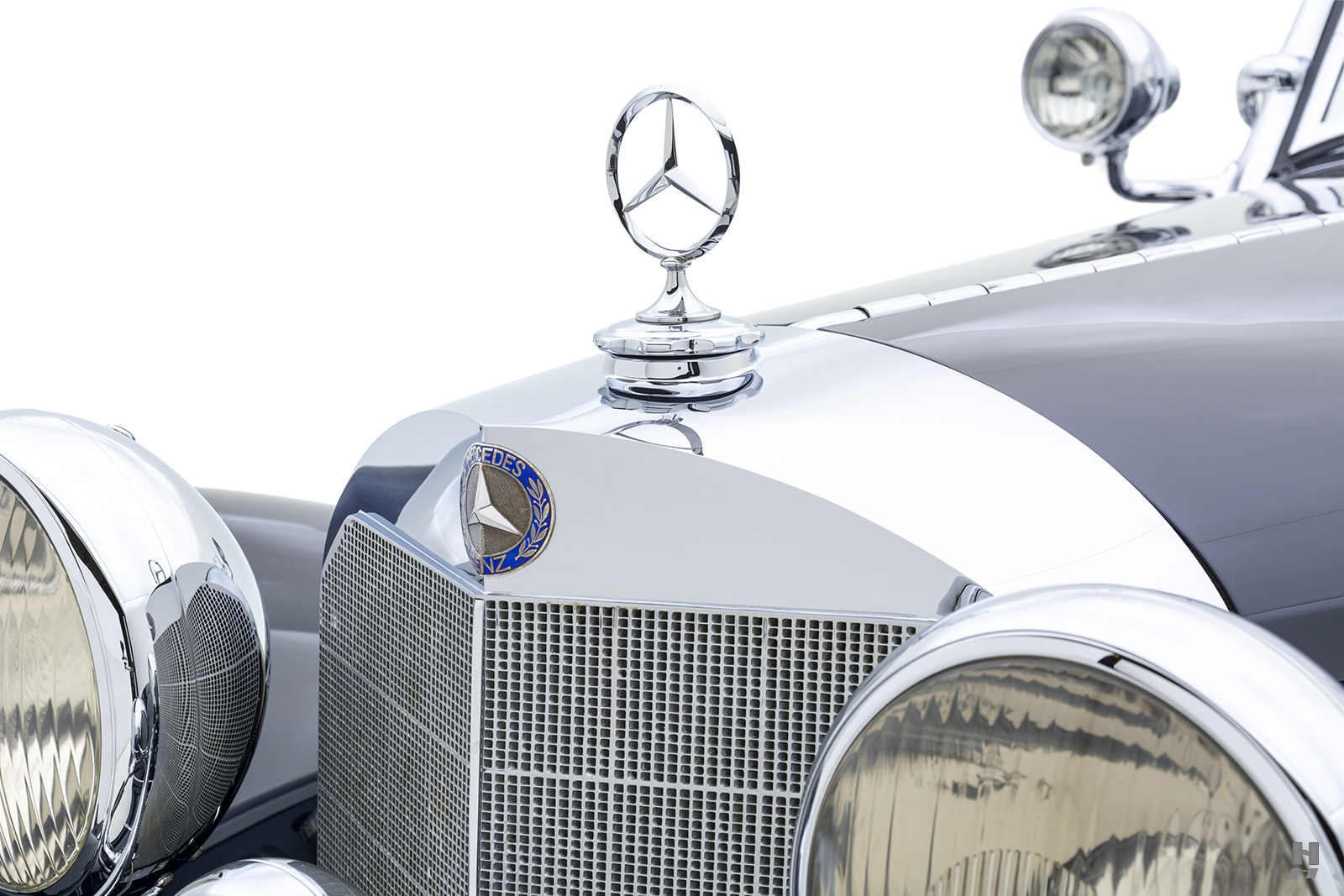
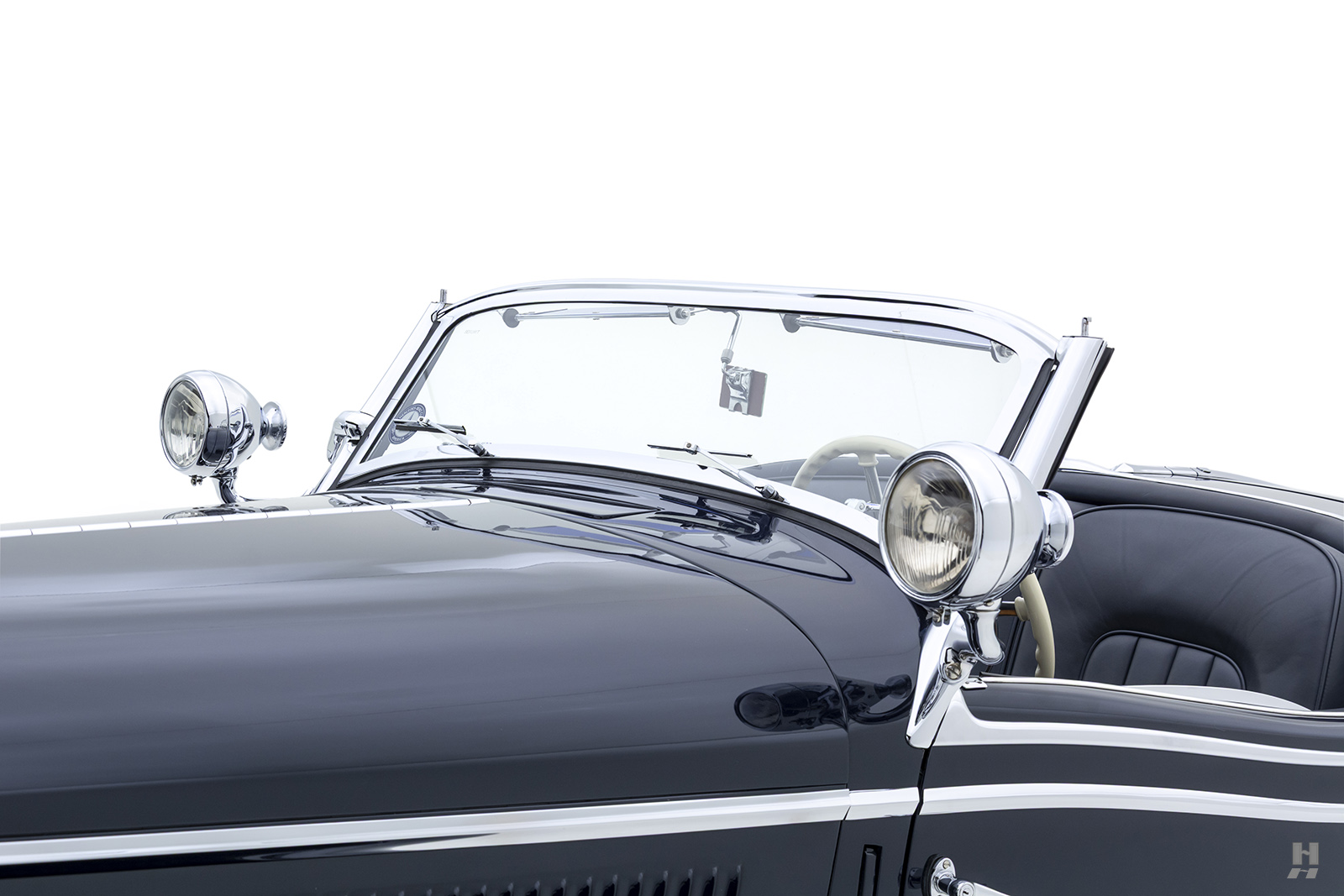
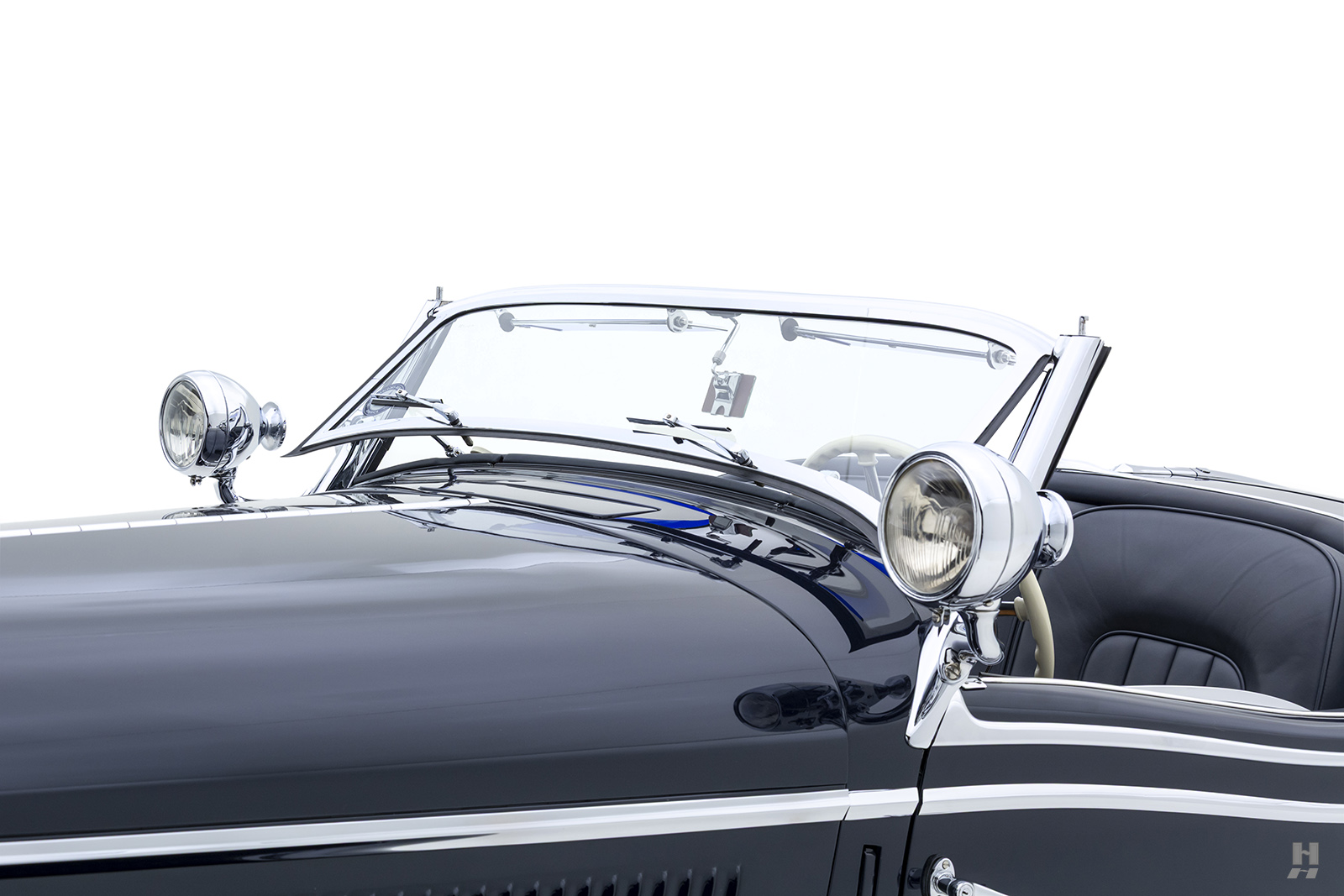
The windscreen is sharply raked, meeting cut-down doors that recall the earlier and more sporting Mercedes-Benz roadsters. Painted hood-side louvers replace the more familiar chromed screens used on earlier cars, allowing the signature external exhaust pipes to stand out all the more dramatically. A fine chrome belt molding begins near the hood break and sweeps downward along the coachwork, narrowing as it approaches the rear fenders and lending the car a sense of motion even at rest.
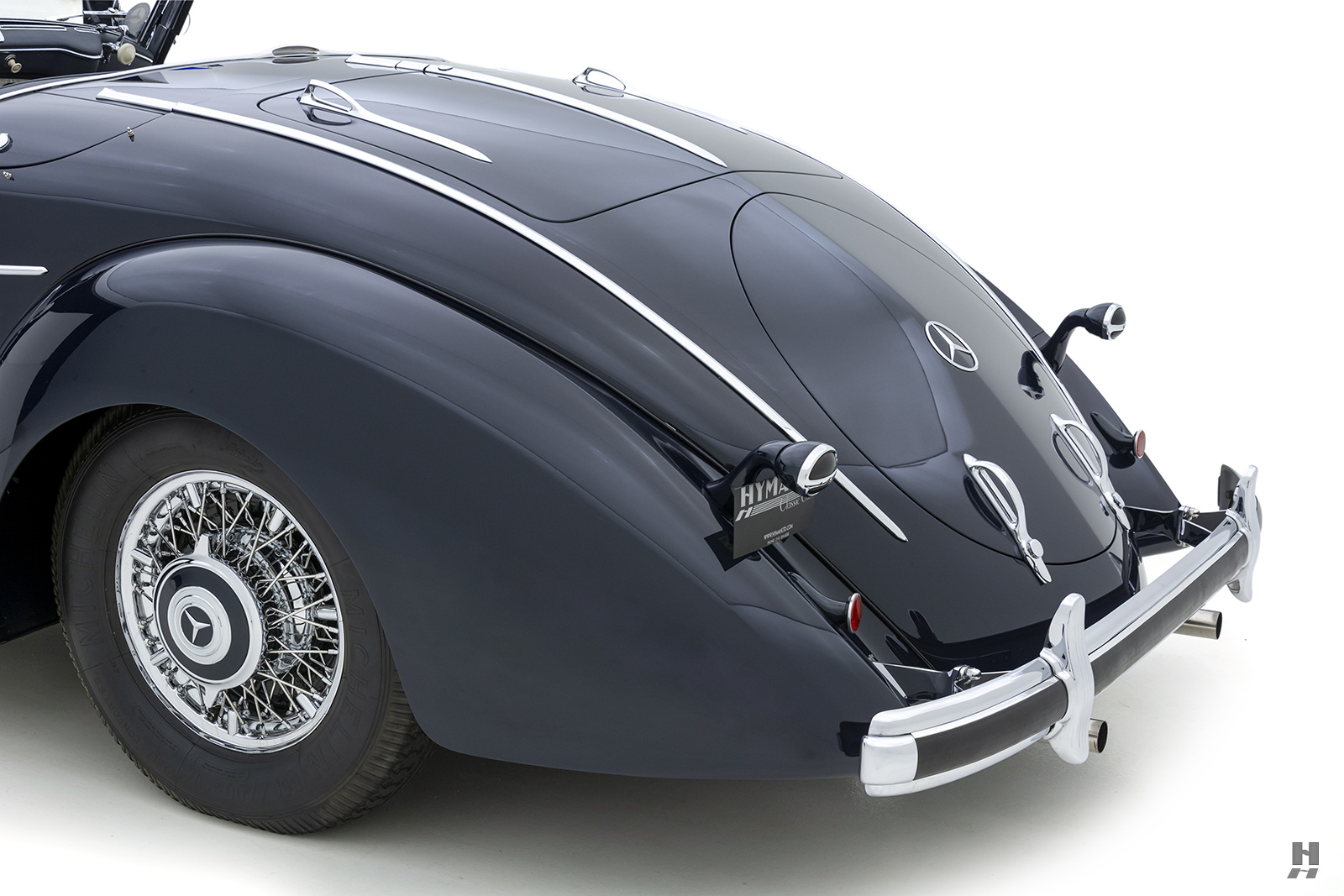
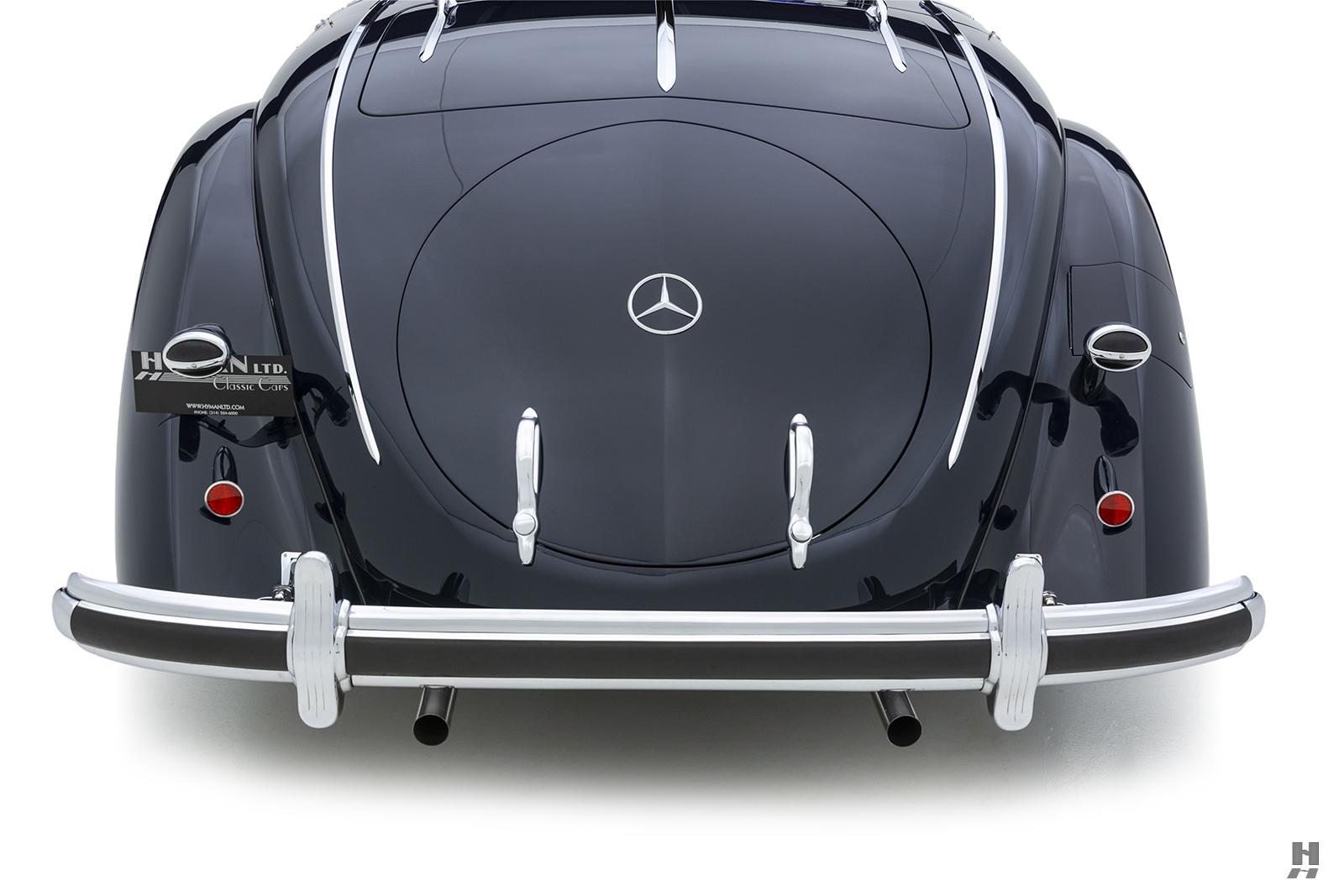
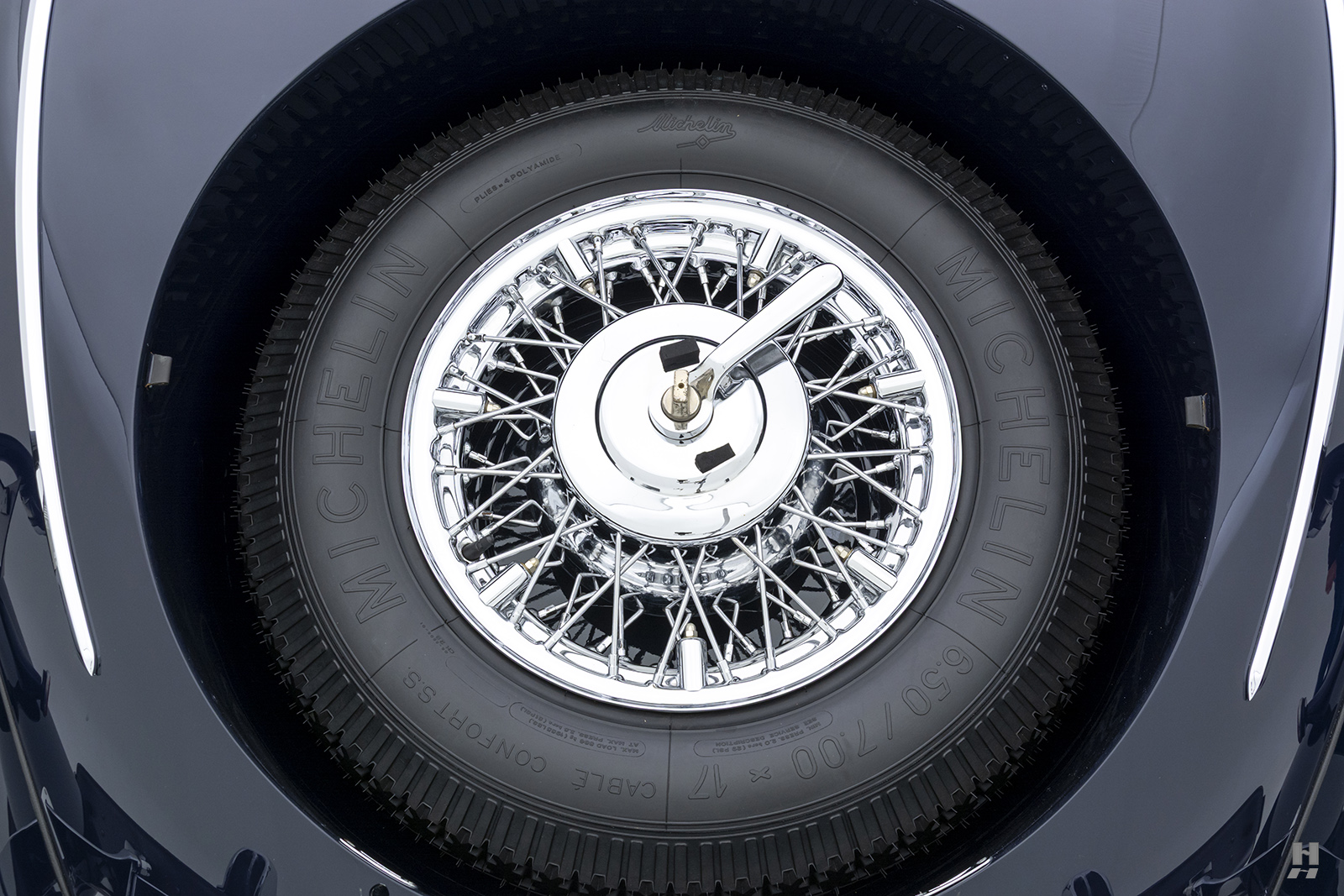
At the rear, the fully disappearing top leaves the body remarkably uncluttered when lowered, while the covered rear-mounted spare allows the tail to flow cleanly to its conclusion. Subtle arches along the fenders and rear body introduce a hint of the streamlined forms that would become increasingly influential after the war. The result is unmistakably a 540 K Spezial-Roadster, yet unlike any other.
The original factory records specify the car in black with leather upholstery. Its design was restrained in ornament compared with many contemporary Special Roadsters, relying instead on proportion, surface, and line. That restraint remains one of its greatest strengths. Horn had commissioned a car of immense scale and presence, but one whose visual drama came from shape rather than decoration.
Its timing could hardly have been more precarious. Delivered only weeks before the outbreak of the Second World War, the Mercedes appears to have seen limited early use before being stored. By 1945 it was reportedly discovered on blocks in Soviet-controlled East Berlin, still showing low mileage. It was subsequently used by Soviet diplomats until 1953 before making its way east into Russia.
There it entered the care of Arthur Leshtin, an early Russian enthusiast who played an important role in preserving a number of significant prewar Mercedes-Benz automobiles. Period photographs show the 540 K on the streets of Moscow, a remarkable sight against the backdrop of postwar Soviet life. Leshtin used and maintained the car, and in 1962 sold it to young Swedish translator Alf Johansson, then working at the Swedish embassy in Moscow.
Johansson made the Mercedes his regular automobile, using it in the city for approximately three years. When he prepared to leave the Soviet Union in 1967, the fate of the 540 K became uncertain. Rather than risk leaving it behind, he simply drove it toward the border under the pretense of a vacation and crossed into Sweden. The gamble worked, ensuring that one of the most distinctive 540 Ks ever built escaped the Soviet Bloc intact.
Johansson continued to enjoy the car in Sweden for another decade before selling it in late 1977 to prominent American dealer Tom Barrett. From there it passed to Axel Wars, whose remarkable collection was housed in a converted roller-skating rink in San Diego, before later joining the Imperial Palace Auto Collection in Las Vegas. By the late 1990s it had entered the collection of General William Lyon, himself a devoted enthusiast with an exceptional stable of supercharged Mercedes-Benz automobiles.
In 2011 the car was acquired by the late Thomas Taffet, who commissioned marque specialist Jim Friswold to undertake a comprehensive restoration. The work returned the 540 K to a very high standard while carefully preserving its numbered components and much of the important original material that had survived with the car. During the restoration, the exterior was changed from its original black to the deep blue it wears today, a color that emphasizes the extraordinary length and sculptural quality of the coachwork.
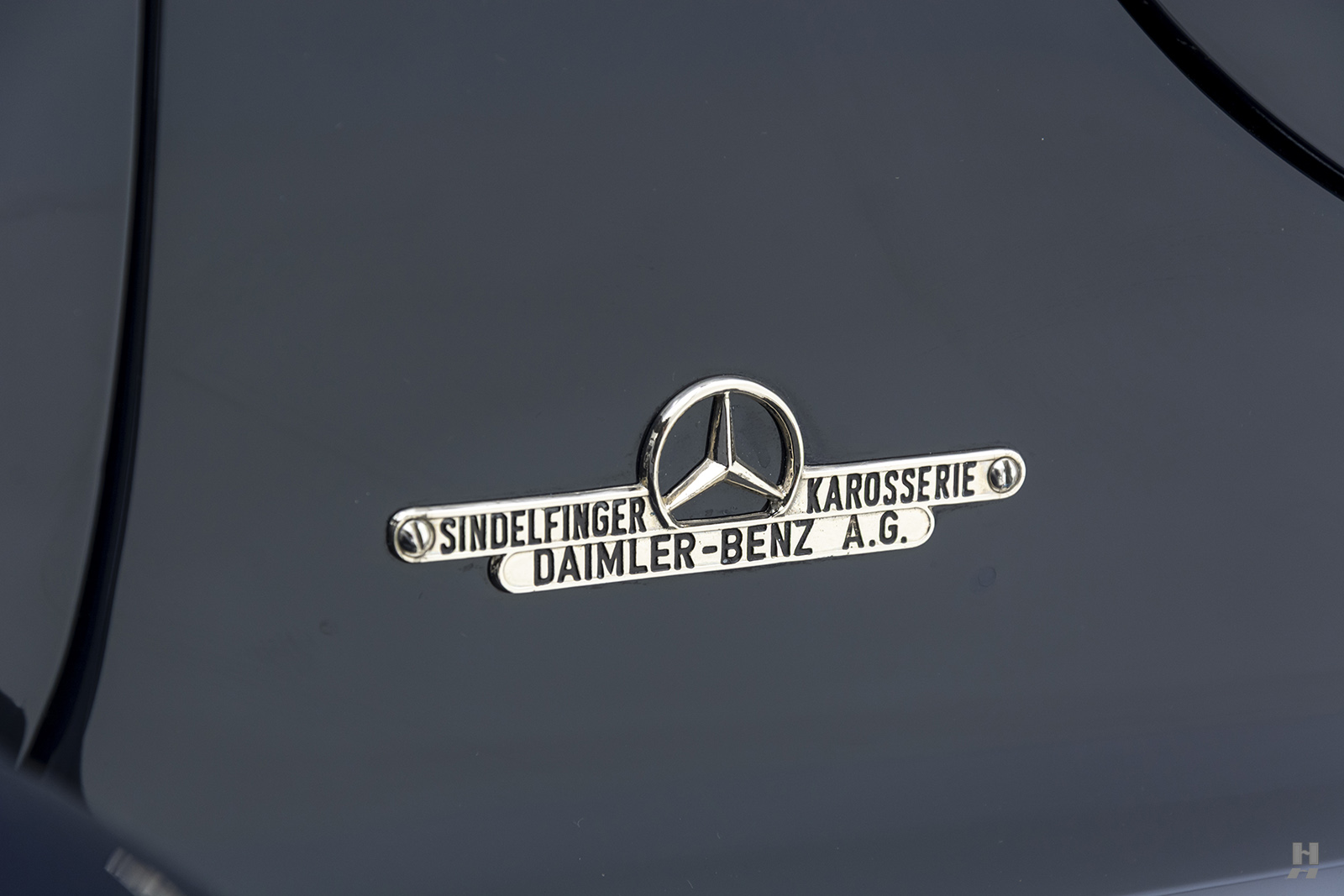
The car later passed to Dr. Richard Workman before entering its present ownership in 2017. Since then it has continued to receive careful maintenance and attention while retaining a remarkable collection of original identifiers, including its factory data plate, commission plate, body plate, and frame stamping. The motor number plate riveted to the block appears to be original, although the boss typically stamped with an internal number followed by the motor number, appears to have been altered during a previous restoration. The block date code indicates a casting date of June, 1938 which is temporally appropriate to the completion of the bare chassis in early 1939. Further research by marque historian Jonathan Sierakowski was recently completed and will accompany the car to its next owner.
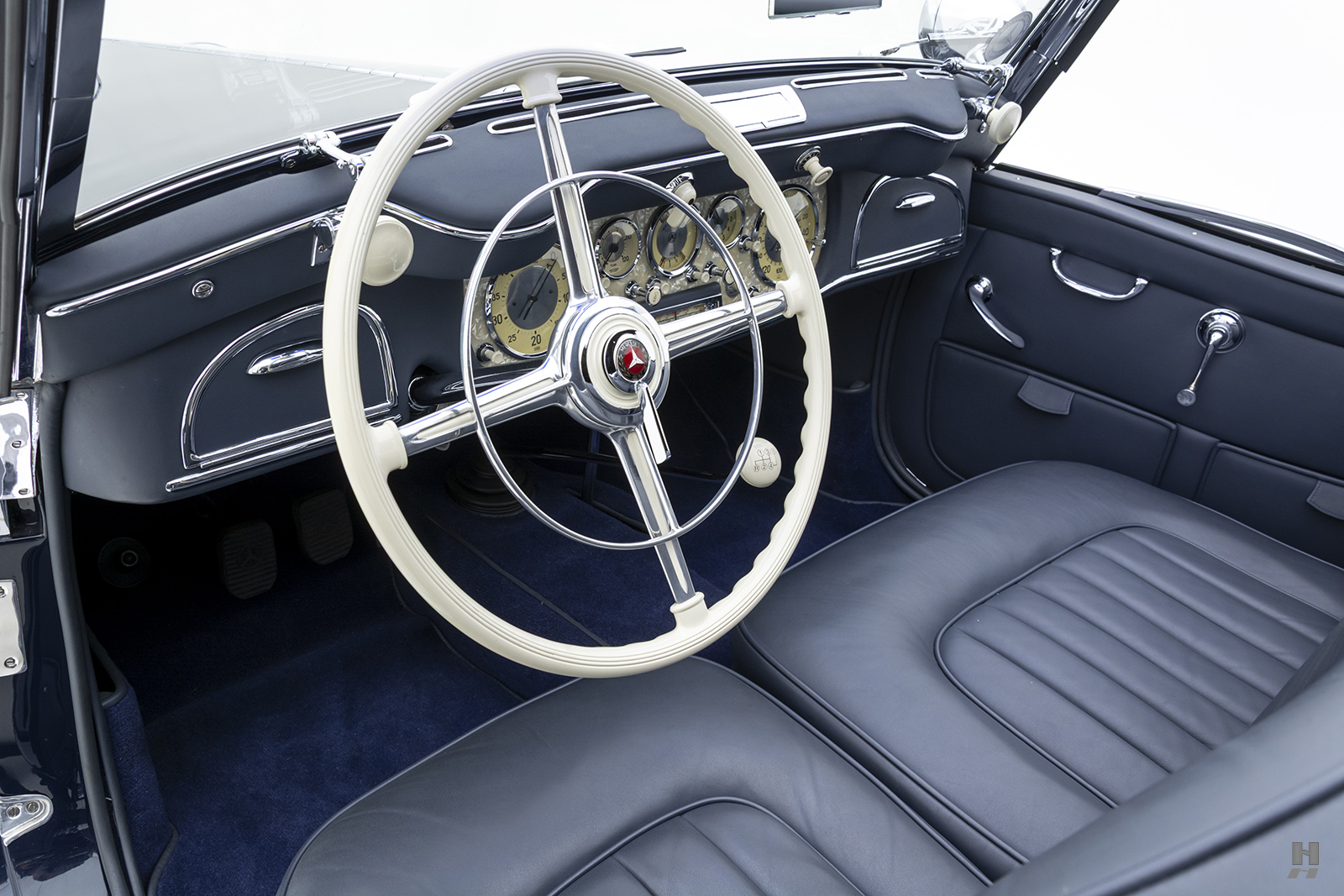
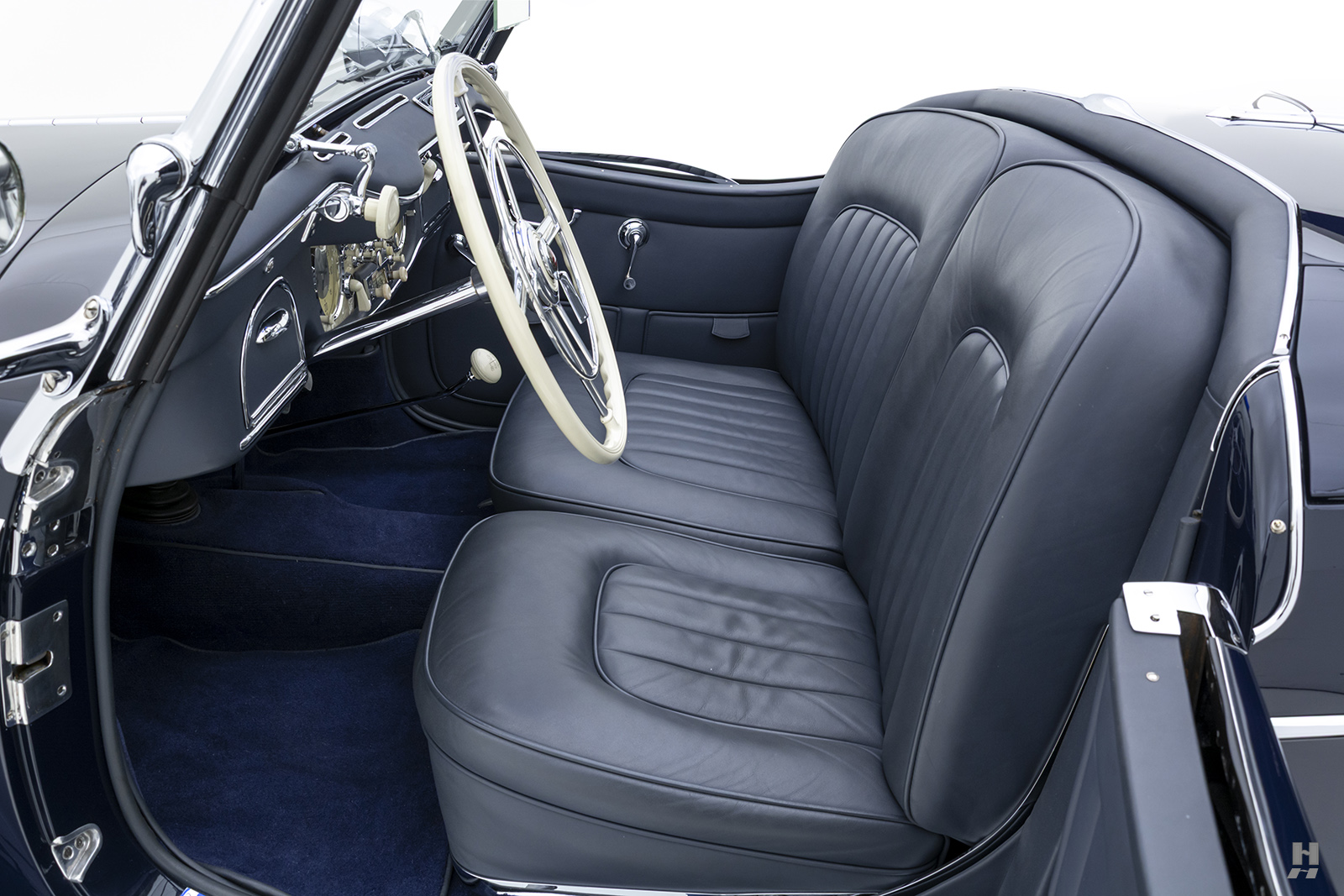
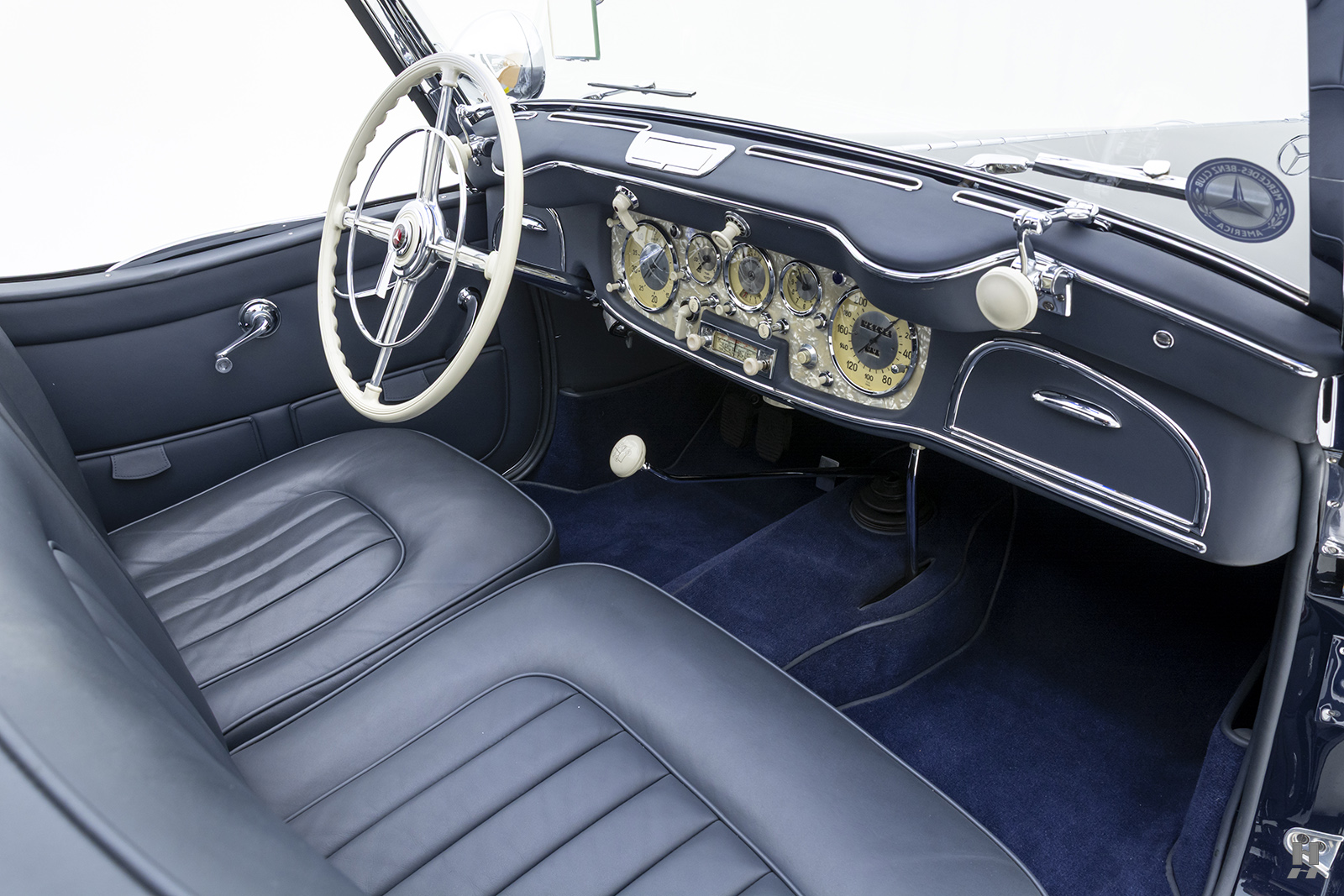
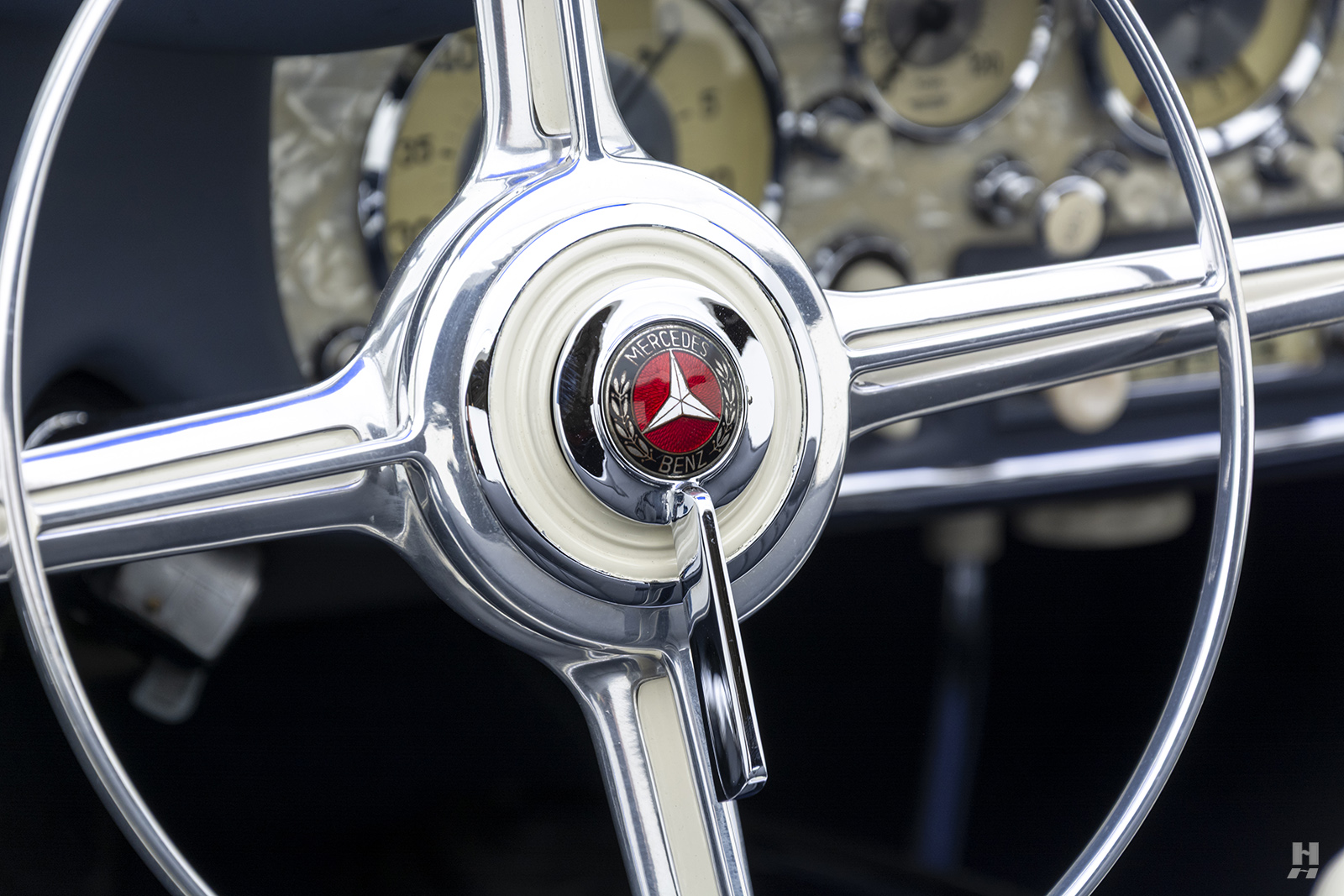
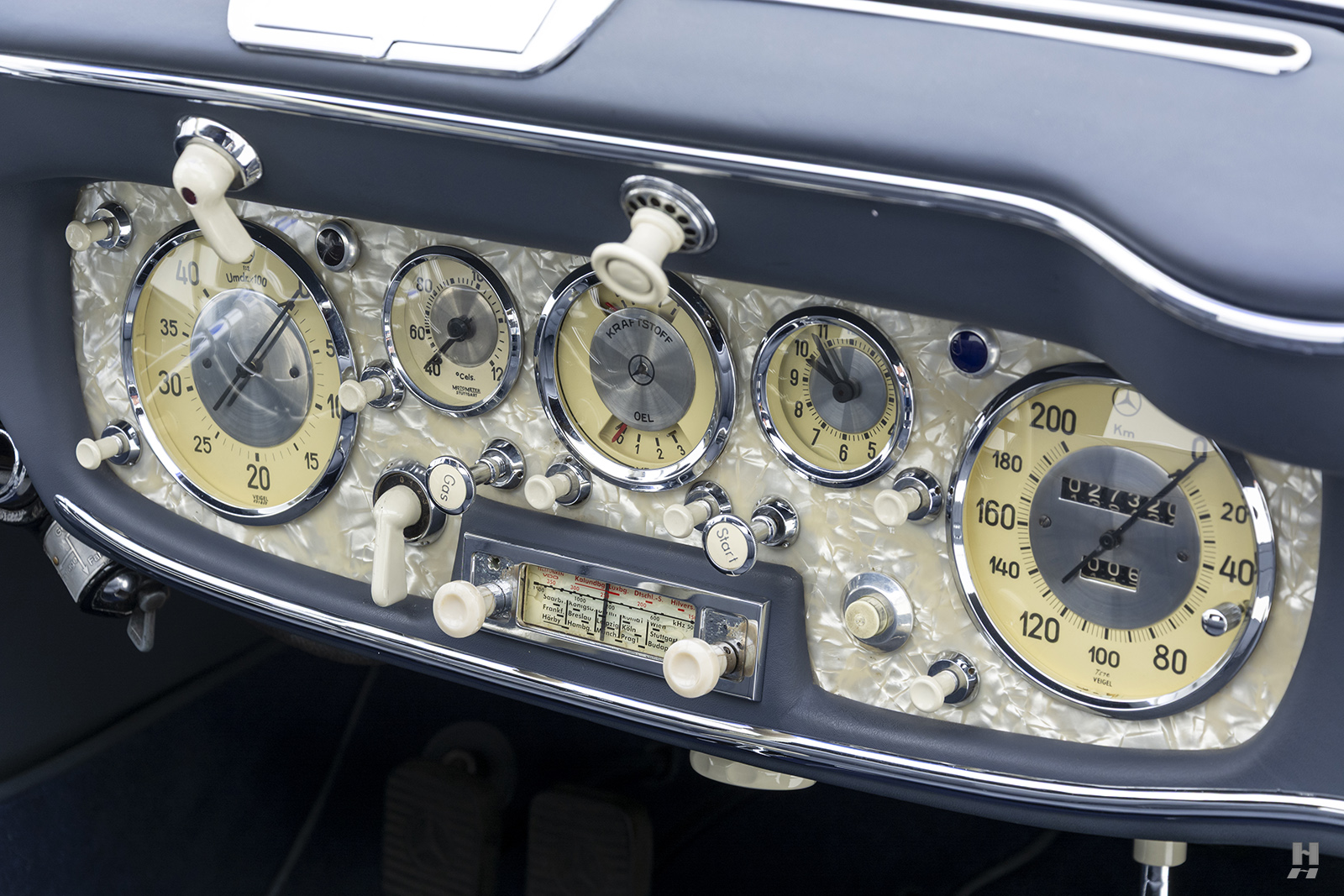
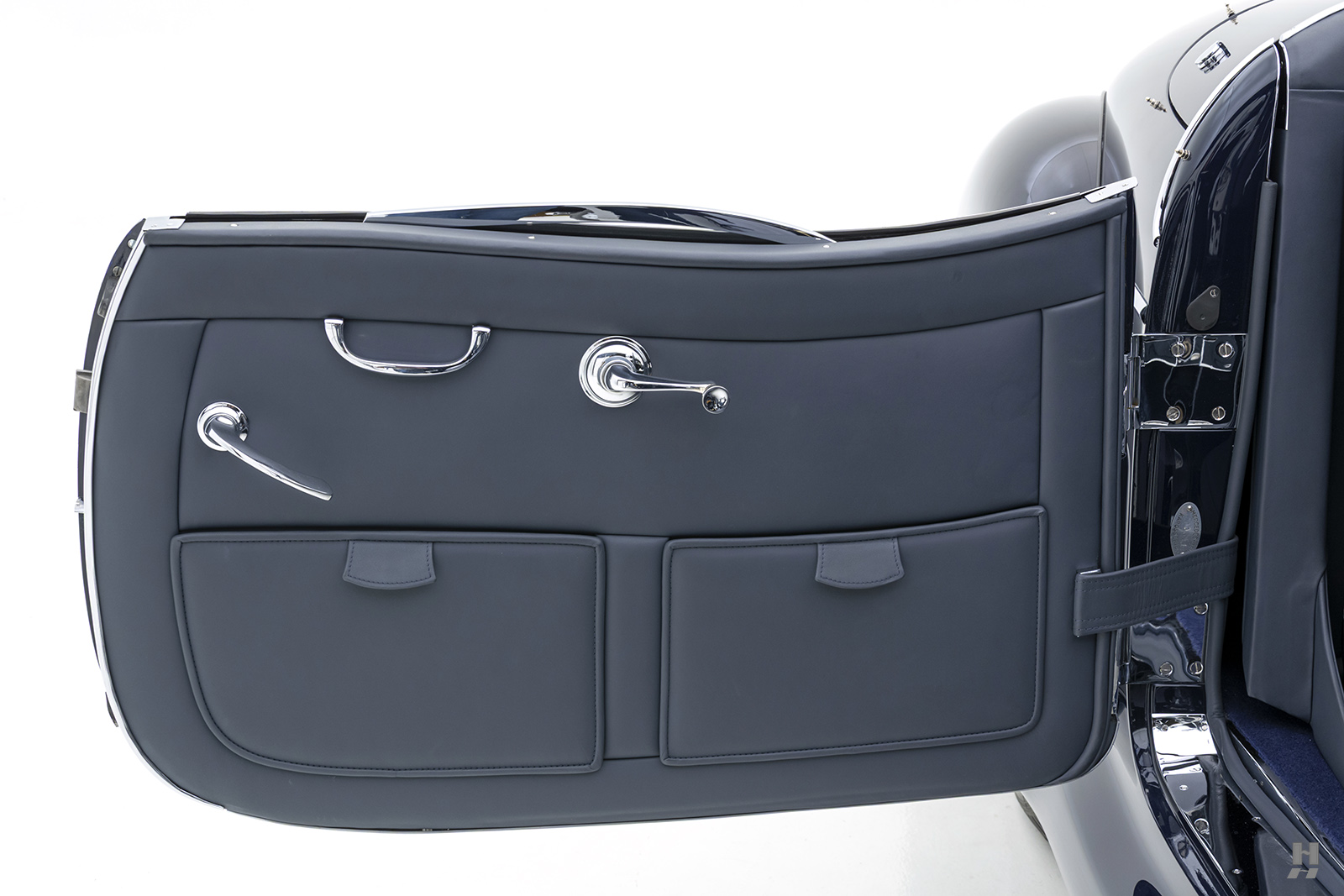
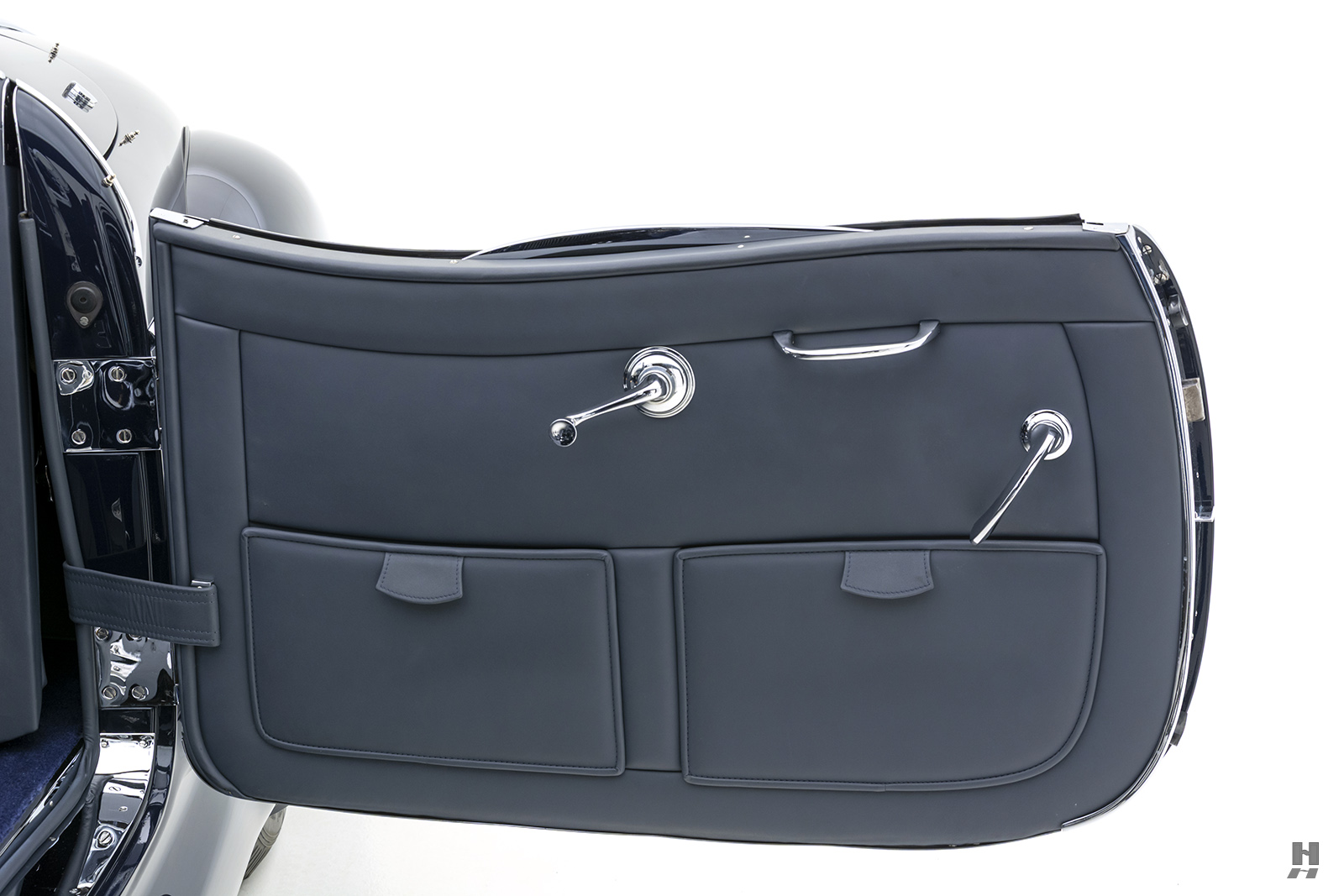
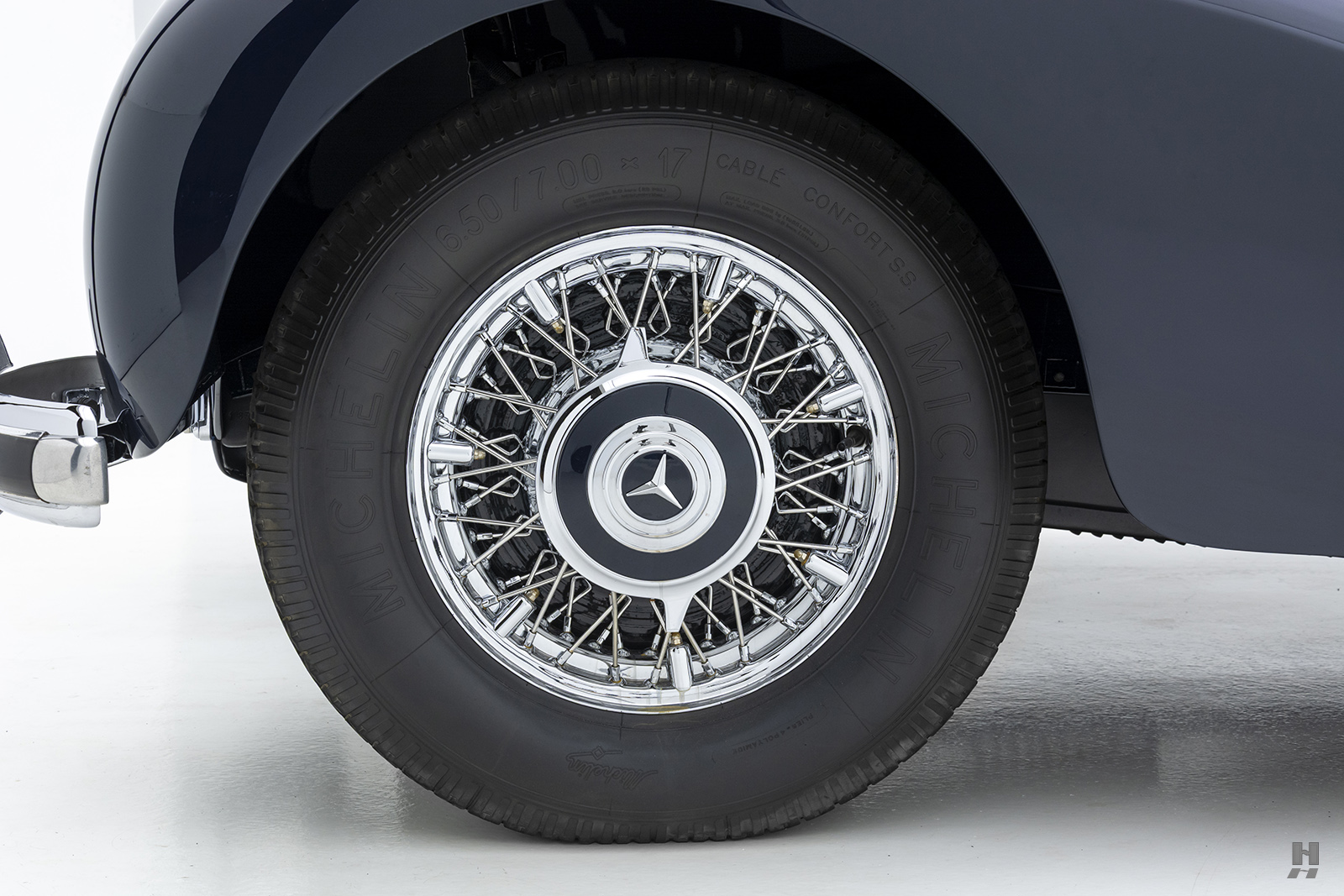
Today, chassis 408383 remains spectacular in presentation. The deep blue finish gives the enormous body a restrained elegance, while the bright wire wheels, exposed exhaust, subtle chrome accents, and mother-of-pearl instrument panel provide just enough contrast to draw attention to the details without overwhelming the design. Inside, blue leather and a beautifully preserved dashboard create a cockpit that feels both luxurious and purposeful, particularly when viewed over the long bonnet stretching ahead.
Mechanically, the 540 K retains the attributes that made the model legendary. The 5.4-liter supercharged straight-eight delivers its power with tremendous smoothness, while the five-speed gearbox makes this late example particularly well suited to sustained touring. Fully independent suspension and the carefully developed chassis give the car a composure that belies its immense scale, reinforcing the fact that the Special Roadster was intended not merely to impress at the curb, but to cover great distances at speed.
What separates this car from even other great 540 Ks is the clarity of its identity. It was ordered by a man whose professional and personal life revolved around aesthetics, created within Sindelfingen’s special coachbuilding department, and shaped with features that exist nowhere else. It then survived war, Soviet occupation, years of everyday use in Moscow, an improbable escape across the Iron Curtain, and decades in some of America’s most respected collections.
All of that history remains visible in a car whose design still feels remarkably modern. The long, skirted fenders, set-back radiator, cut-down doors, absence of running boards, disappearing top, and tapered chrome beltline give Horn’s Special Roadster a tautness and simplicity that distinguish it from the more familiar long-tail 540 K roadsters.
Delivered at the very end of the great coachbuilt era, chassis 408383 represents both a culmination and a glimpse of what might have followed. It combines the grandeur of the classic supercharged Mercedes-Benz with the streamlined thinking that would increasingly shape automobile design after the war.
Offers welcome and trades considered.
$6,000,000
Stock number 8127
For immediate assistance please call us at +1-314-524-6000 or please fill out the following form and a member of our team will contact you.