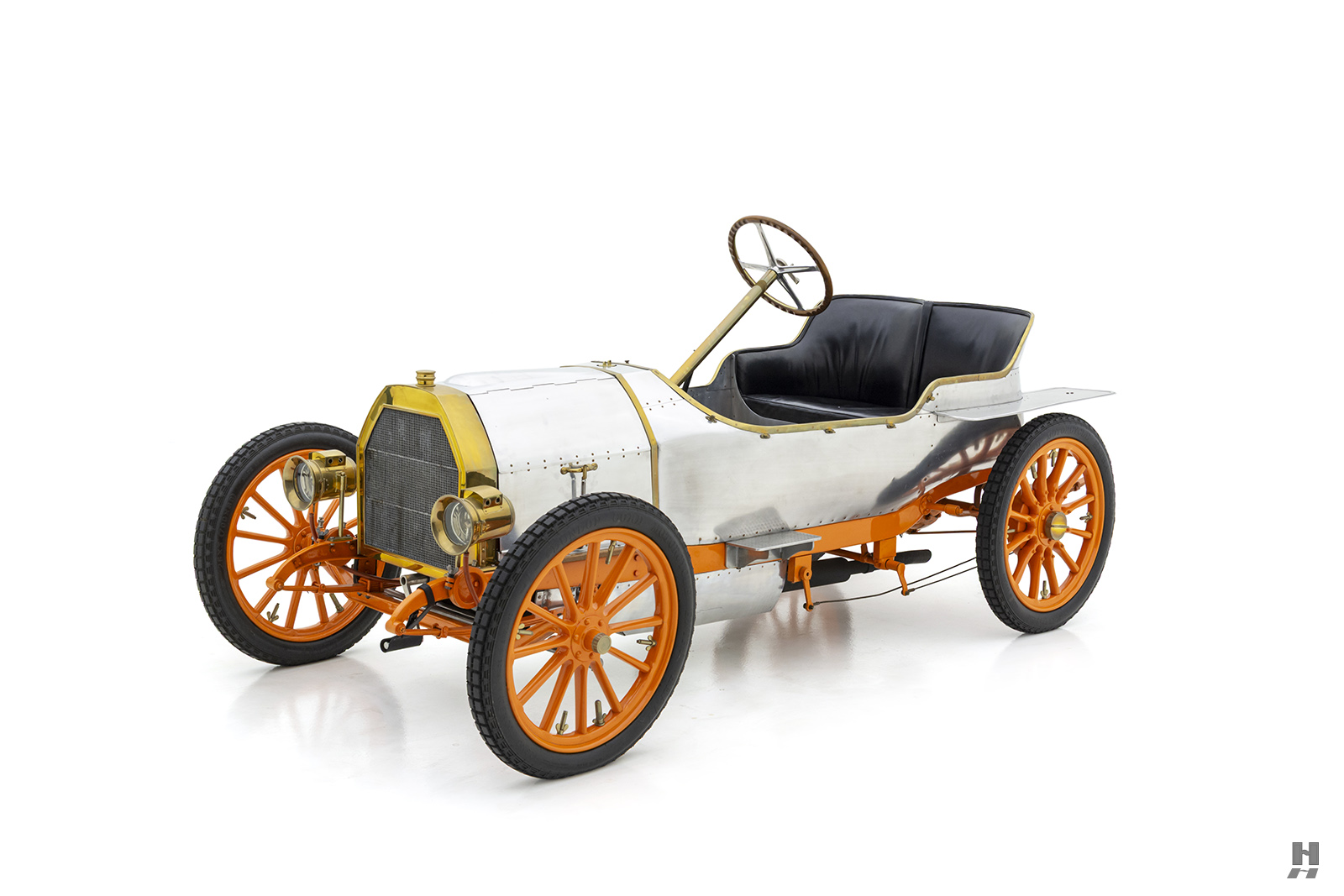
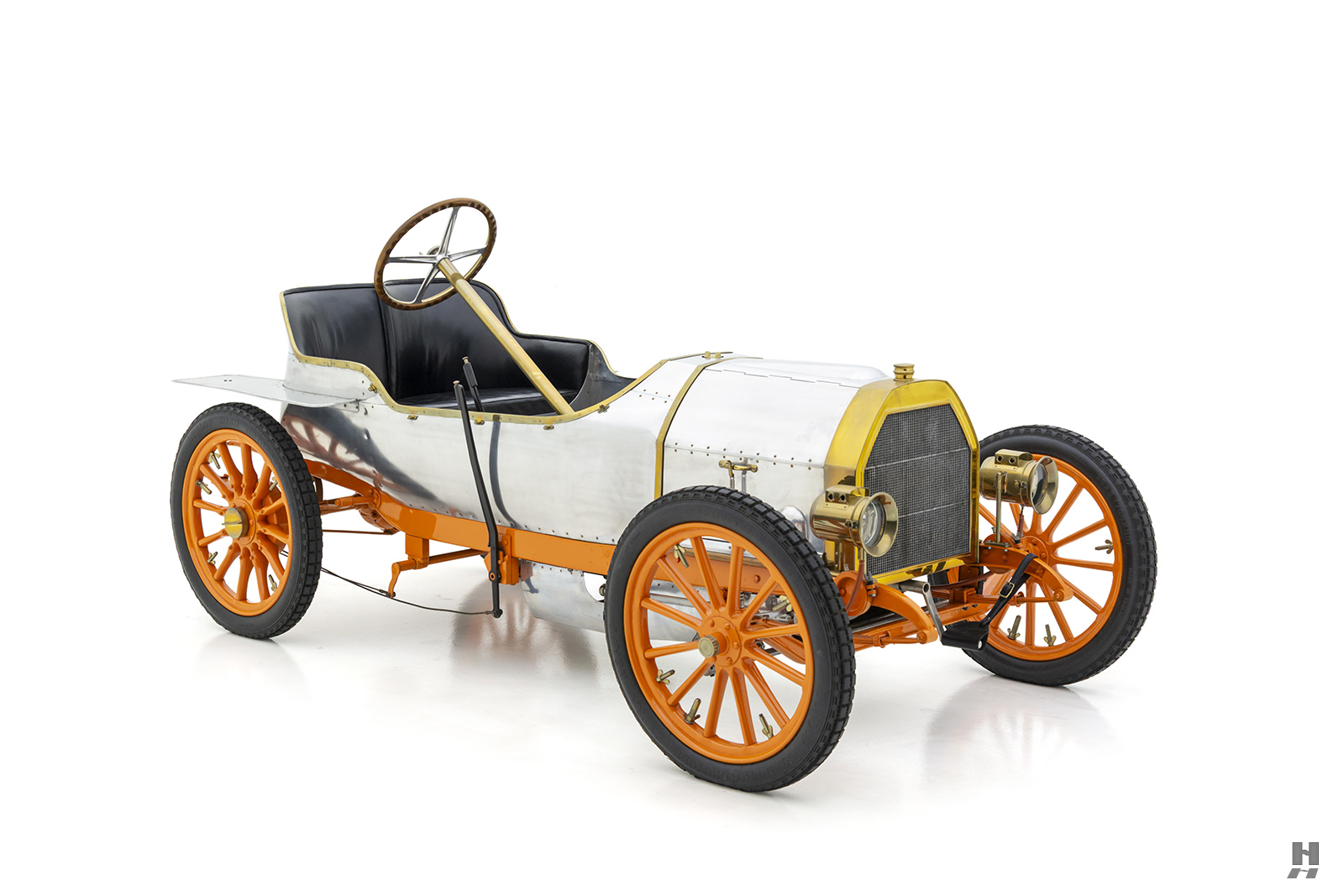
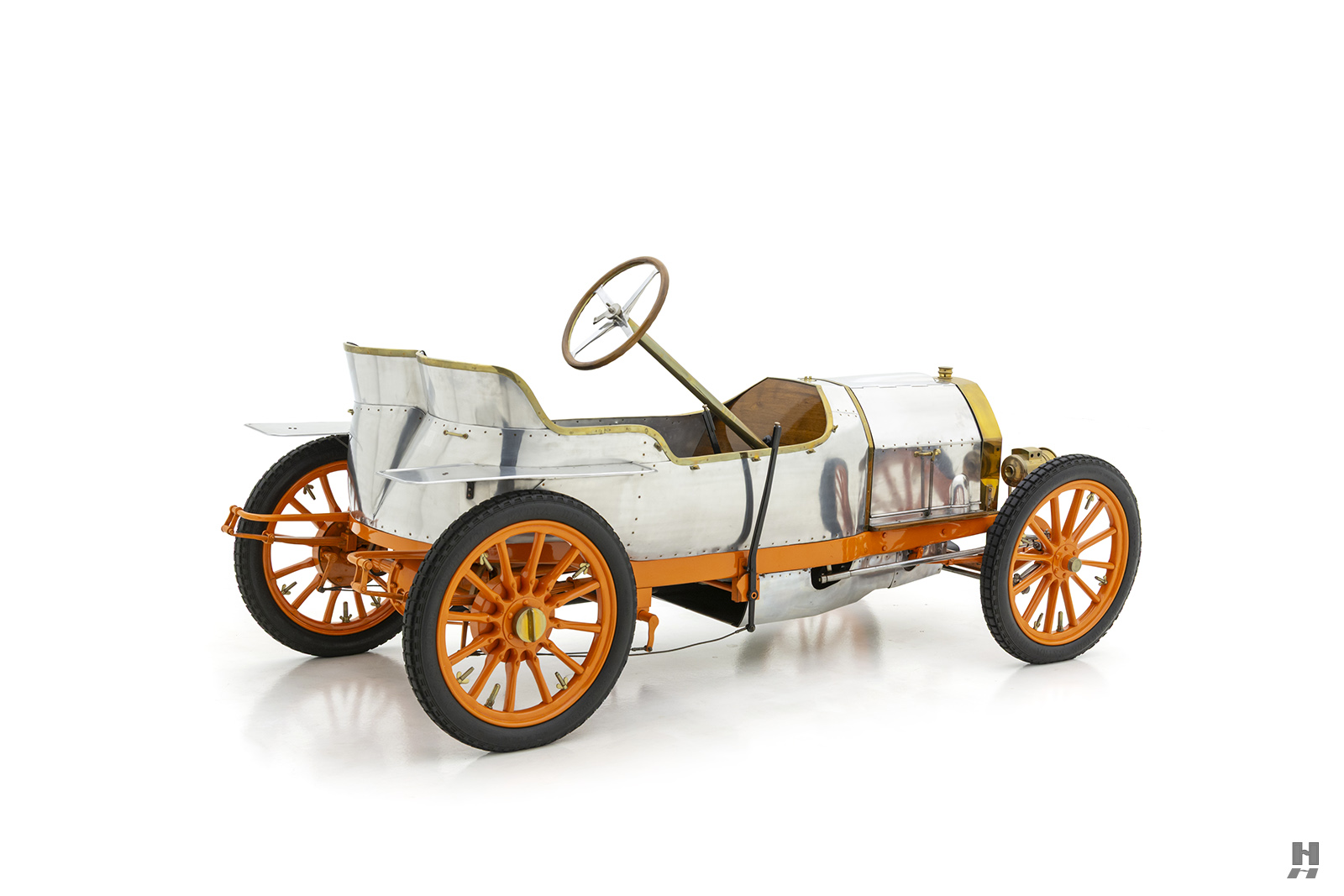
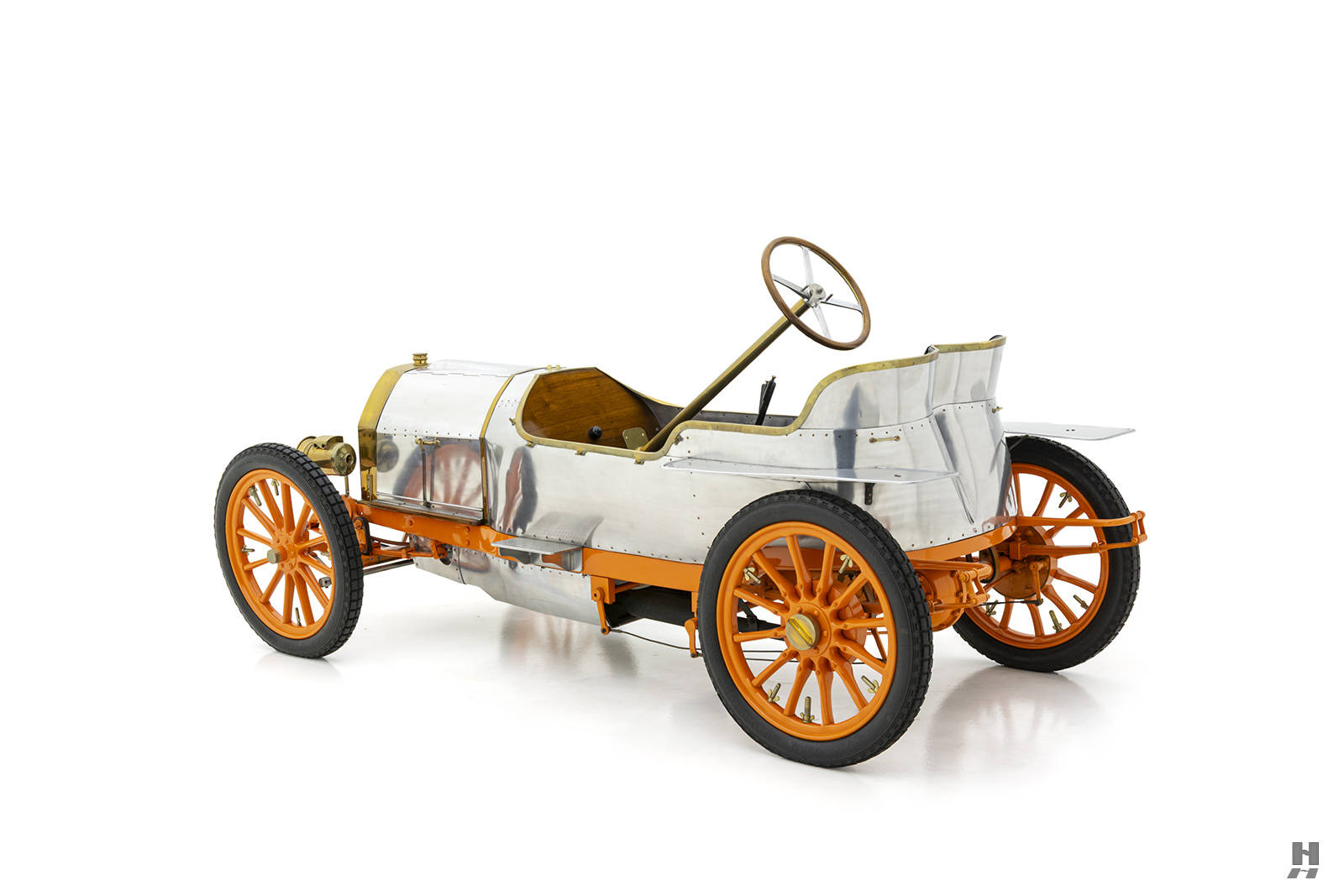
Chassis 10
- The genesis of Bugatti Automobiles
- Designed and built in Ettore’s home in Cologne, Germany
- The blueprint for the first production model, the Type 13
- Retained by the Bugatti family until Ettore’s death in 1947
- Discovered in the early 1960s by marque experts Antoine Rafaelli and Jean de Dobeleer
- Acquired and restored by the William F. Harrah Collection in 1971
- Offered from the famed Lyon Family Collection, where it has resided since 1986
Ettore Bugatti’s Early Days
Born in Italy of a richly talented artistic family, Ettore Bugatti was undoubtedly destined for greatness. His father Carlo was famous for his exceptionally crafted Art Nouveau furniture, his paternal grandfather, Giovanni Luigi Bugatti was an architect and sculptor, and even Ettore’s younger brother Rembrandt became renowned for his beautiful animal sculptures. At the encouragement of his father, young Ettore pursued a technical career, focusing his studies on engineering and starting his career with an apprenticeship at one of Milan’s leading cyclecar manufacturers. He showed considerable prowess for all aspects of motor vehicle design, designing an impressively well-engineered motorized trike sold as the Prenetti & Stucchi Type 1.
His experiments with four-wheeled prototypes led to Ettore to catch the eye of Baron Adrien de Turckheim, who hired him at Lorraine-Dietrich. By 1902, Ettore served as head of technology at De Dietrich. All along, he continued designing and tinkering with projects of his own, eventually assuming the role of Production Director (chief engineer) for Deutz Gasmotoren Fabrik in Cologne, Germany. Deutz cars were renowned for superior quality, but their large and heavy nature was not to Ettore Bugatti’s taste. He recognized the European economy may not support such large, expensive cars for long, and felt a small yet sophisticated voiturette may appeal to a wider audience. Bugatti’s restless, relentless creativity fueled his desire for something different.
The Little Thoroughbred
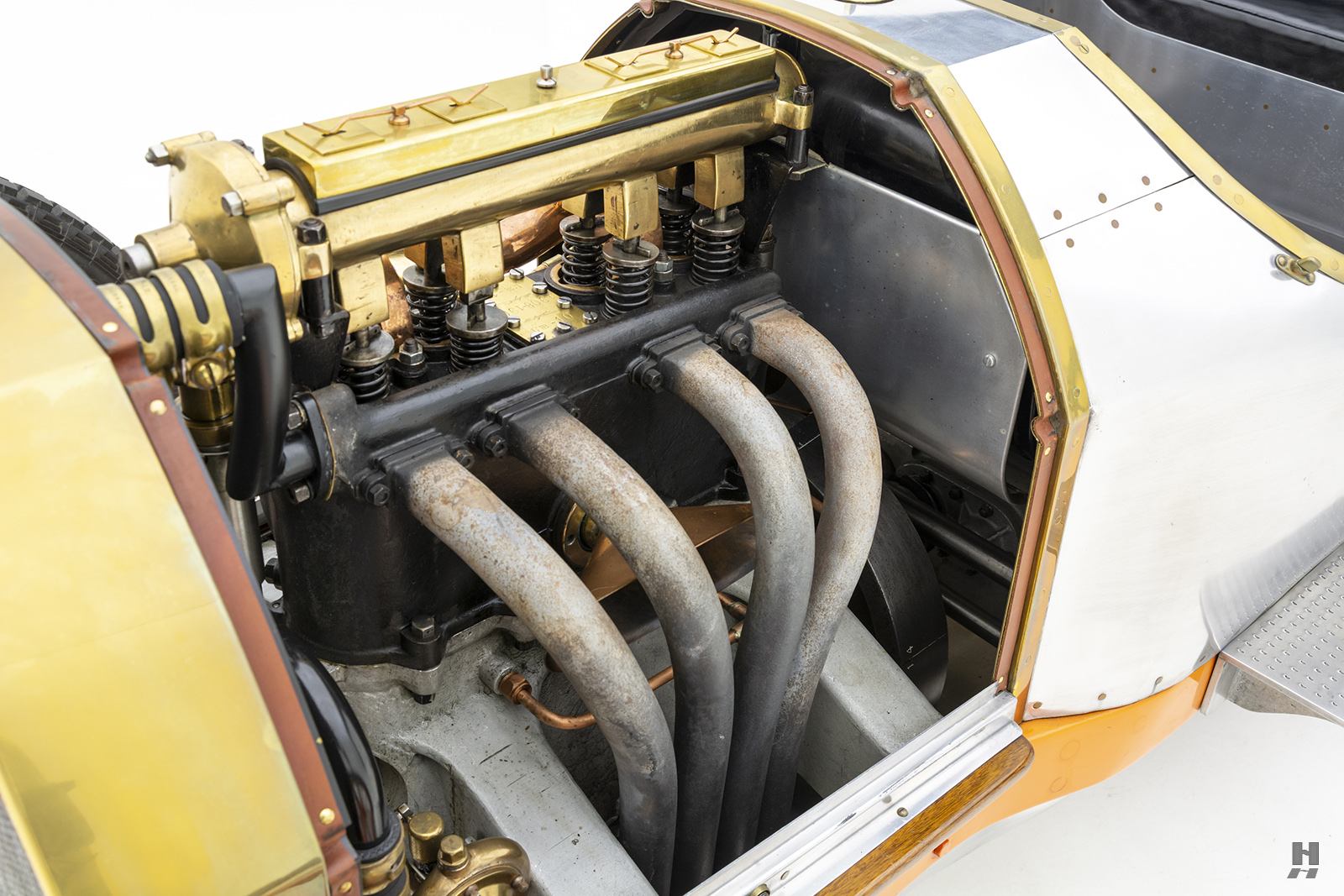
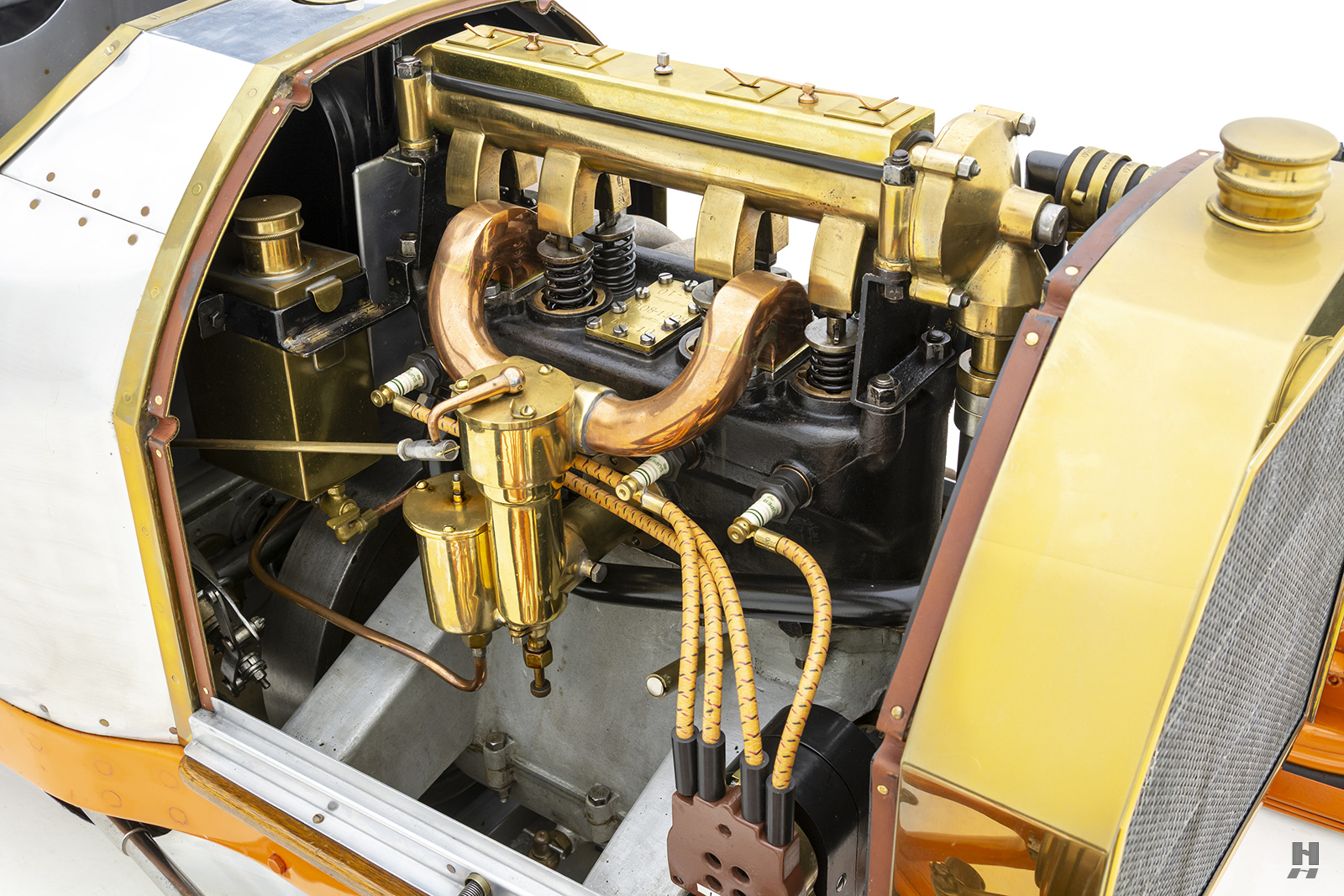
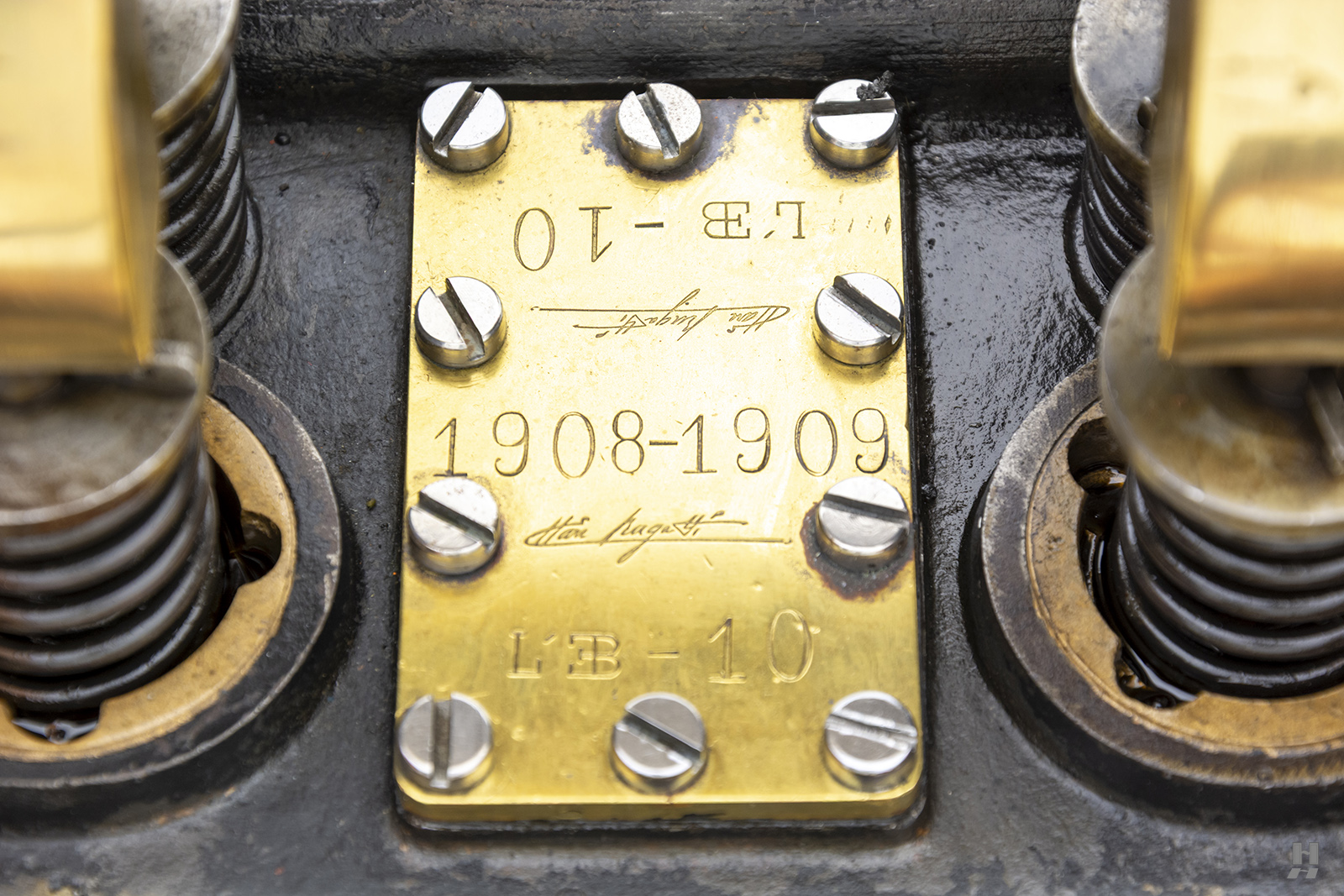
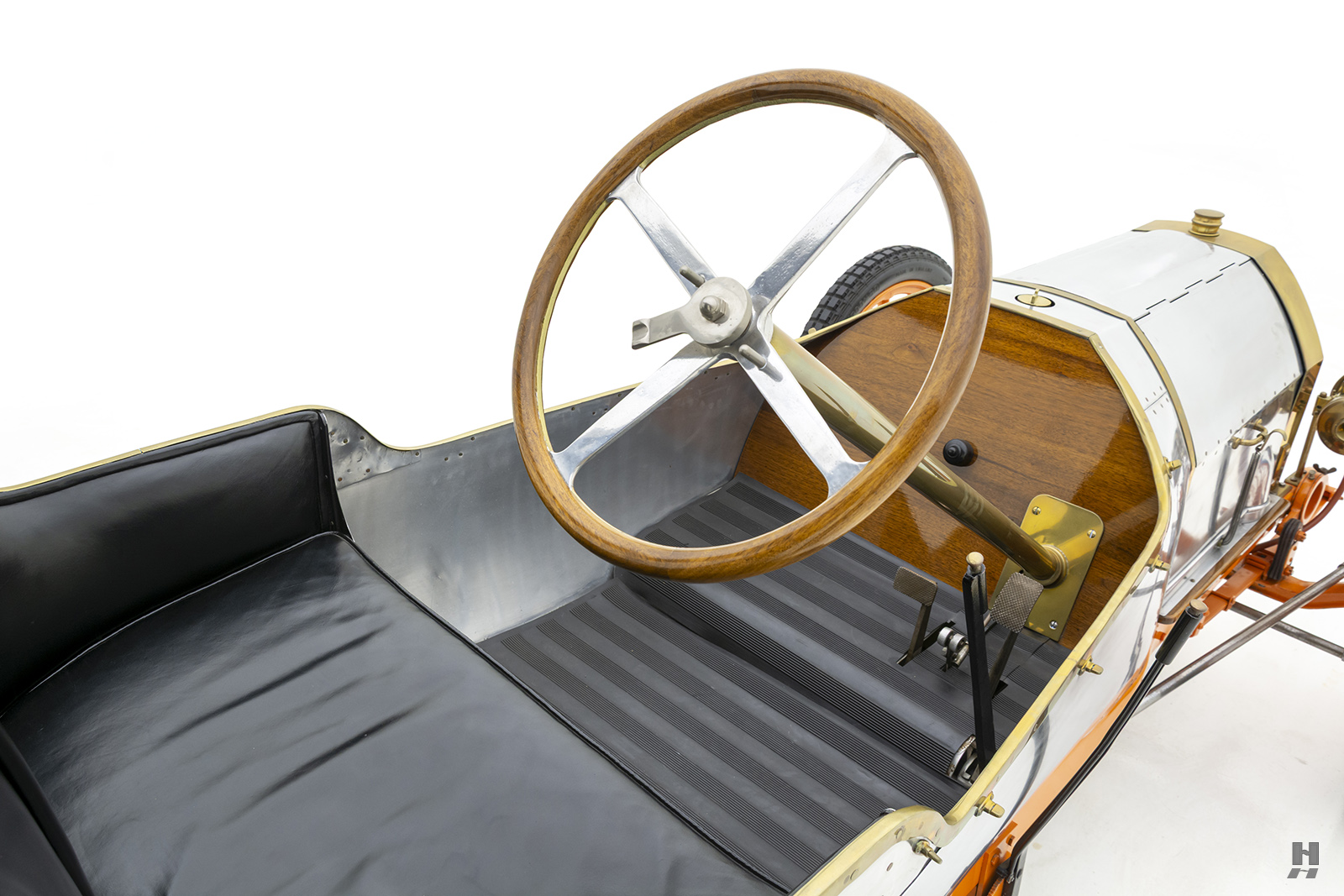
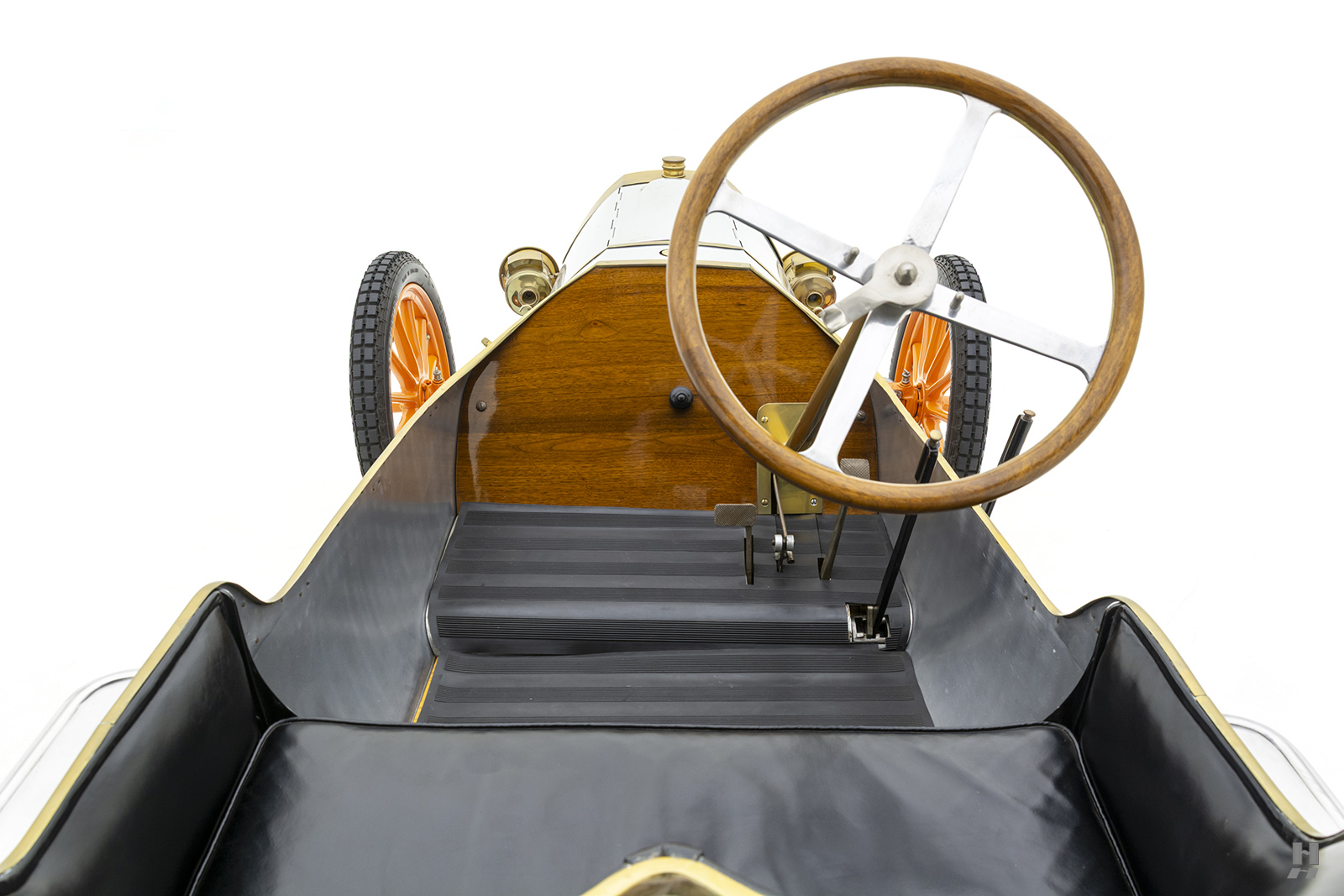
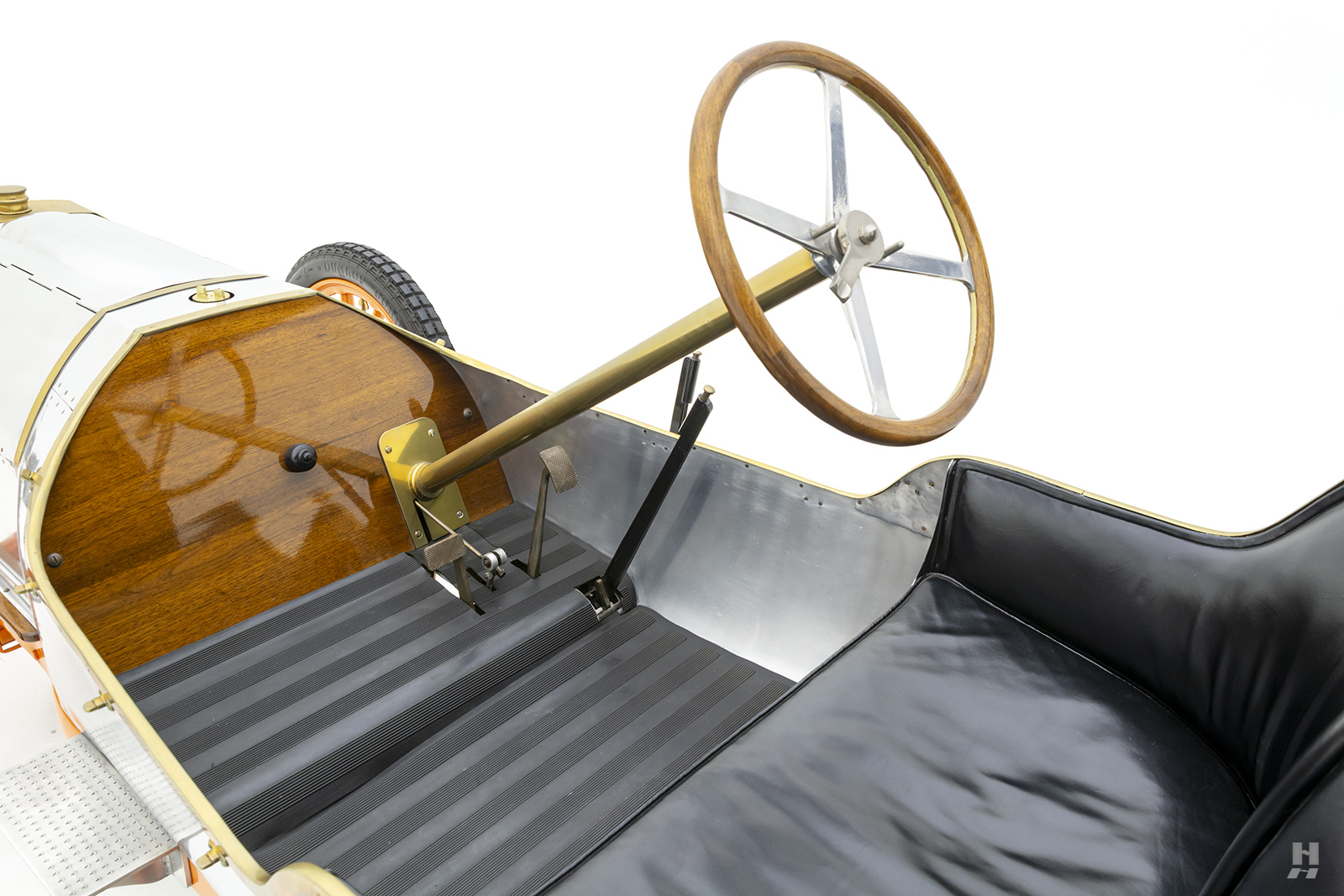
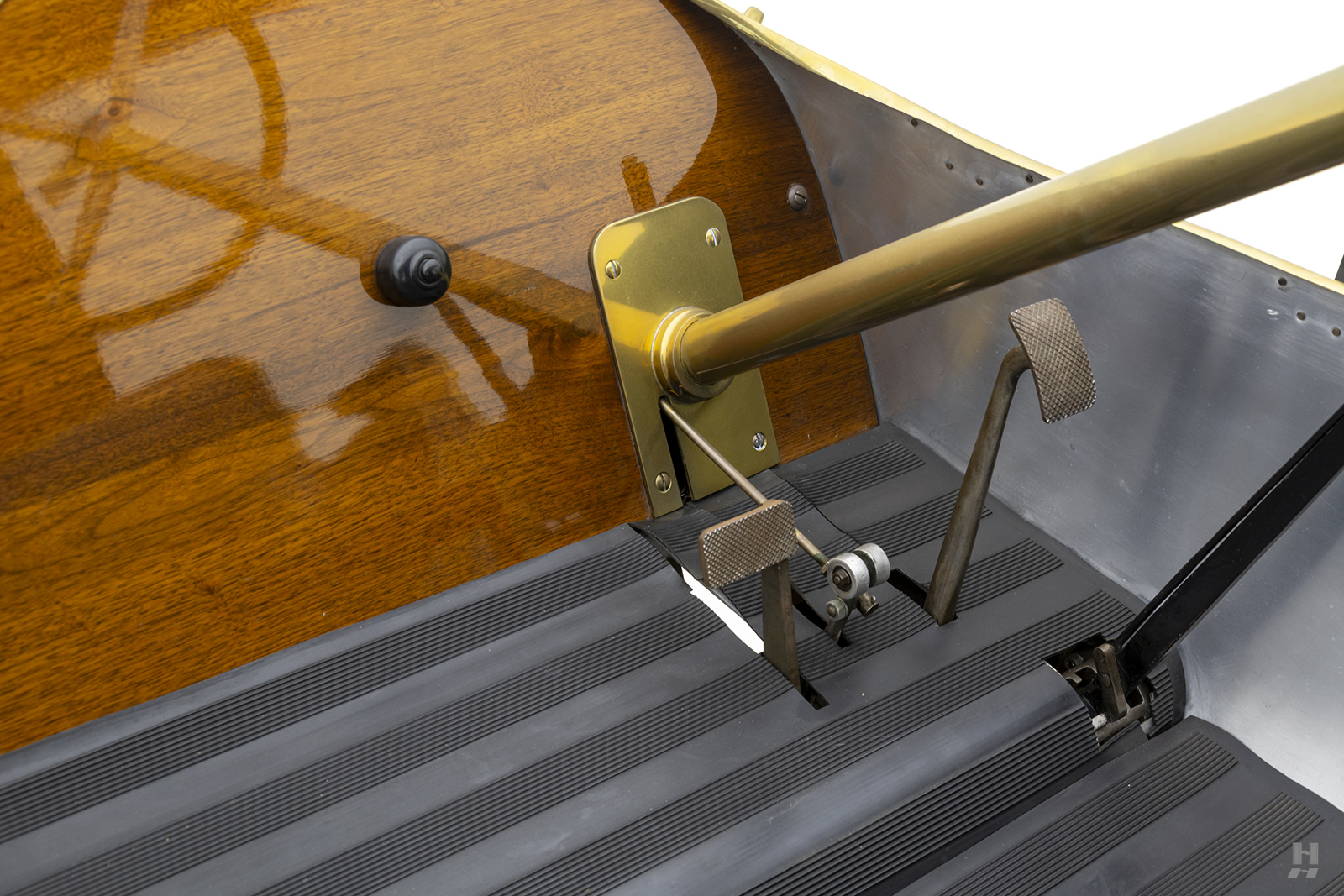
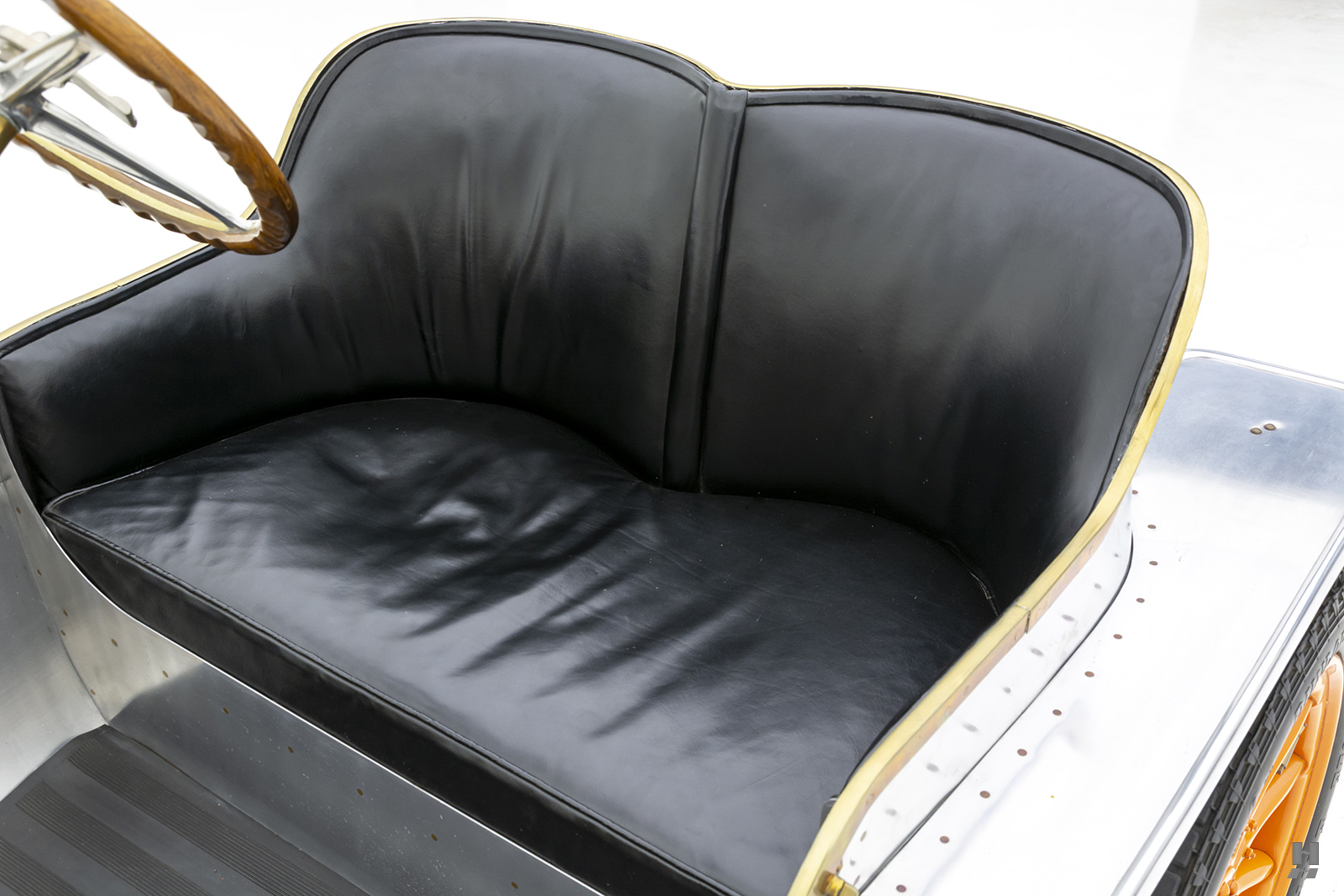
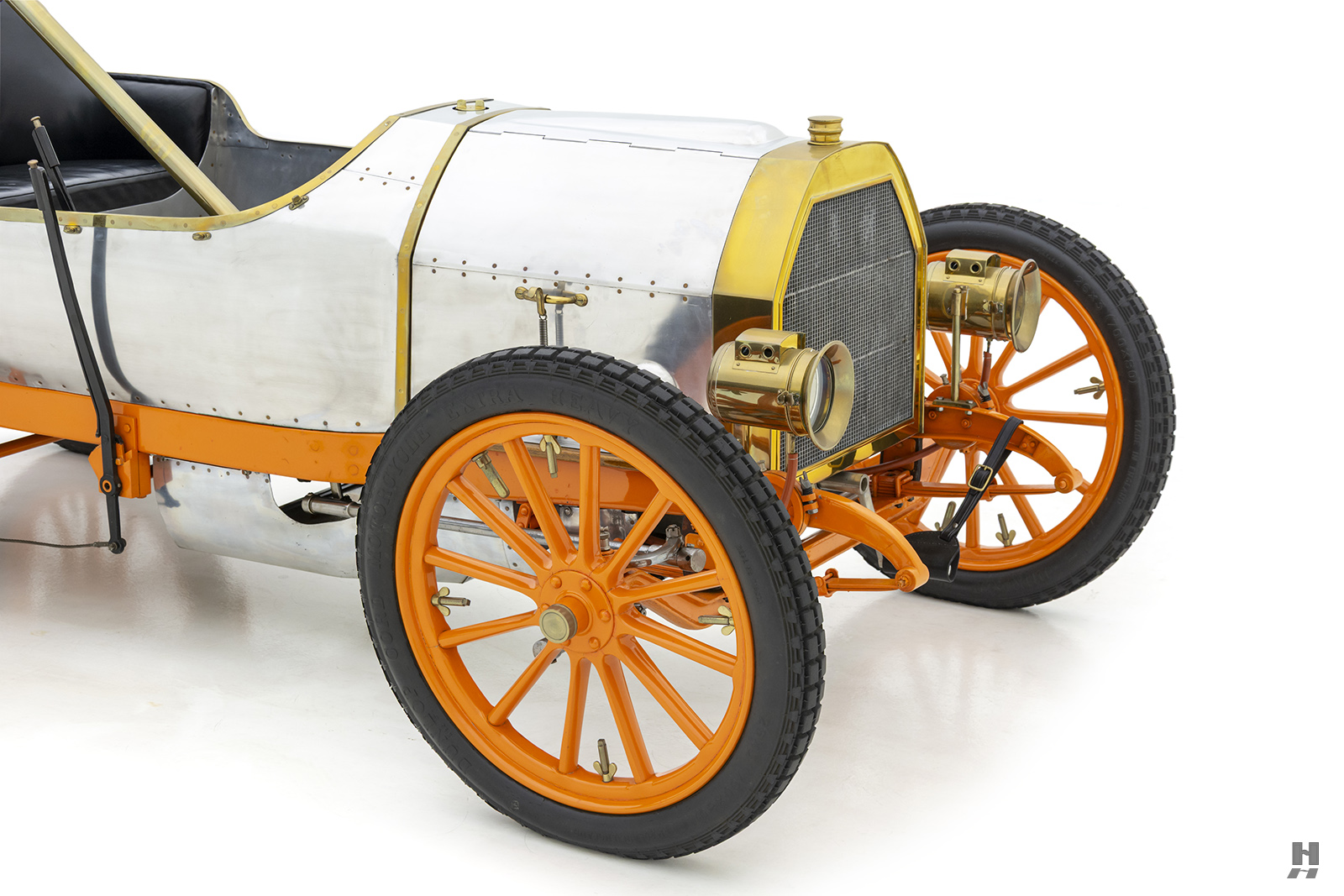
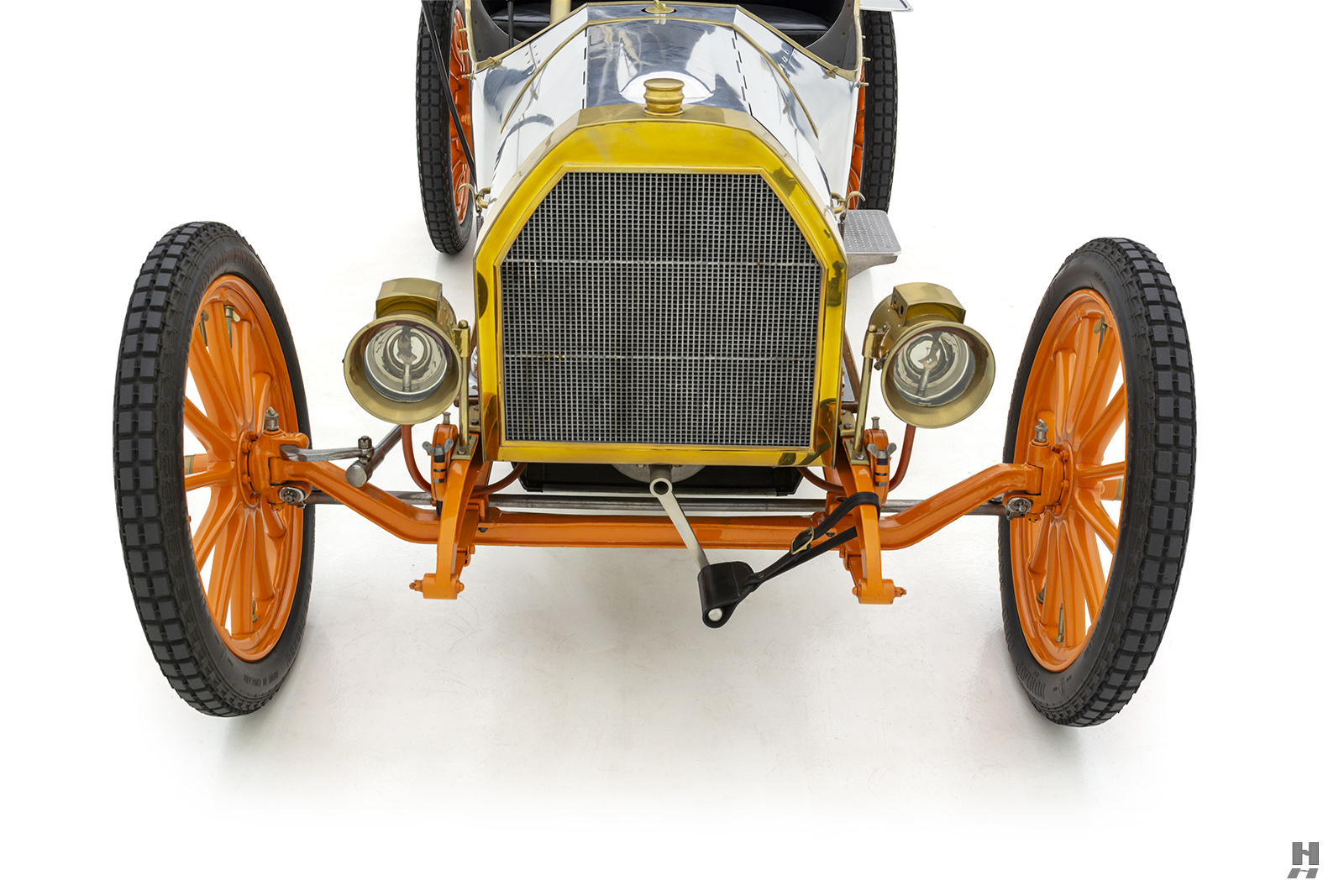
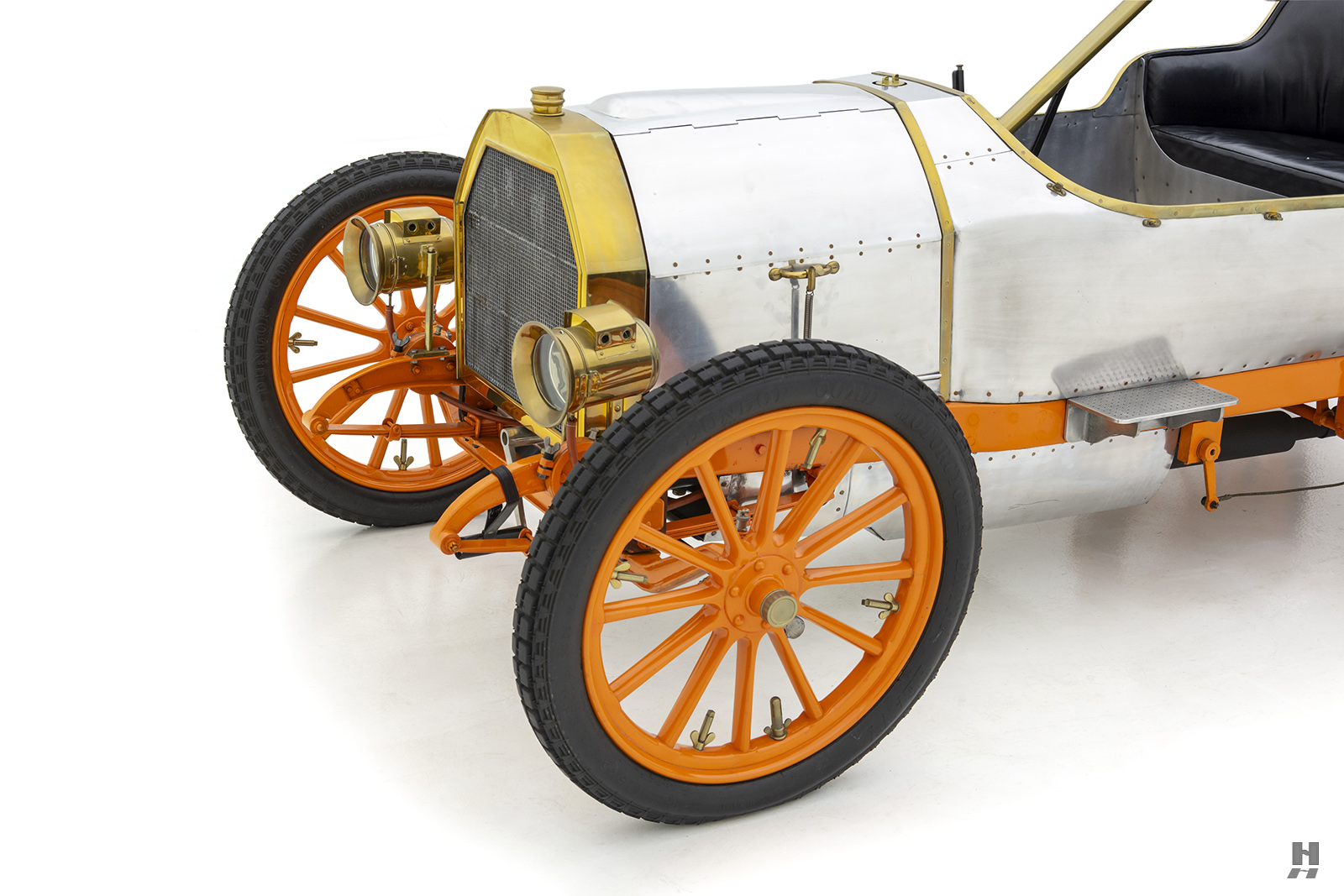
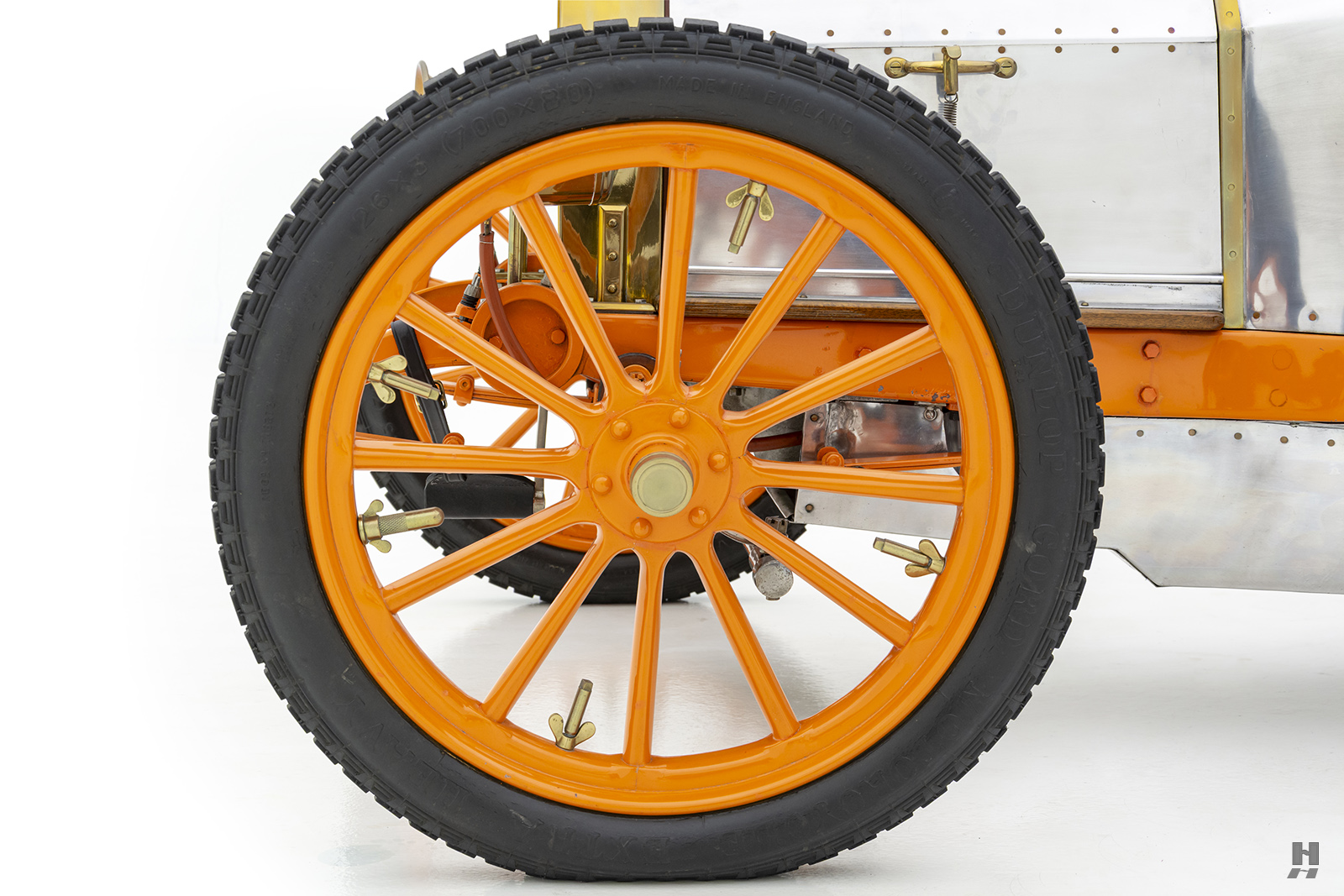
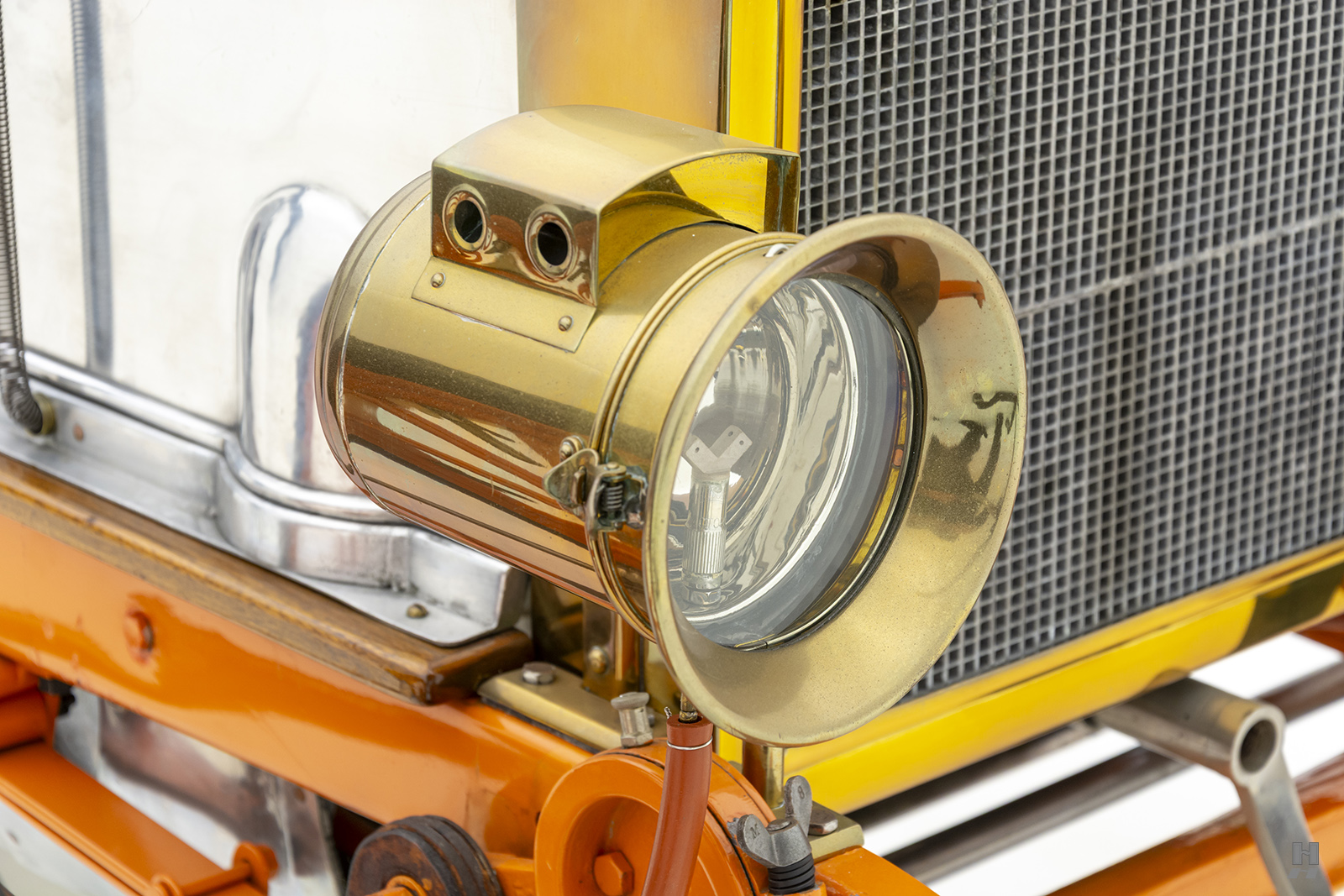
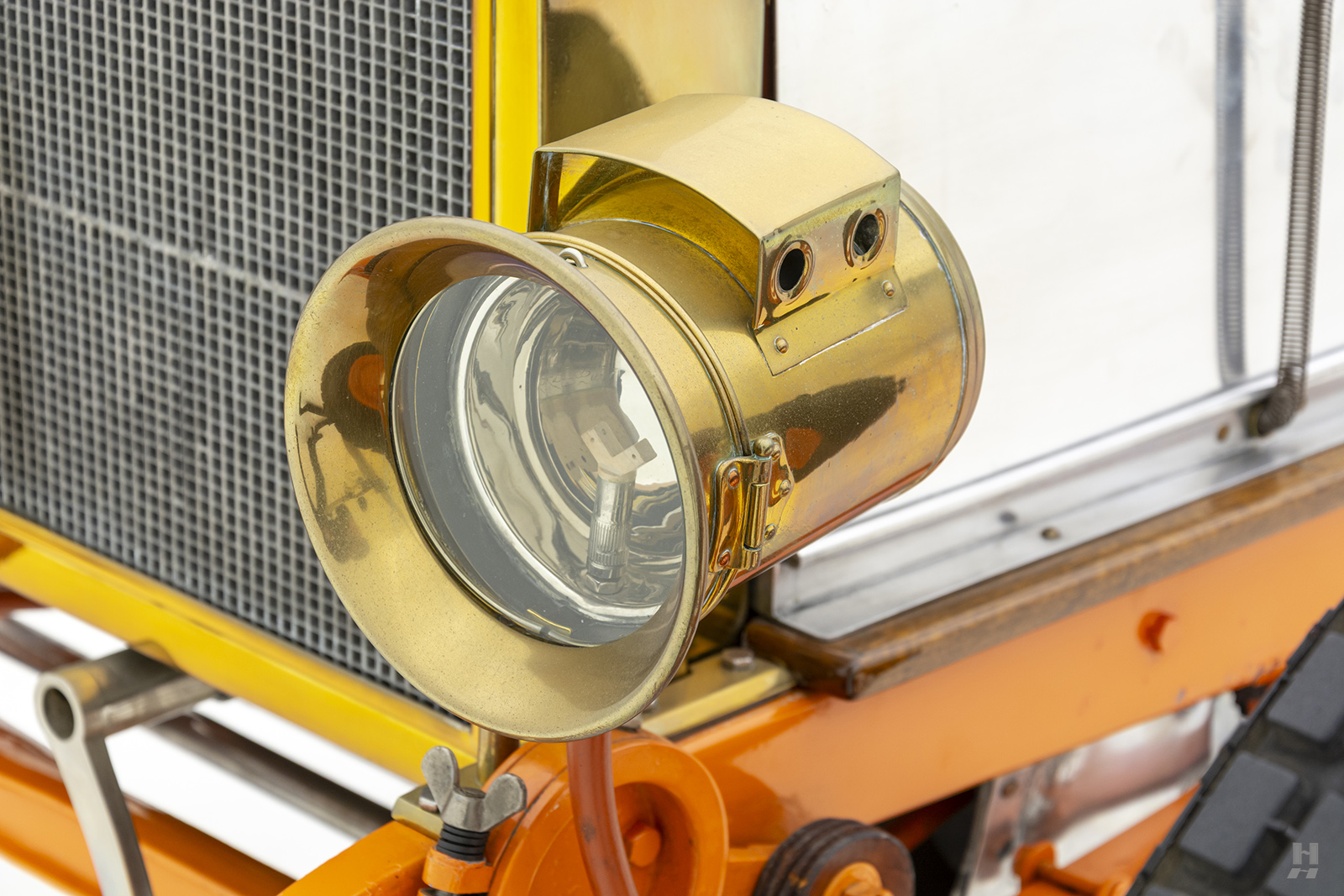
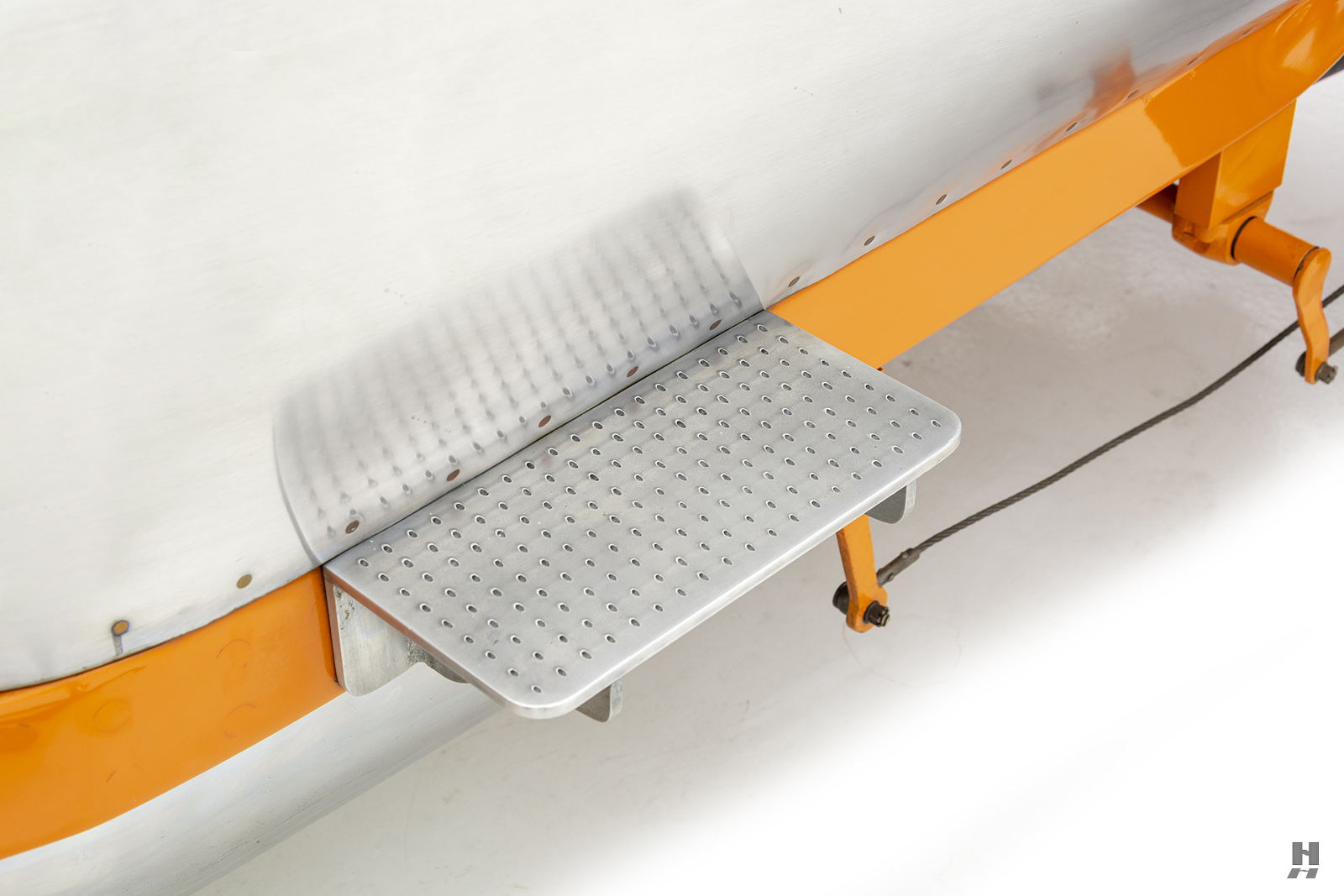
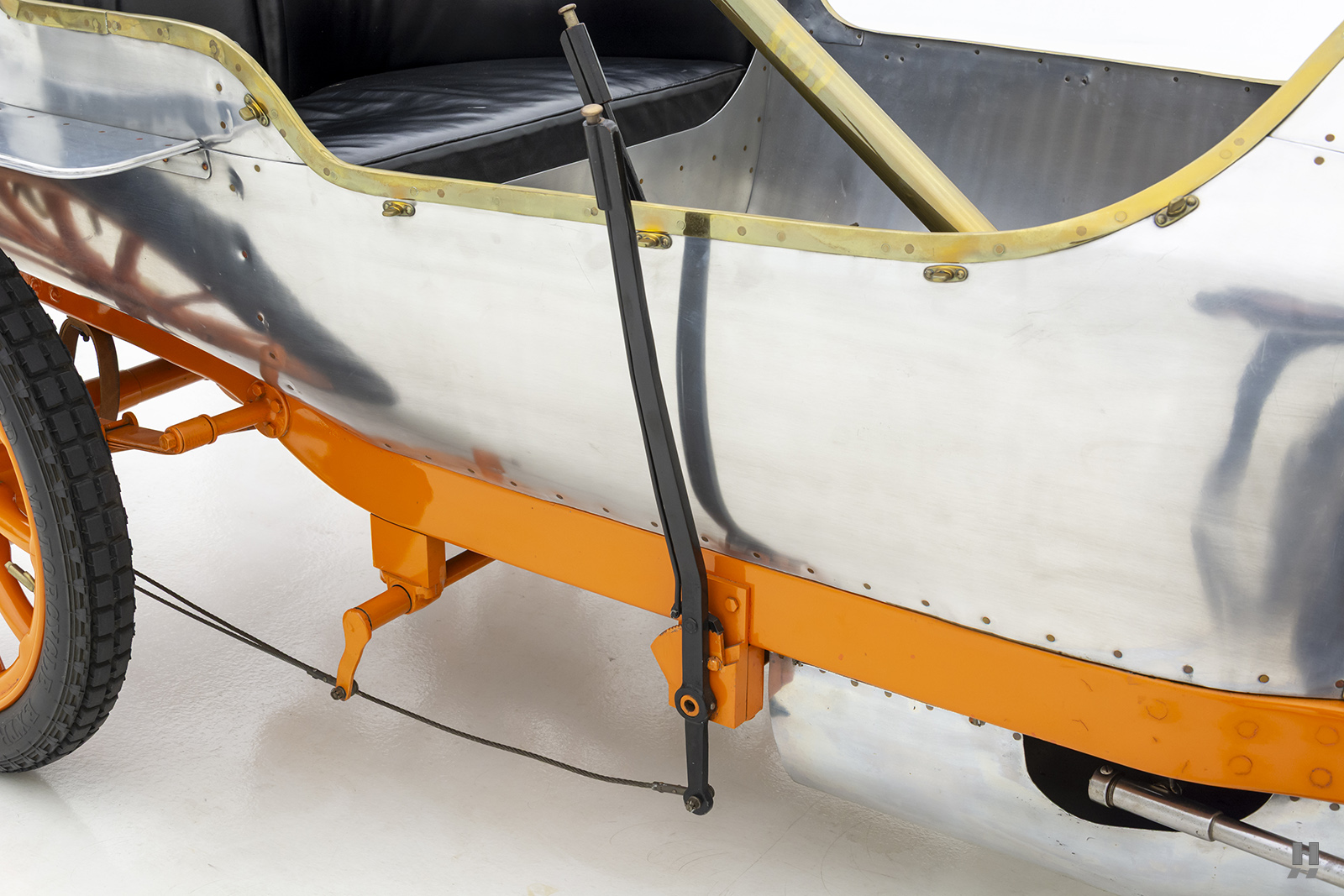
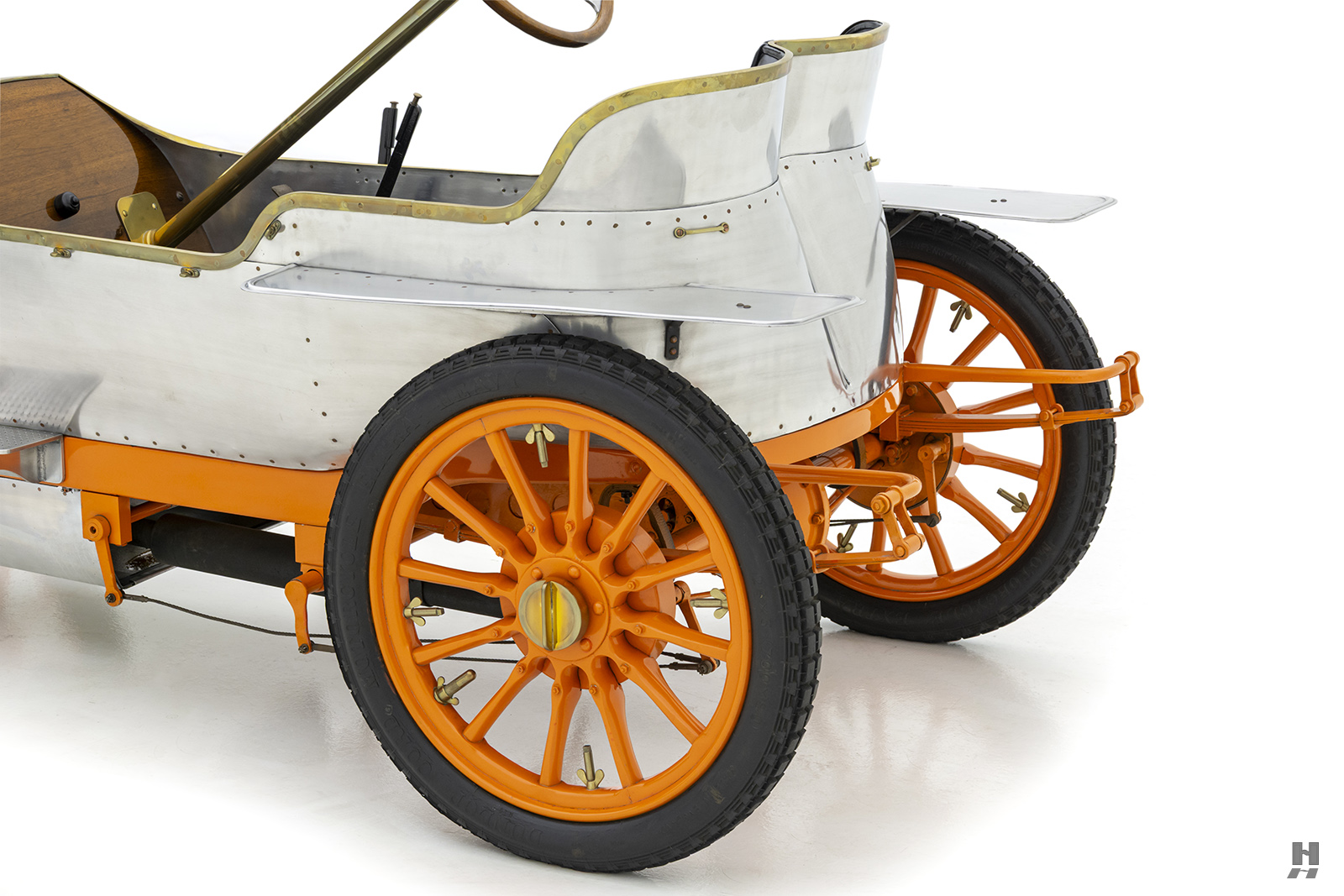
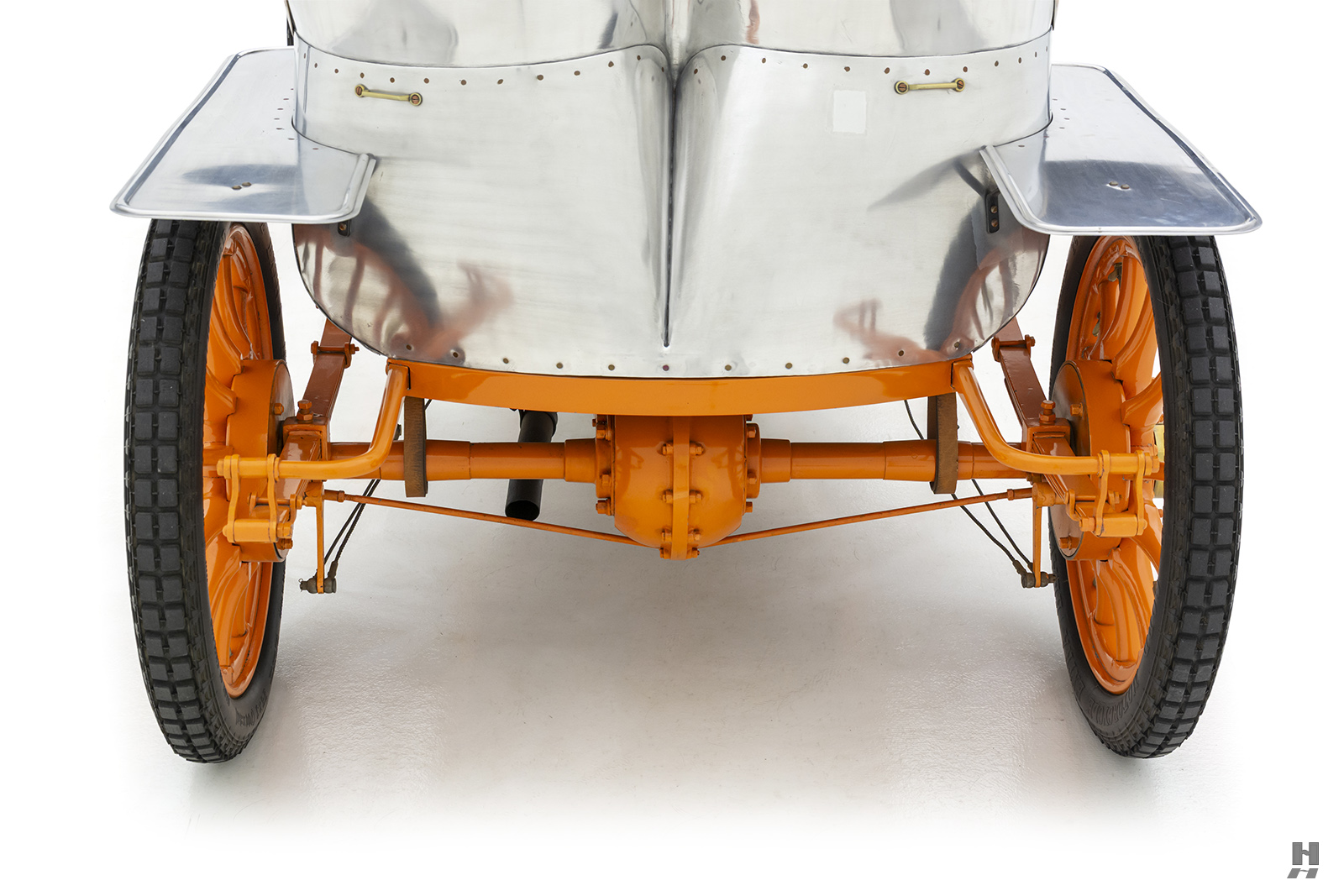
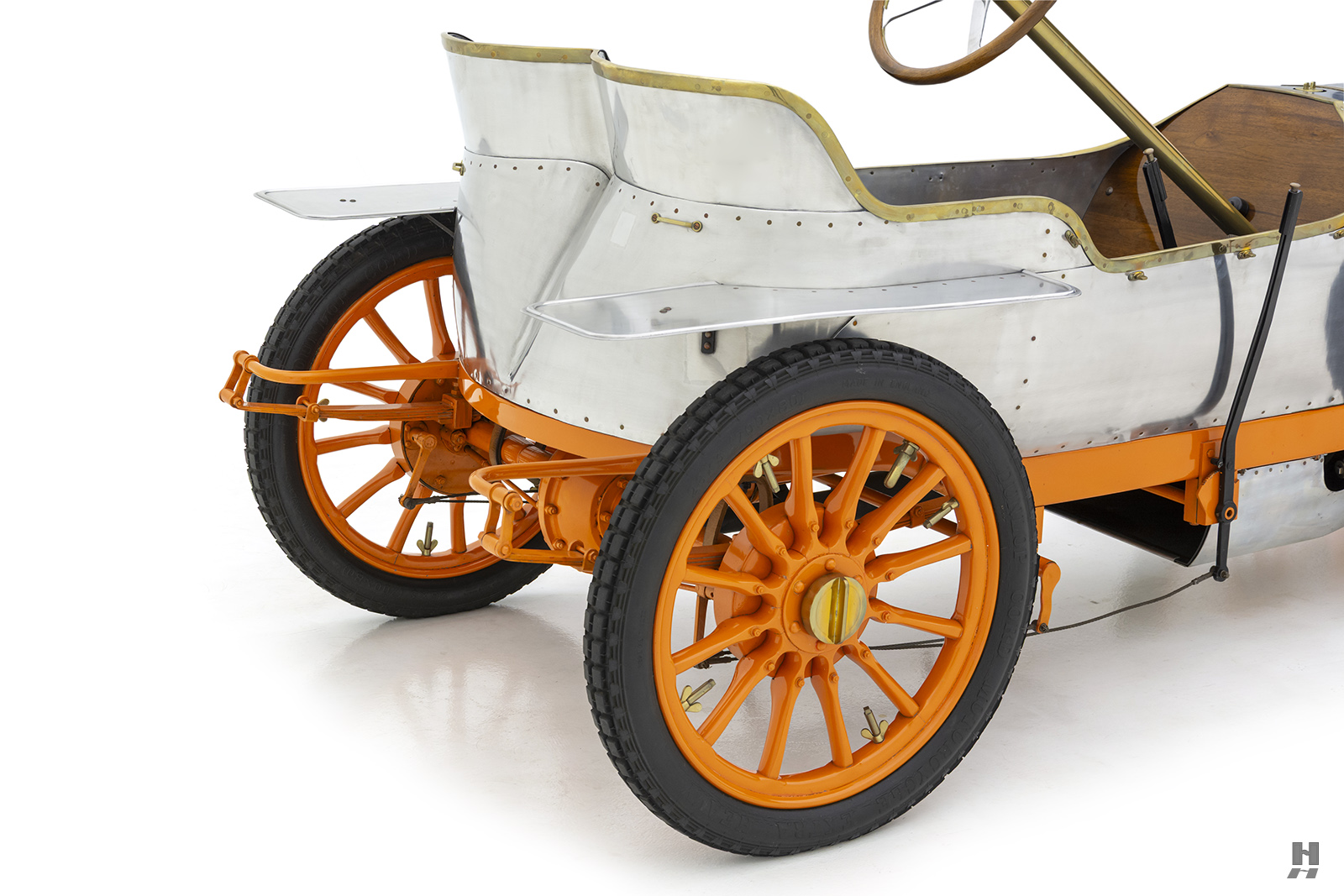
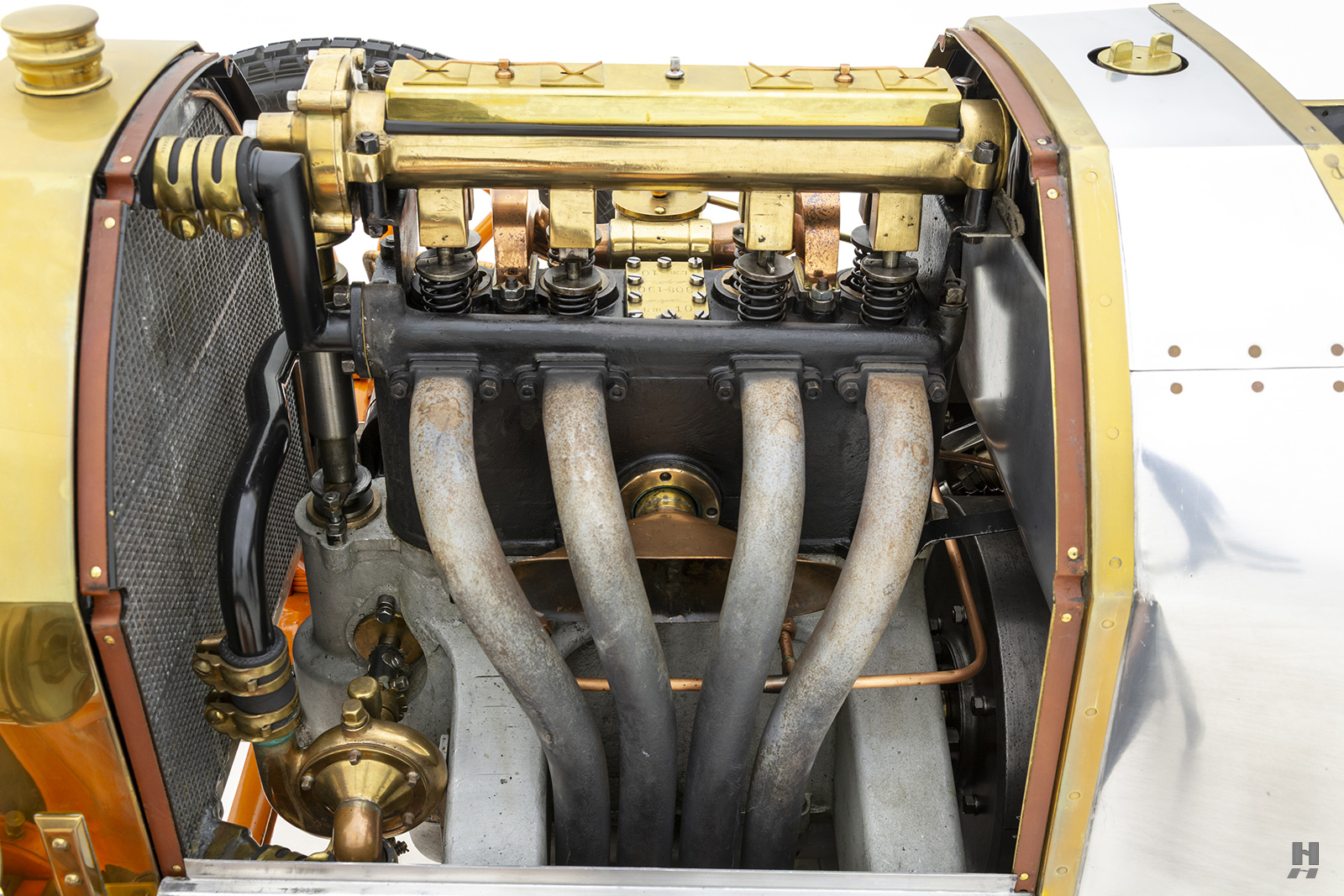
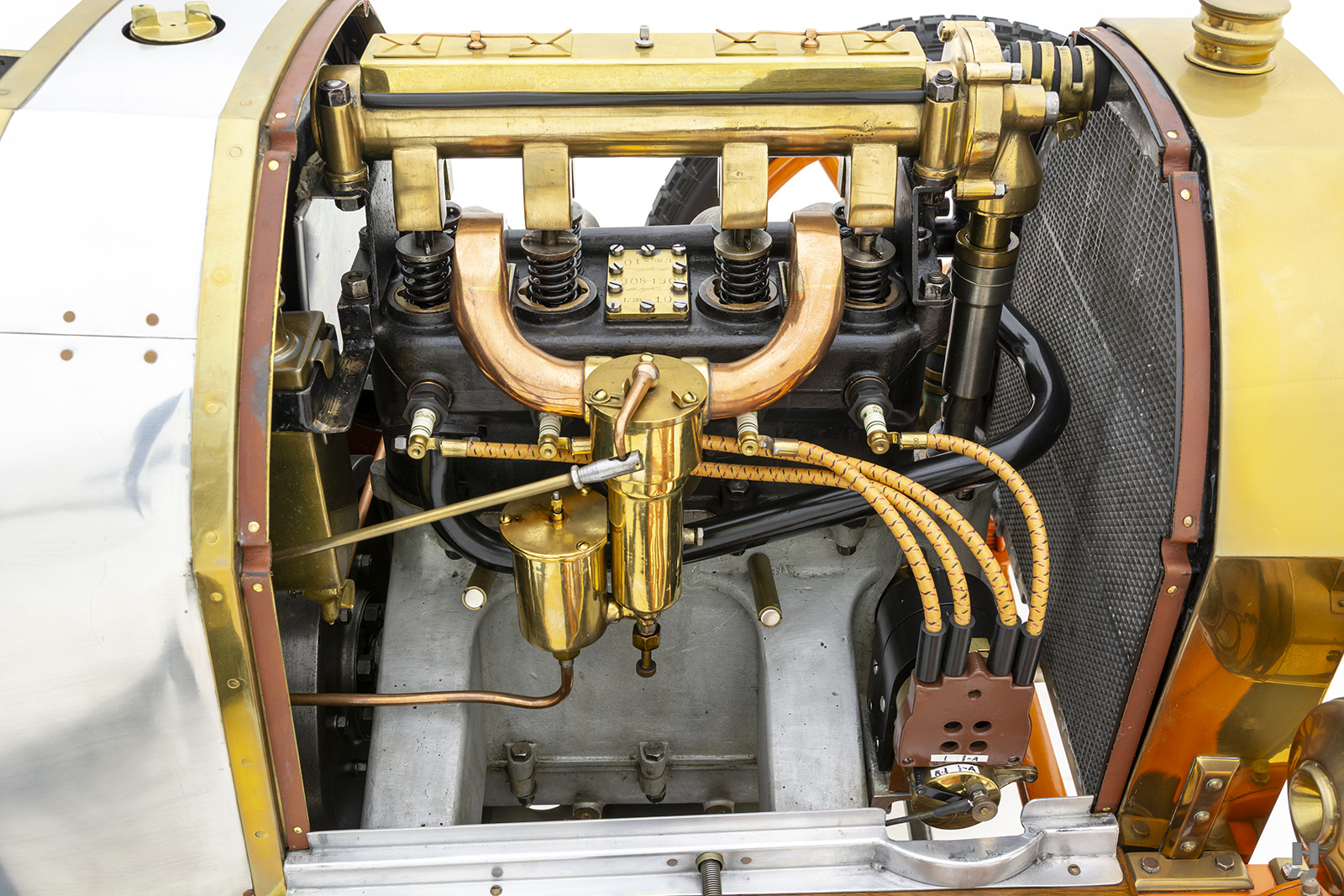
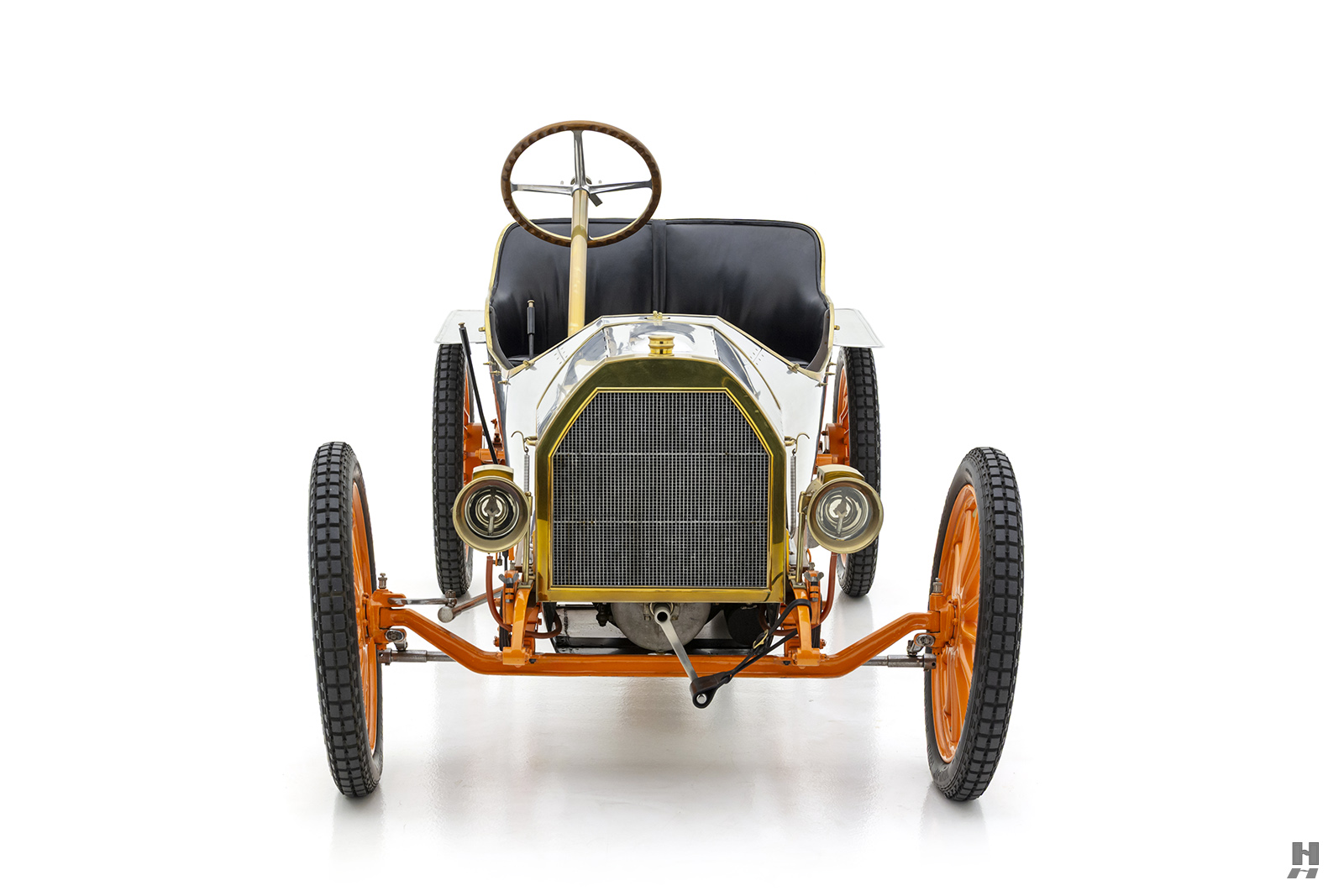
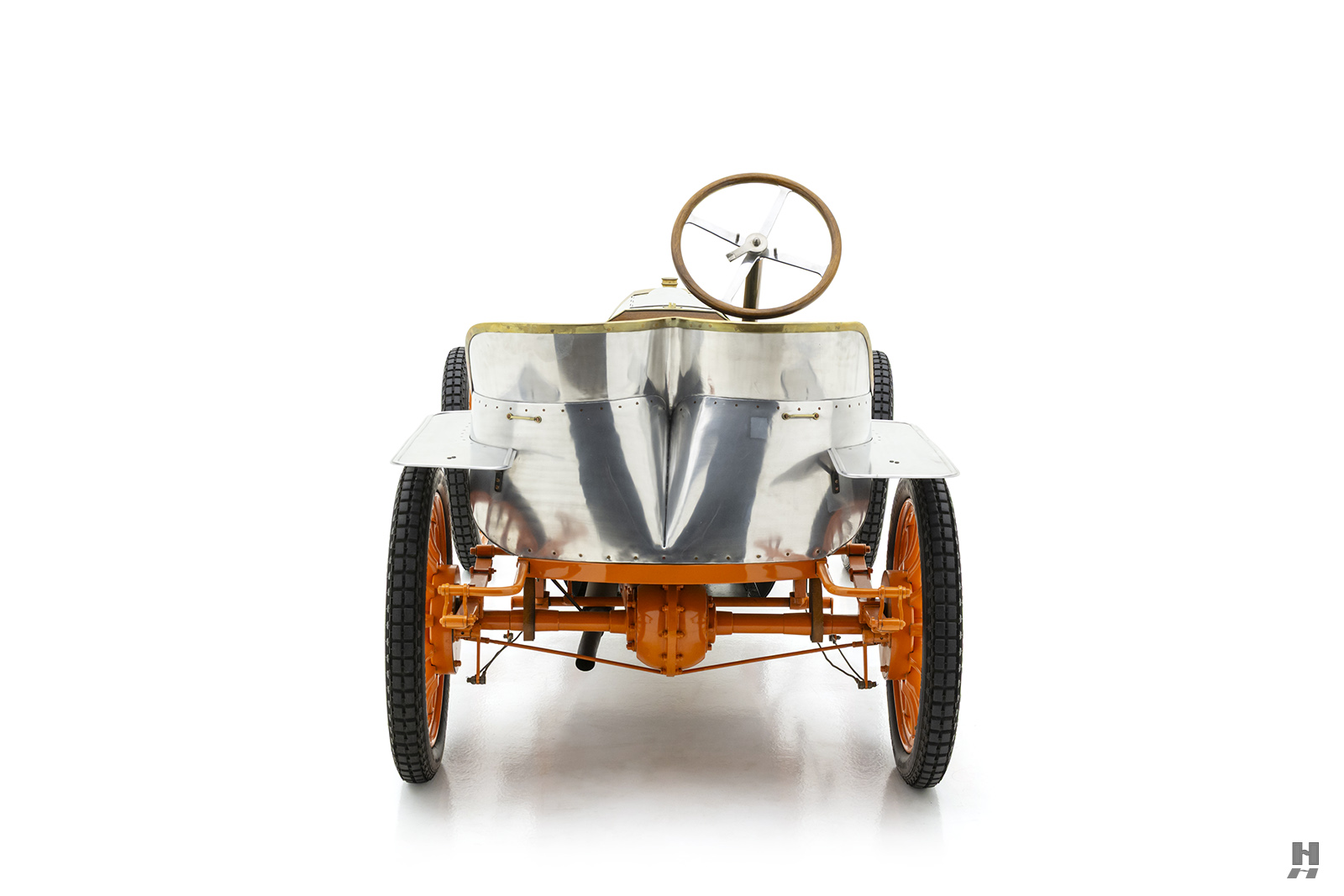
During the winter between 1908 and 1909, while still employed by Deutz, Ettore constructed the first complete car to bear his name – the Type 10. Designed to be light, powerful and nimble, the car was powered by a 1,200cc four-cylinder engine designed by Ettore from scratch – the first time he wasn’t using an engine of outside manufacture. The engine featured advanced technology such as a bevel shaft-driven single overhead camshaft, two valves per cylinder operated by cleverly designed tappets, a multi-plate clutch, and shaft drive. The engine operated at 1,500 rpm and was capable of reaching 2,000 rpm, a remarkable figure for its time. The engine bore the famous “EB” stamp for the first time. Bugatti utilized a simple channel chassis fitted with leaf springs, wooden wheels, and cable operated brakes. Since it was primarily a prototype, little consideration was given to style and the car was skinned in a simple, alloy body without doors, left unpainted. Weighing just 365kg (ca. 800lbs) and producing about 10 horsepower, it was remarkably quick for such a small machine and delightfully balanced for nimble handling. Ettore’s lifelong passion for horses undoubtedly inspired its nickname - Le Petite Pur Sang – the little thoroughbred
At an exhibition in Cologne, pioneering French aviator Louis Bleriot trialed the Type 10 and was thrilled by the little car, and pleaded with Ettore to put his voiturette into production. By this point in his career, Ettore had the attention of financial backers, and with the support of patrons like Pierre de Vizcaya and Ernest Frederich, the opening of a factory became a new priority. They settled on a disused Tannery located in the village of Molsheim, Alsace, and on January 1, 1910, having completed his contractual obligations to Deutz, Ettore Bugatti signed lease on his factory. While Bugatti has long been considered proudly French, its origins are multinational – Ettore Bugatti remained an Italian citizen until 1946, and Molsheim’s location in Alsace meant the company was actually based in Germany from its foundation until the end of The Great War.
The diminutive Type 10 was fundamental to Bugatti’s move toward serial production. Bugatti’s first production model, the Type 13, was essentially an enlarged and refined version of the Type 10. As Ettore’s first Bugatti automobile, the sentimental attachment to Le Petit Pur Sang was understandably strong, and he never entertained selling it. It remained a fixture in the factory, and through the years it was nicknamed “the bathtub” by workers, undoubtedly for its simplistic, unpainted metal coachwork. Into the 1930s, the Type 10 even served as regular transport for Ettore’s first wife Barbara as she preferred it’s light weight and easy operation. At some point, Ettore had the car freshened, painting the chassis and wheels a distinctive red-orange color, and workers responded by nicknaming it “the lobster” in jest. It remained very much a part of the family, with Roland Bugatti recalling “We always kept it at Molsheim, and it became sort of a family pet, and eventually, a prized part of our collection.”
The Survival of the Type 10
In 1939, German troops moved toward Alsace and Bugatti was forced to abandon his Molsheim factory and evacuate to safer territory. Critical machinery and workers were relocated some 800km away to Bordeaux, and Ettore was sure to take the Type 10 with him. There, it was stored at a shipyard where the Bugatti yachts had been designed, and it stayed there for the duration of the war.
After the war, Ettore Bugatti struggled and fought to regain control of his factory in Molsheim, an effort which absorbed his spirit and his health. He died in 1947, shortly after wresting his beloved factory from government control. The Type 10 remained in Bordeaux and fell into a state of neglect, and it slipped off the radar.
At some point the Type 10 was stolen, presumably for scrap value, and wound up in a junkyard some 160km north in Niort. Miraculously, it was saved from the scrapper, discovered in 1961 by the “Bugatti Hunter” Antoine Rafaelli who purchased it and quickly passed it to his compatriot and fellow Bugatti archaeologist, Jean de Dobbeleer, who determined its significance. It was sold to the Belgian collector and hotelier Georges Marquet, who kept it for about a decade before he dispersed his collection. In 1971, the Petit Pur Sang caught the attention of famed collector William F. Harrah, through Claude Dubois, an agent working for Marquet.
While Harrah is famously one of the most prolific collectors of all time, he was also incredibly fastidious and selective about the cars he collected. Reportedly, several skeptical letters were sent from Harrah’s chief curator Edward Catlett to Dubois, De Dobbeleer and others, seeking consensus on the car’s provenance. Mr. Harrah wanted assurances of its authenticity. Among the most important evidence came from Francoise Seyfried, then supervisor of the Bugatti works in Molsheim, who knew the car personally and attested to its history. Marque historians have reached similar conclusions with their own research, corroborating the findings of Harrah’s team.
Once in the Harrah Collection, it underwent a sympathetic restoration, returning it to its original look of bare aluminum bodywork over an orange painted chassis. Concessions included the fitment of slightly later Brescia gearbox and magneto – components derived from the Type 10’s original design. The gem of a 1,200-cc engine was rebuilt and returned to full running order and detailed in black, copper and brass – notably retaining its original “EB” stamped brass ID plate.
In the mid-1980s, the Harrah Collection was gradually dispersed over the course of several events and auctions. Maj. Gen. William Lyon of California had been assembling one of the premier automobile collections in the world, and he added Le Petit Pur Sang to his growing collection in 1986, purchasing it from the Harrah Collection. Significantly, this ‘first Bugatti’ became stablemate to another highly important Bugatti, the final Type 101C, bodied by Ghia to a Virgil Exner design. In the care of the Lyon Family Collection, the restoration performed by Harrah’s team has been beautifully preserved, and the car has made occasional outings to prestigious events, including the Pebble Beach Concours d’Elegance.
In the past four-plus decades that the Type 10 and the Type 101C have sat shoulder-to-shoulder in the Lyon Family Collection, they have represented the ‘bookends’ of Ettore Bugatti’s enduring legacy of style, mechanical artistry, and performance. The Type 10 Le Petit Pur Sang was once a prized possession of the Bugatti family, it later became a cherished part of the Lyon Family Collection, and it now represents an exceptional, once-in-a-lifetime opportunity to own one of the most significant pieces of Bugatti history – the car that started it all.
Offers welcome and trades considered.
inquire for price
Stock number 8063
For immediate assistance please call us at +1-314-524-6000 or please fill out the following form and a member of our team will contact you.