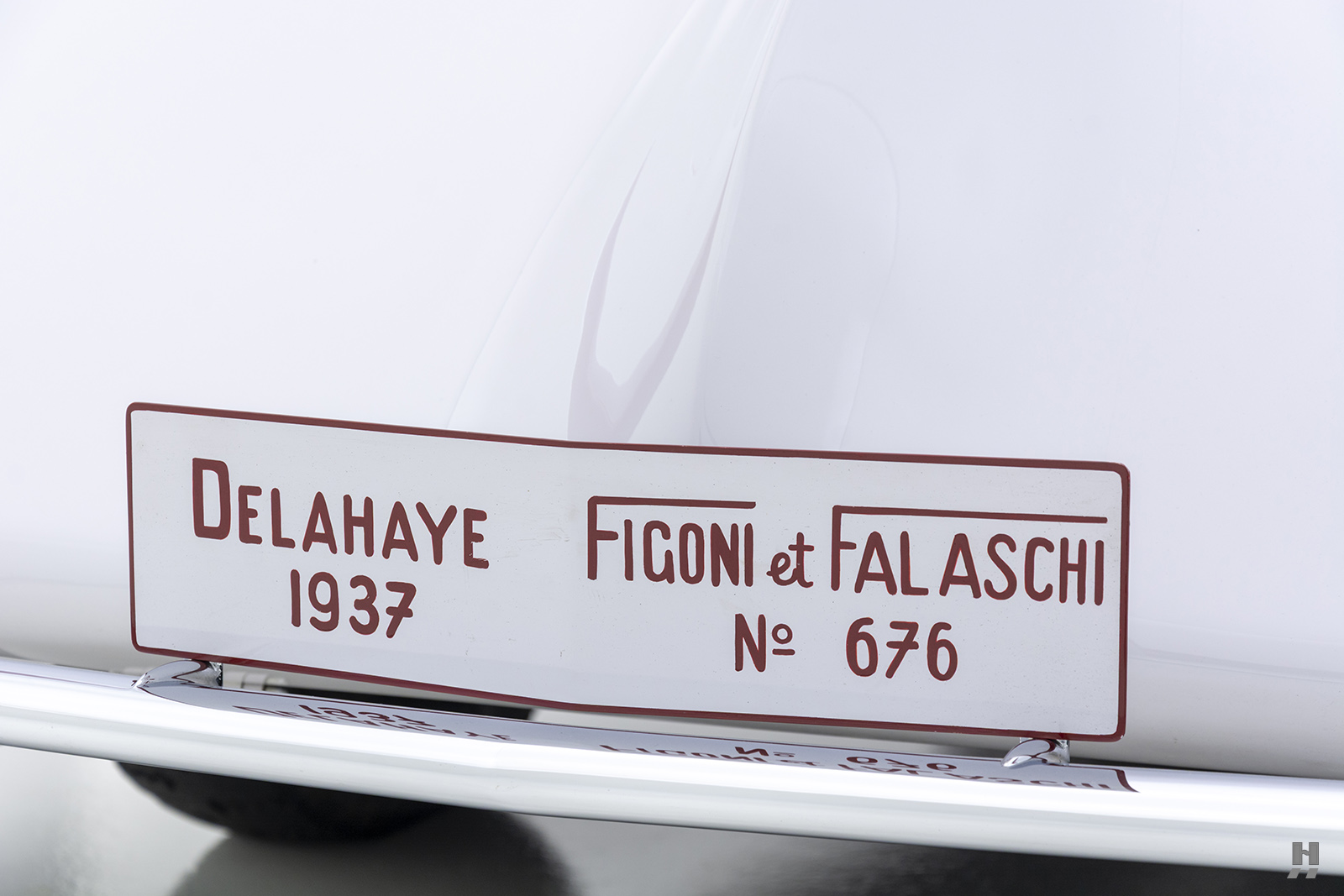
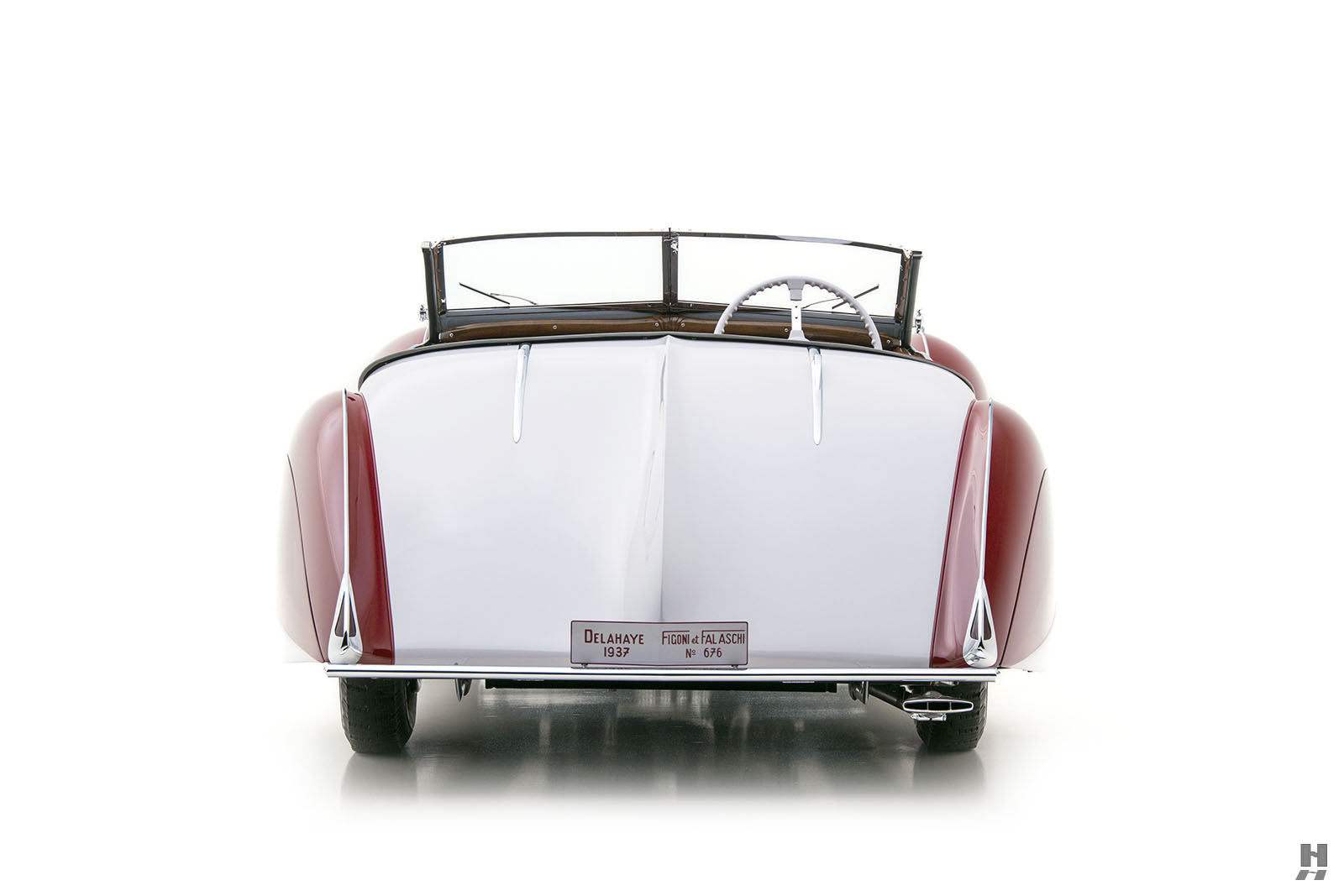
Chassis no. 48666 Figoni & Falaschi Build no. 676
- Best in Show at the 50th Anniversary Pebble Beach Concours d’Elegance in 2000
- One of just eleven Figoni & Falaschi Torpedo Cabriolets built
- One of only three constructed on the short Competition Court chassis, and one of two known survivors
- Restoration guided by Claude Figoni and completed by Perfect Restoration
- Beautifully preserved in its original Gris Lumière and Rouge Foncée color scheme
There are automobiles that are important because of what they achieved, others because of who designed them, and still others because of the history they somehow managed to survive. Chassis 48666 belongs to that exceedingly small group in which all three qualities converge. Built on Delahaye’s short Competition Court chassis and clothed in one of Joseph Figoni’s most extraordinary Torpedo Cabriolet bodies, it is not simply an important French automobile of the 1930s, but one of the defining expressions of the great coachbuilt era.
By the middle of the 1930s, Delahaye had transformed itself from a respected but relatively conservative manufacturer into one of France’s most exciting producers of sporting and luxury automobiles. The Type 135, introduced in 1935, was central to that transformation. Its low-slung chassis, independent front suspension, robust overhead-valve six-cylinder engine, and excellent balance gave Delahaye a foundation equally suited to competition and to the most ambitious coachwork of the period. On the road and in racing, the Type 135 quickly earned a reputation for speed, reliability, and remarkably composed handling, becoming the chassis of choice for many of France’s greatest carrosseries.
Within the Type 135 family, the Competition Court occupied a particularly special place. Built on a shortened 2.7-meter wheelbase, it sacrificed none of the Type 135’s refinement while gaining a more compact, agile character and proportions uniquely suited to sporting coachwork. Only three of the eleven Figoni & Falaschi Torpedo Cabriolets were built on this short Competition Court chassis, and only two of those are known to survive. Chassis 48666 is one of them.
The Torpedo Cabriolet itself was among Joseph Figoni’s boldest designs. The first example was created not to satisfy an individual patron, but as a statement of intent. Displayed at the 1936 Paris Auto Salon before appearing at the Olympia Motor Show in London, the design was intended to demonstrate both Figoni’s imagination and the extraordinary capabilities of the craftsmen at Figoni & Falaschi. At a time when much of Europe remained burdened by the economic realities of the Great Depression, such a car was an audacious declaration of confidence.
Its impact was immediate.
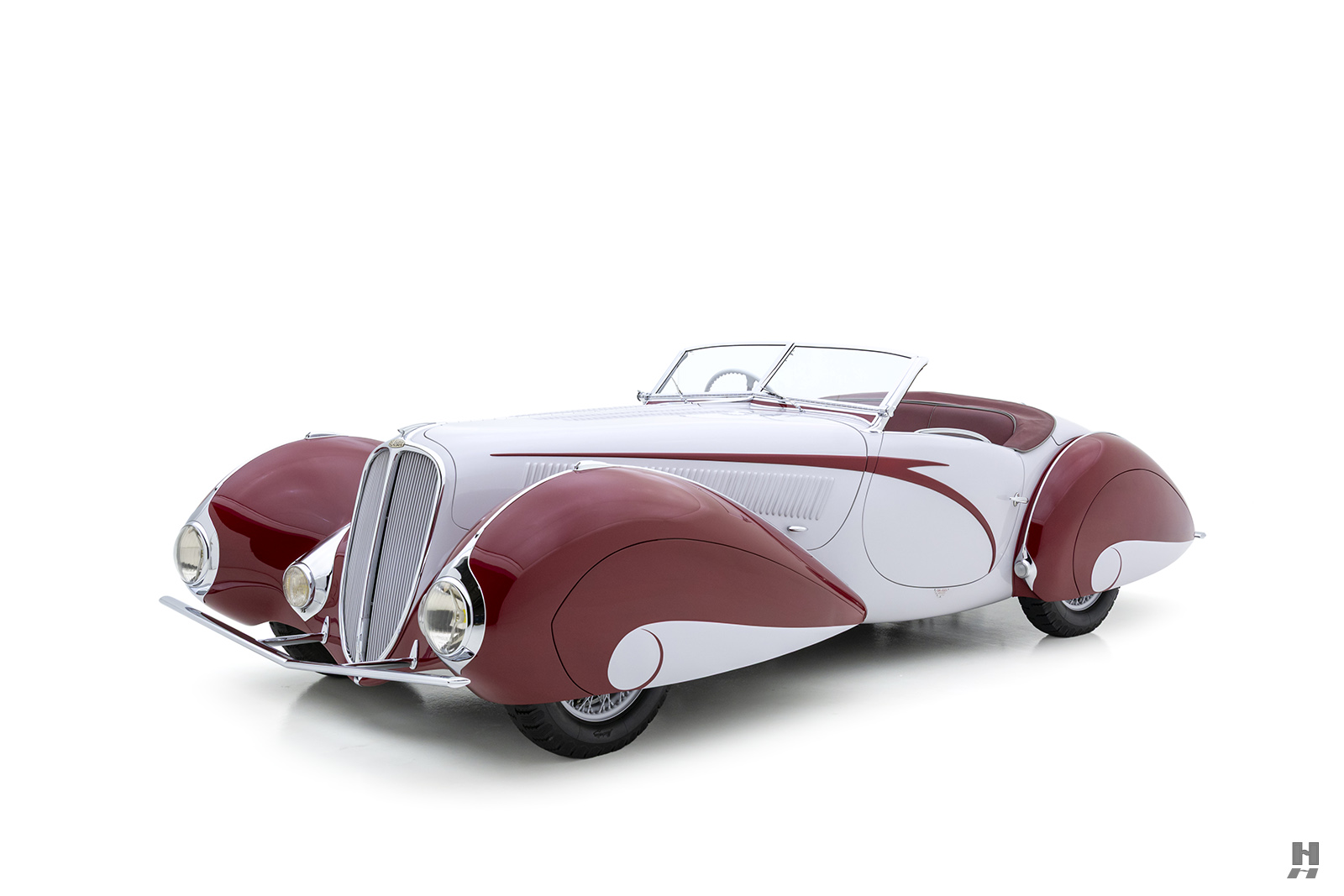
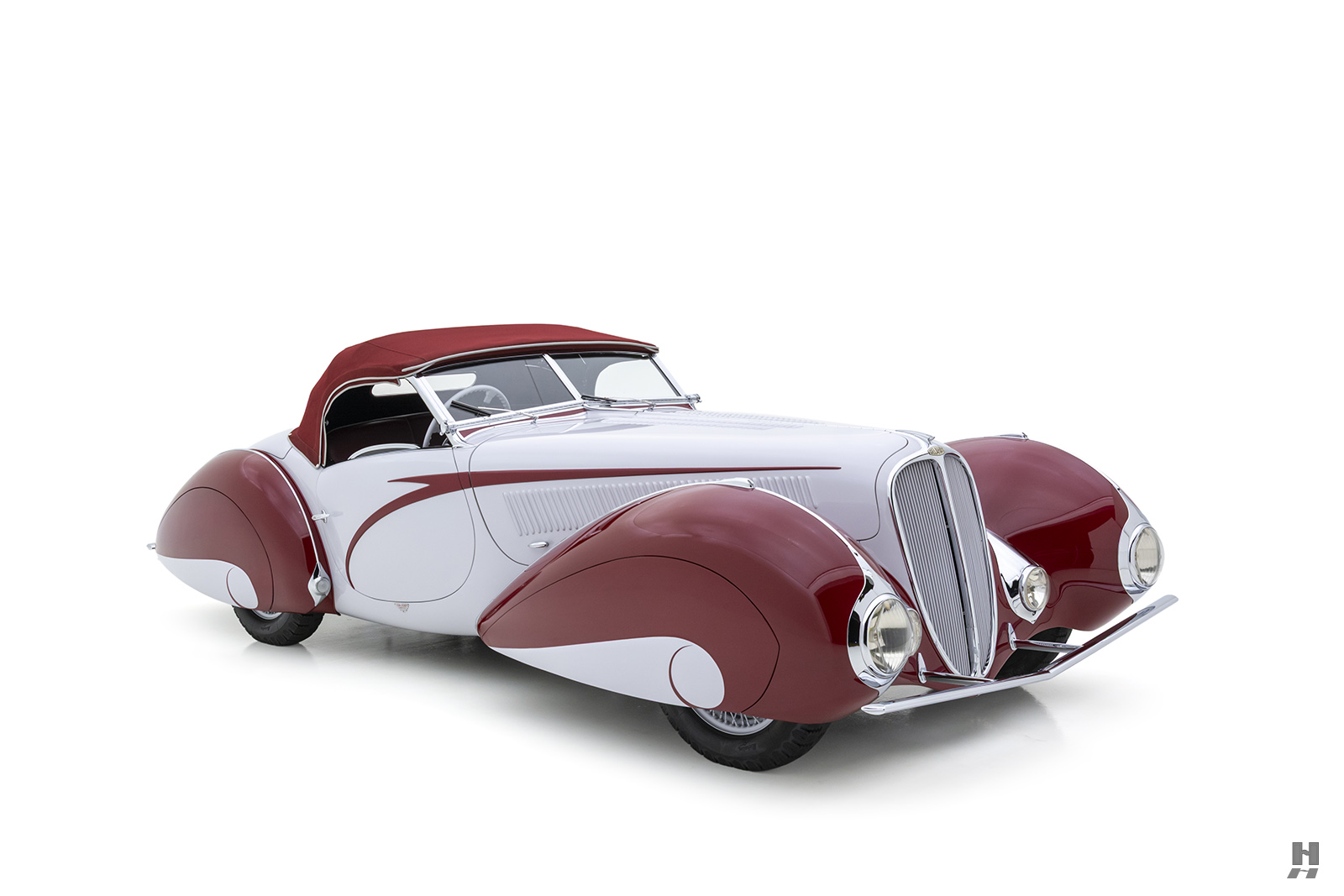
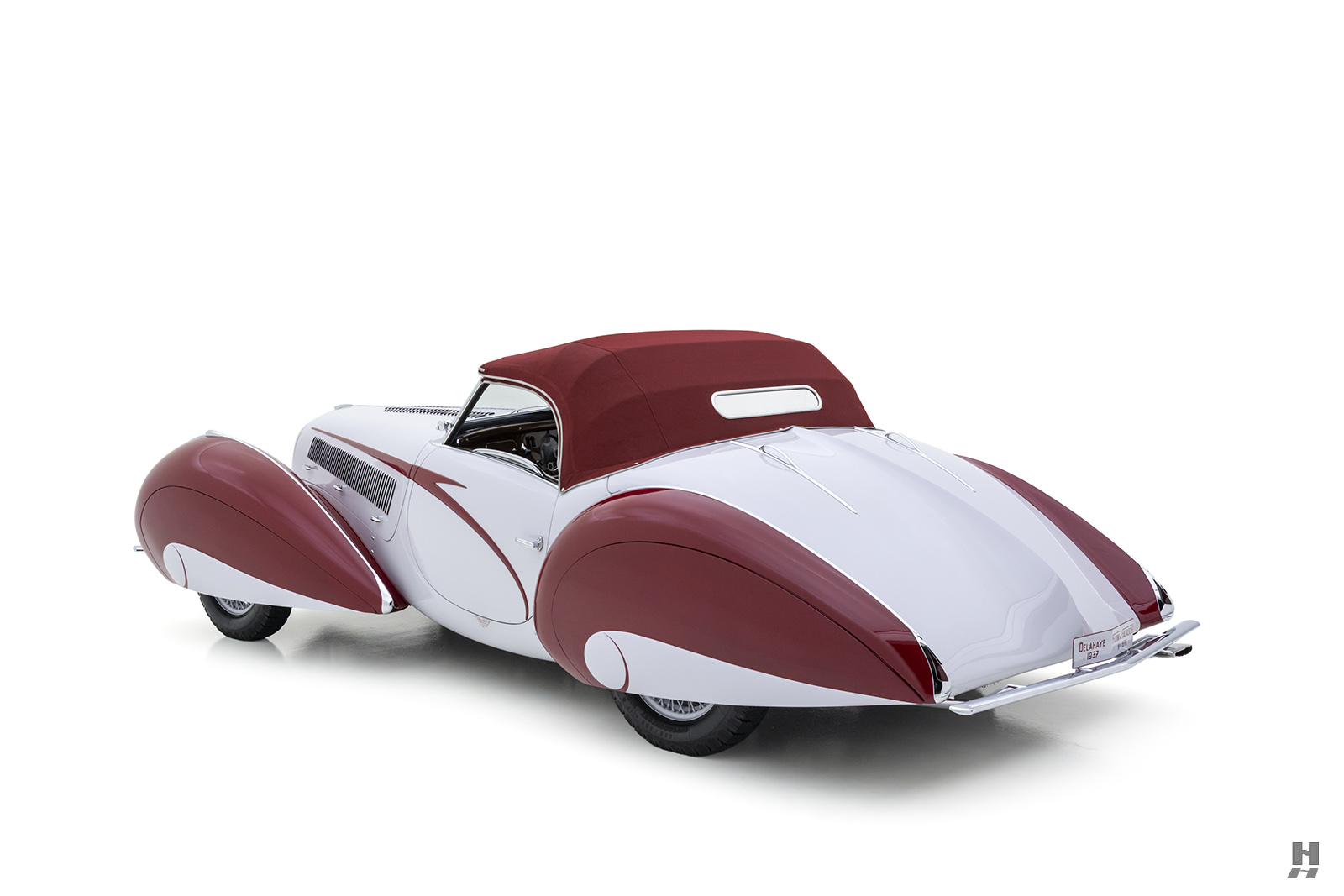
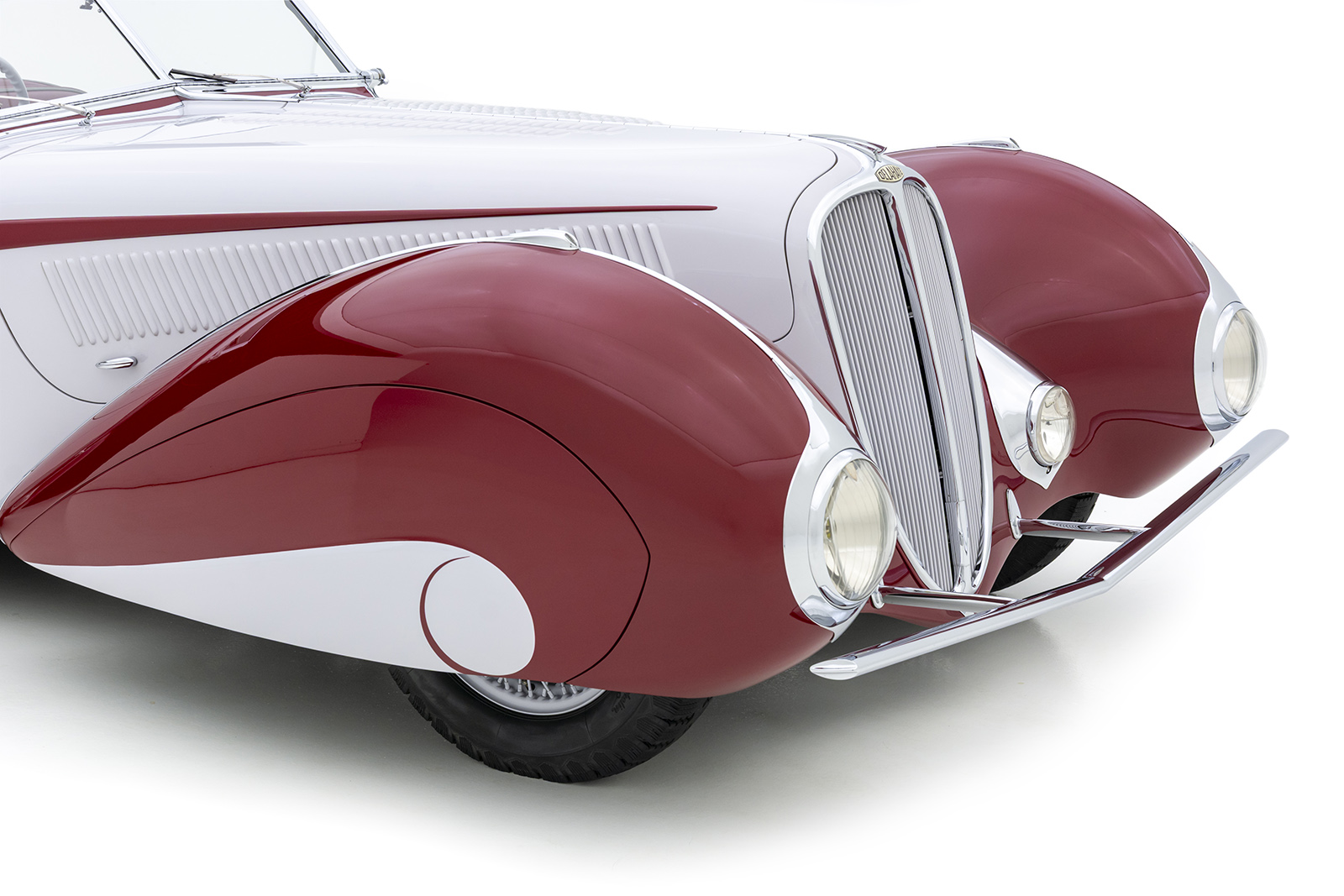
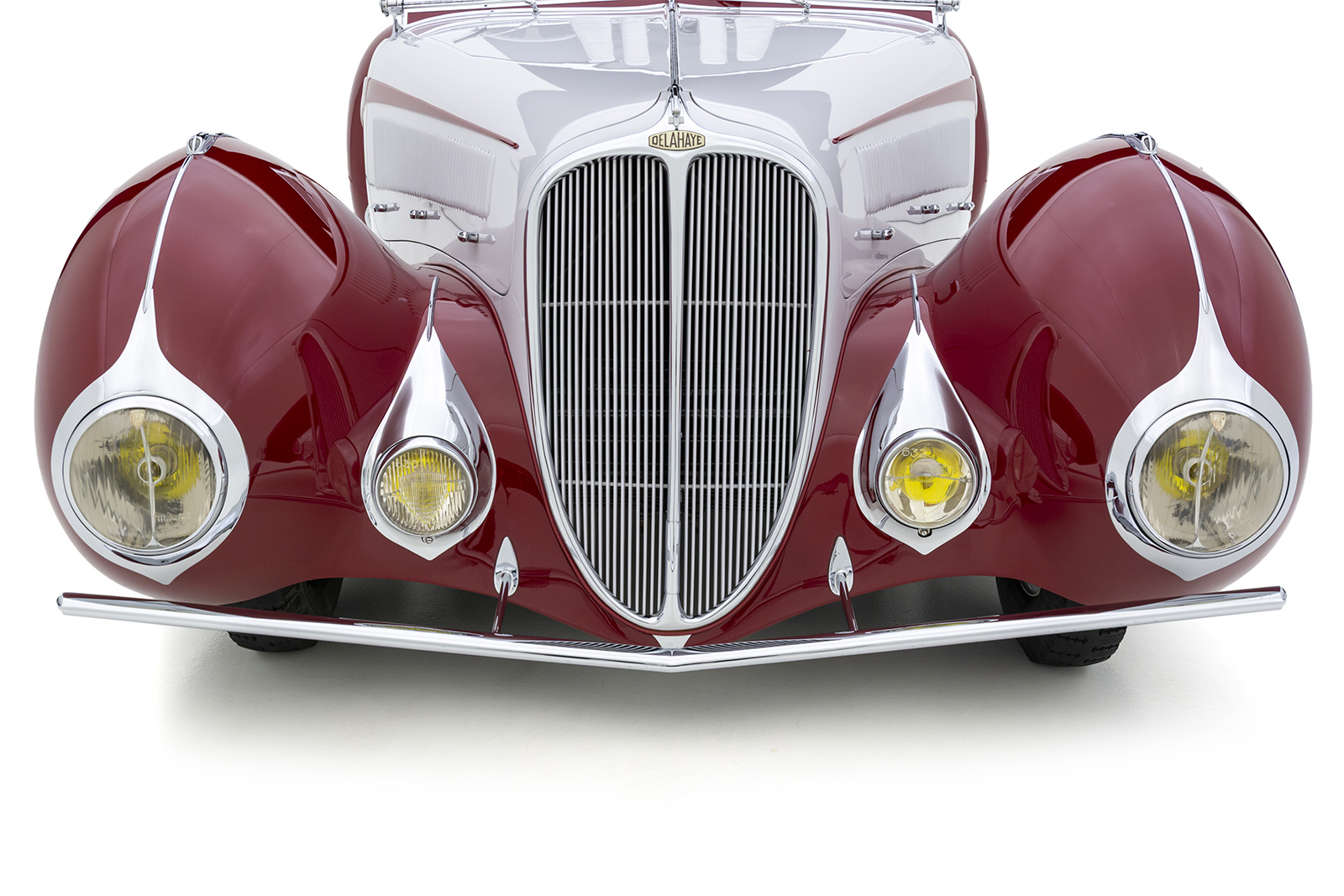
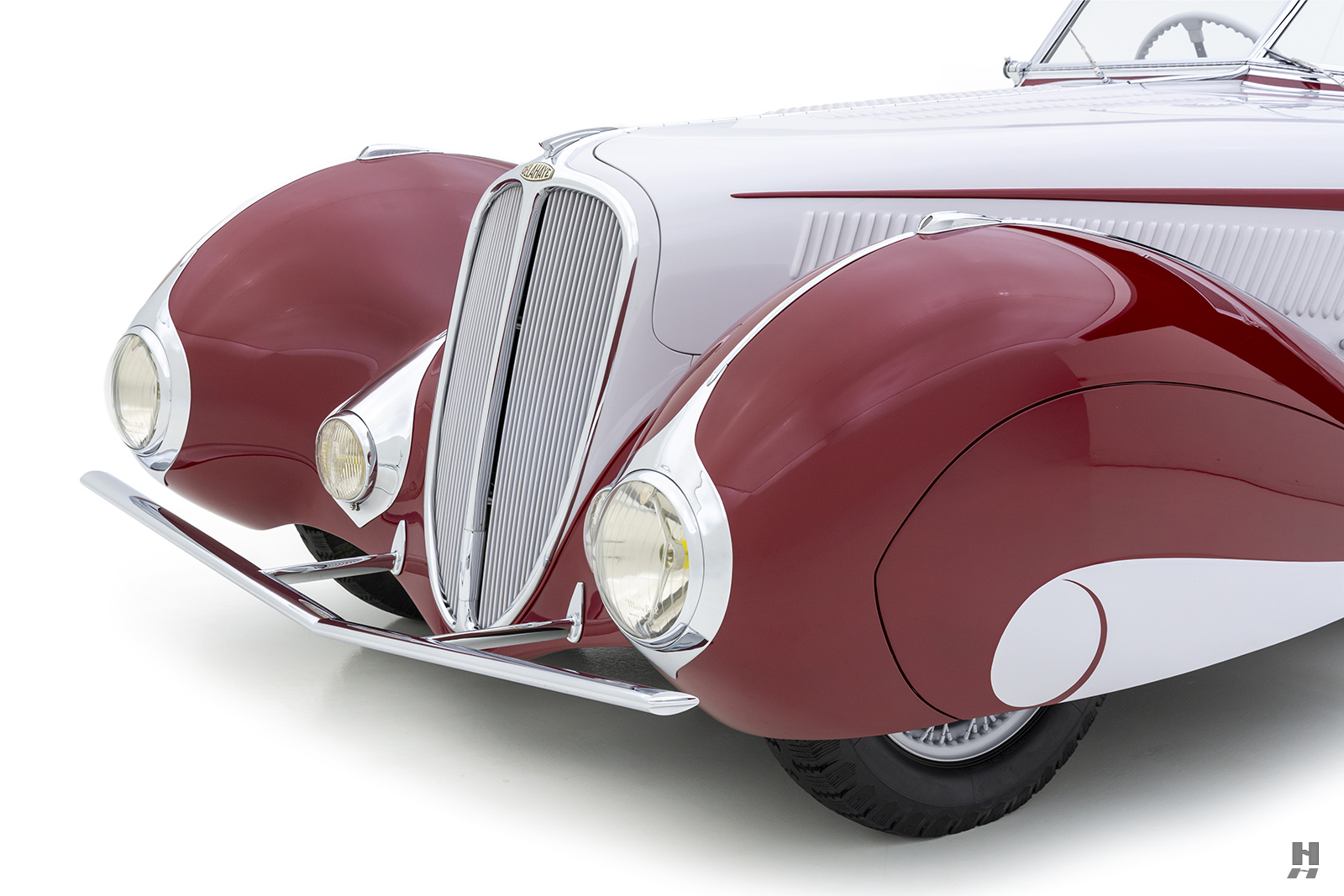
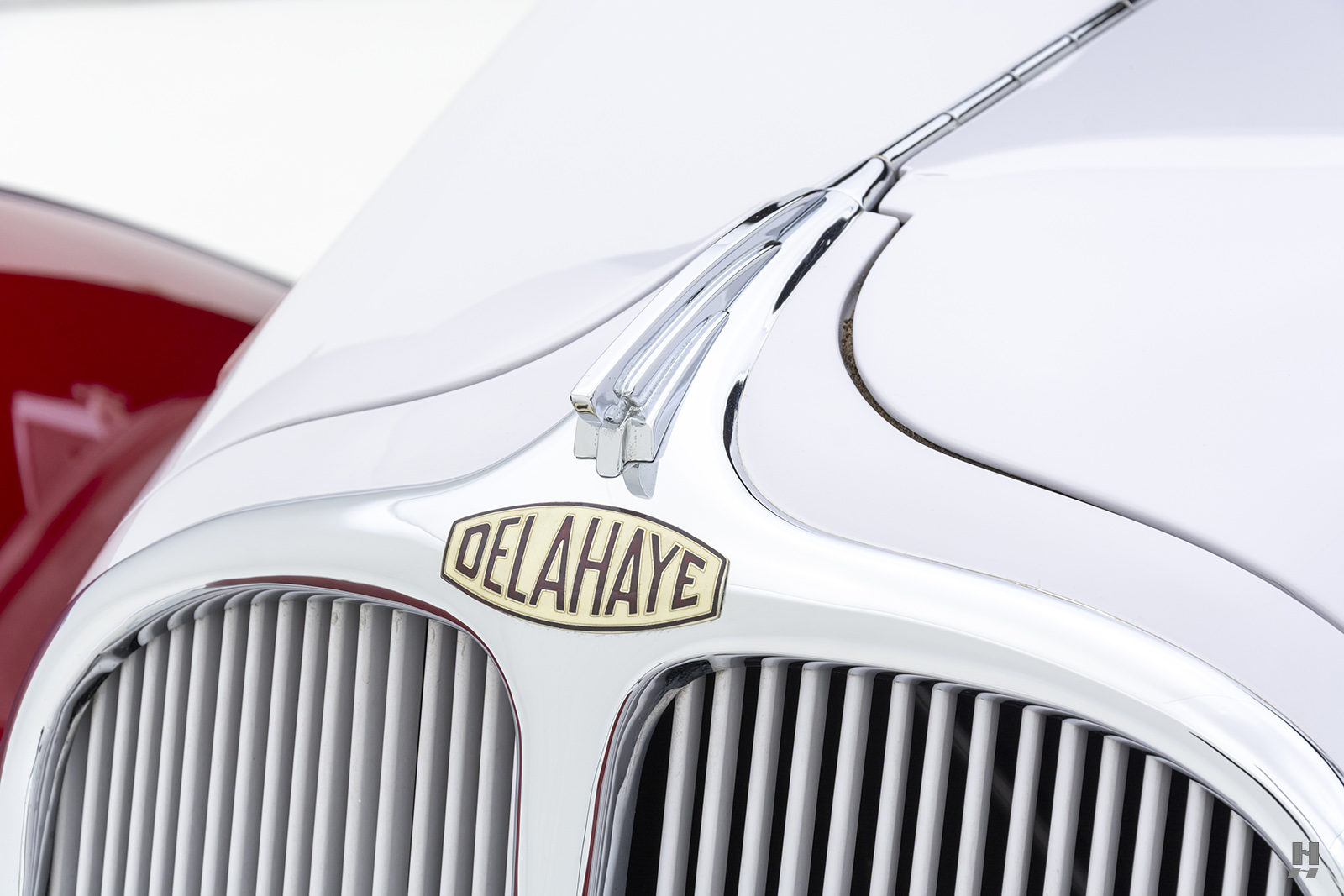
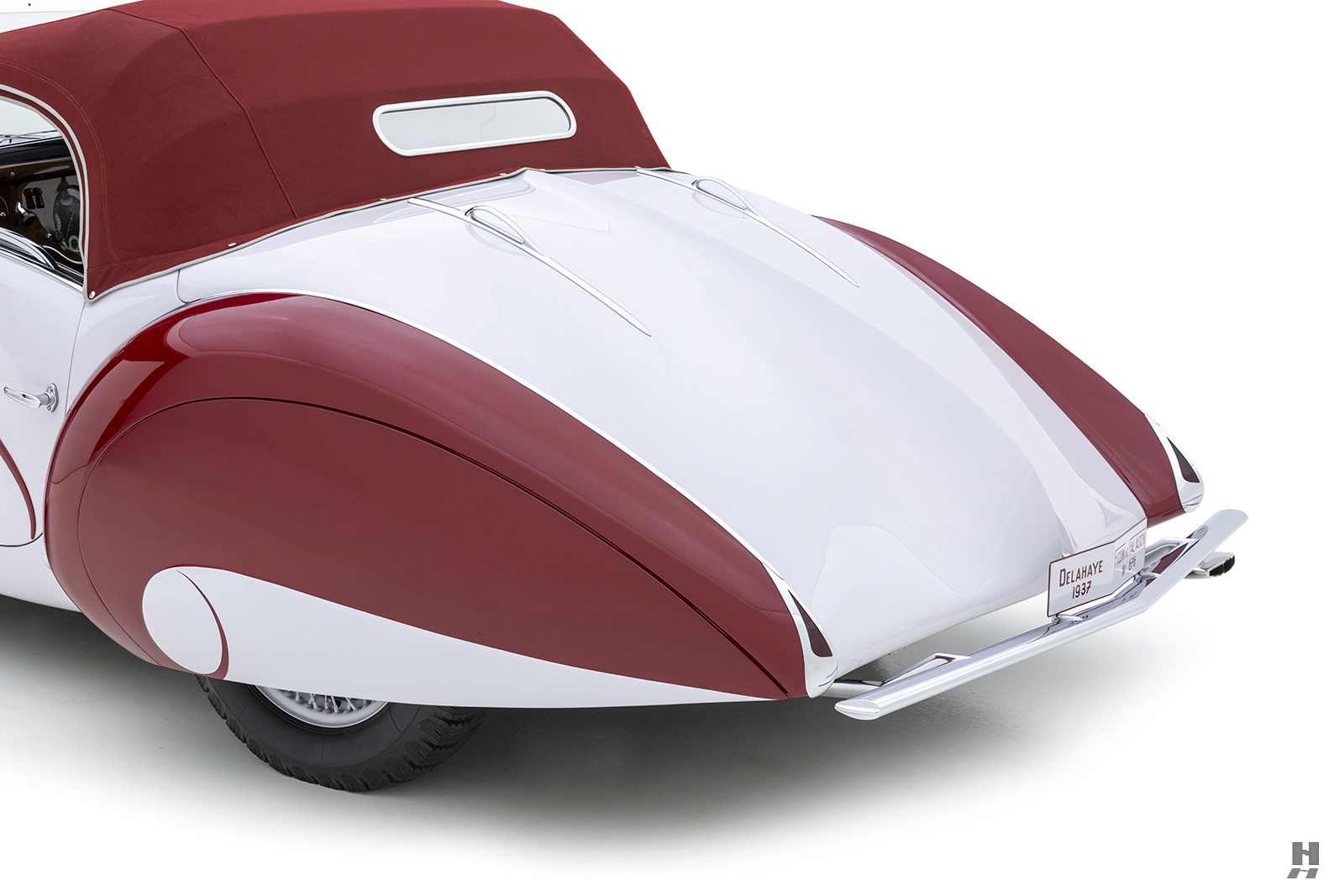
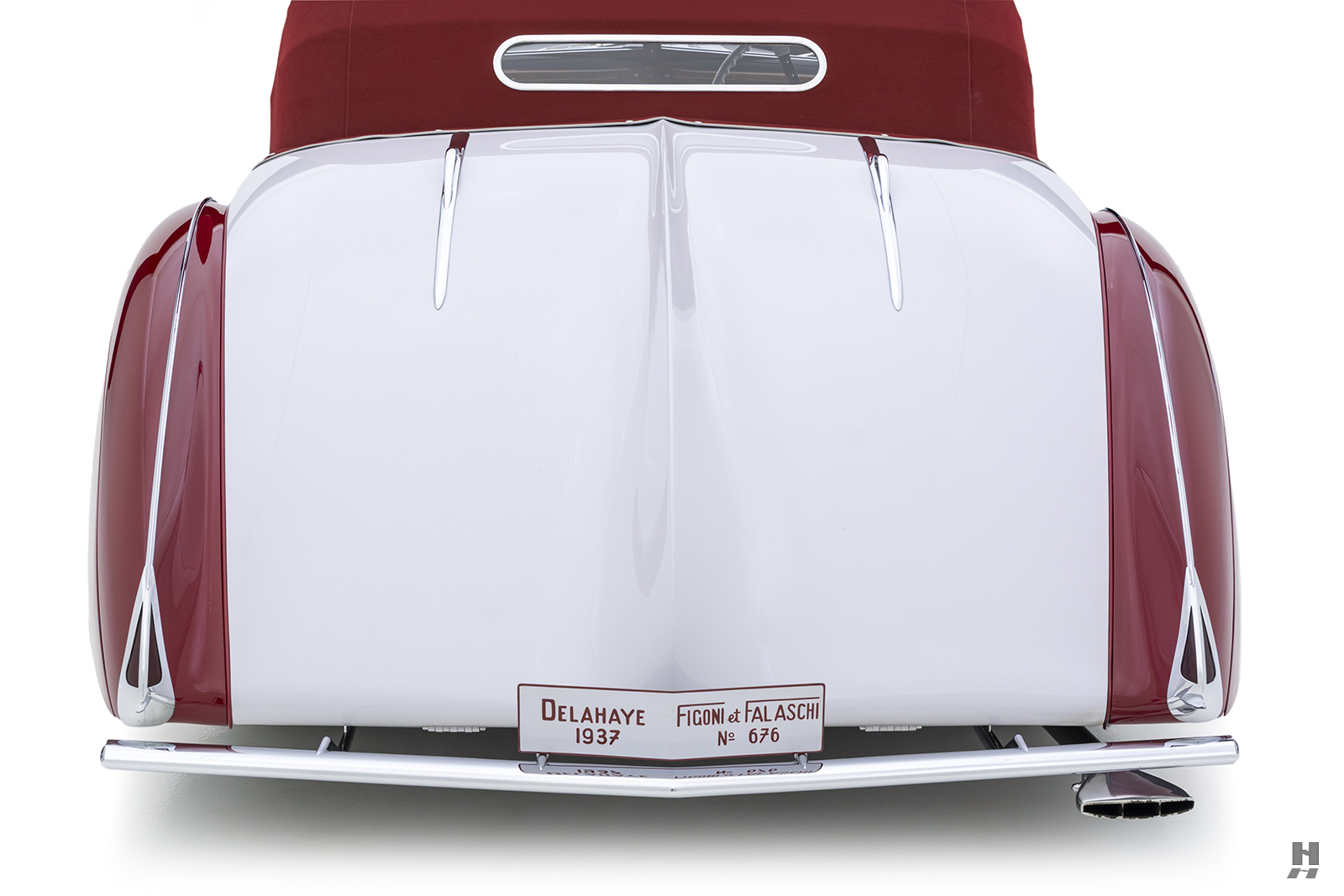
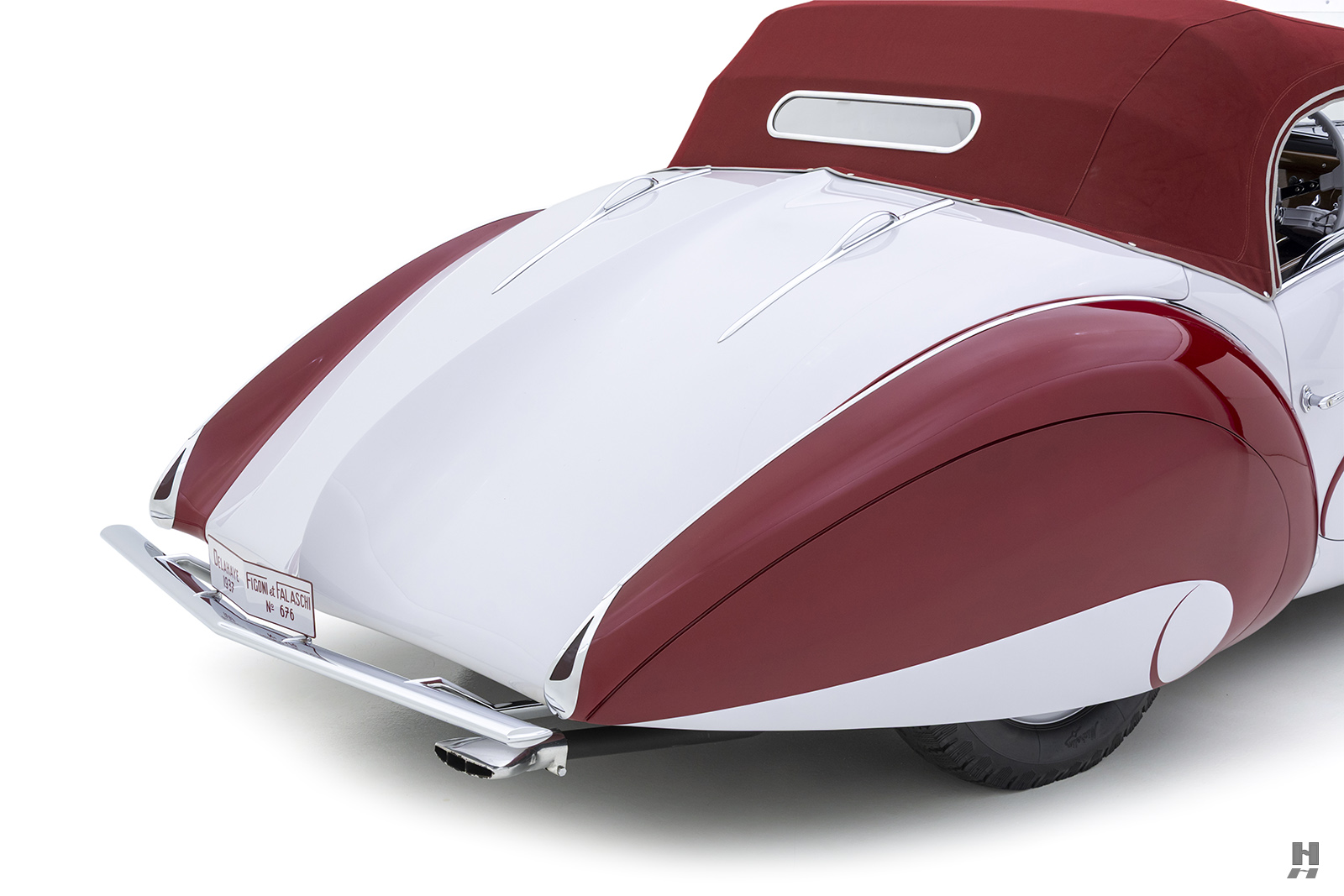
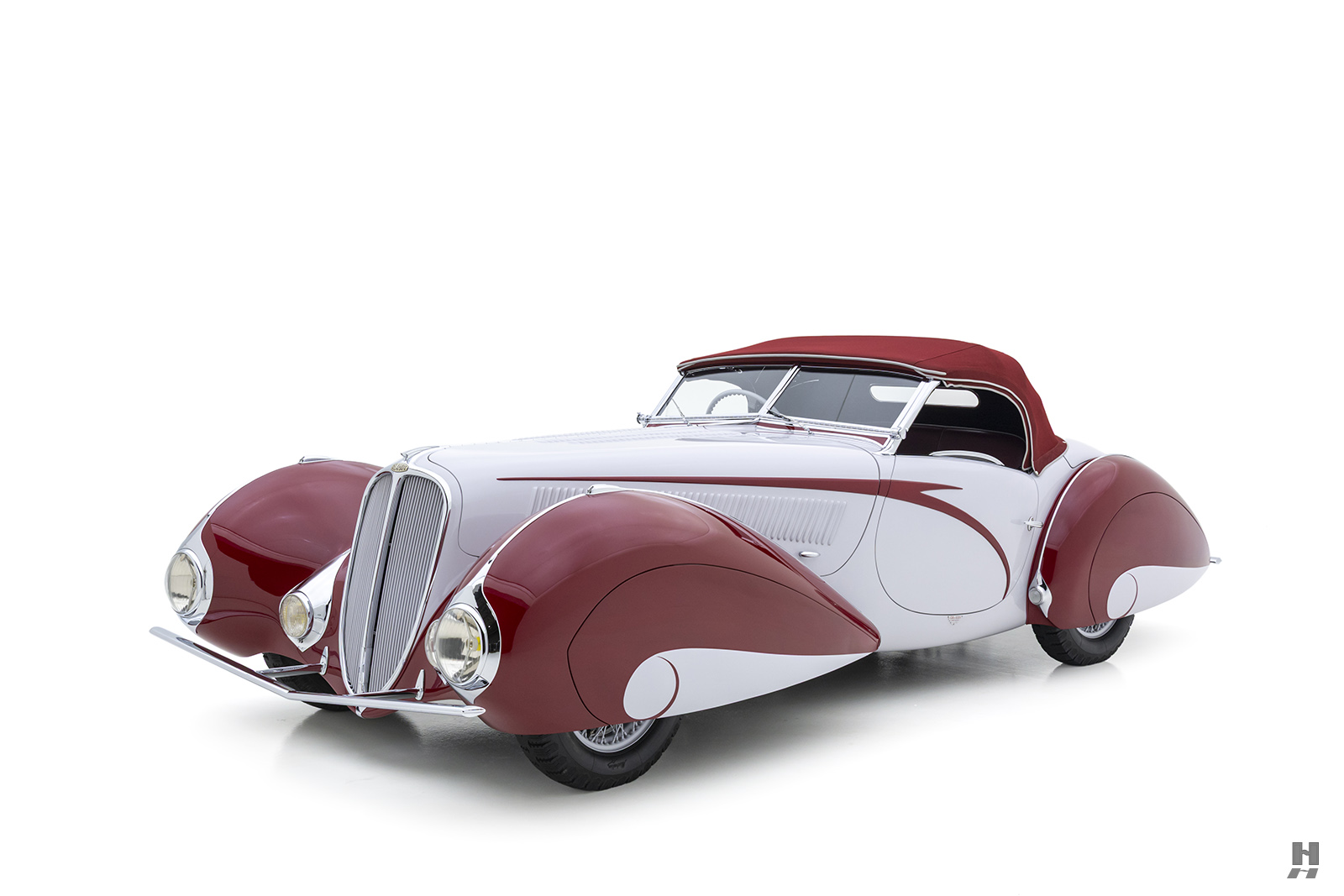
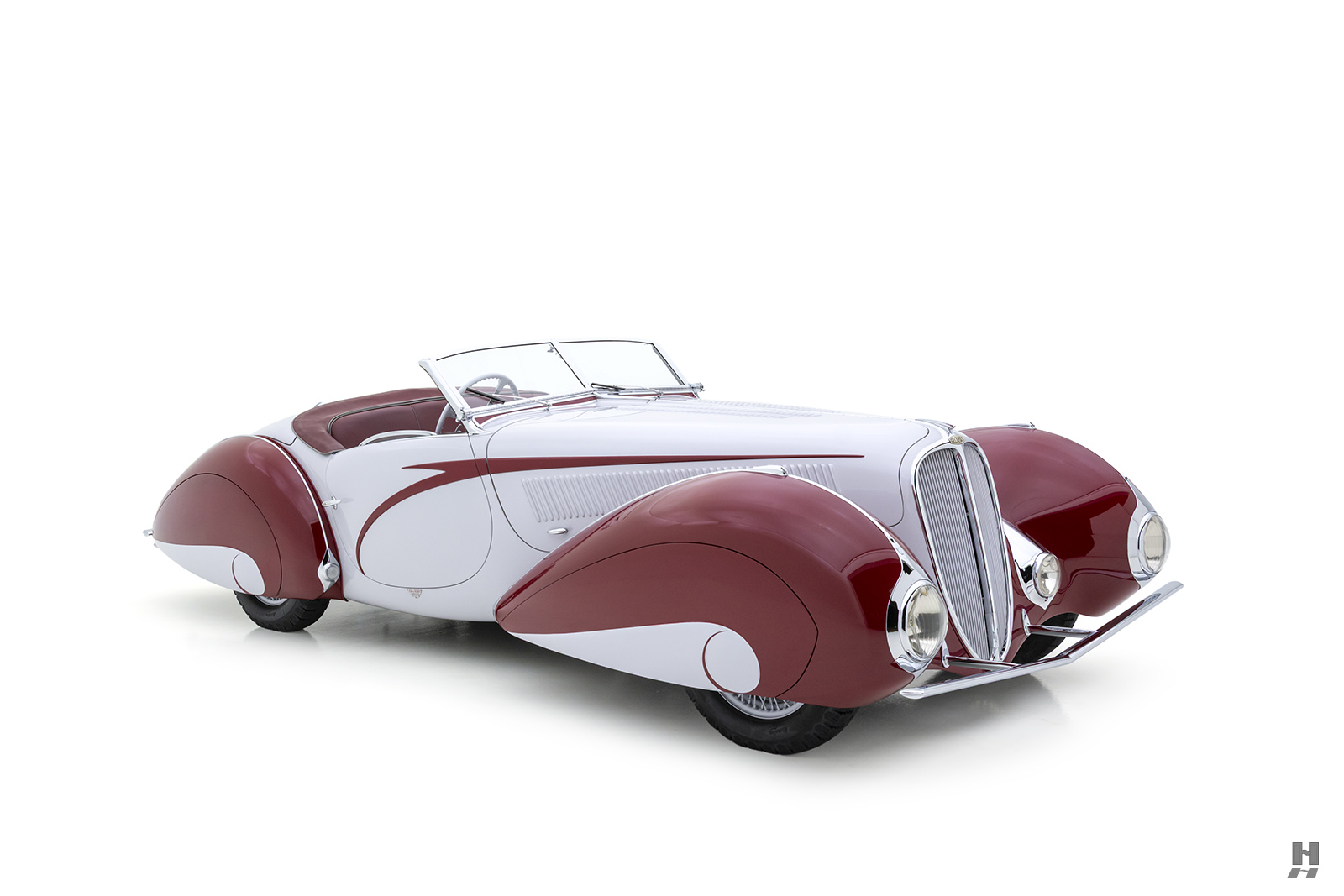
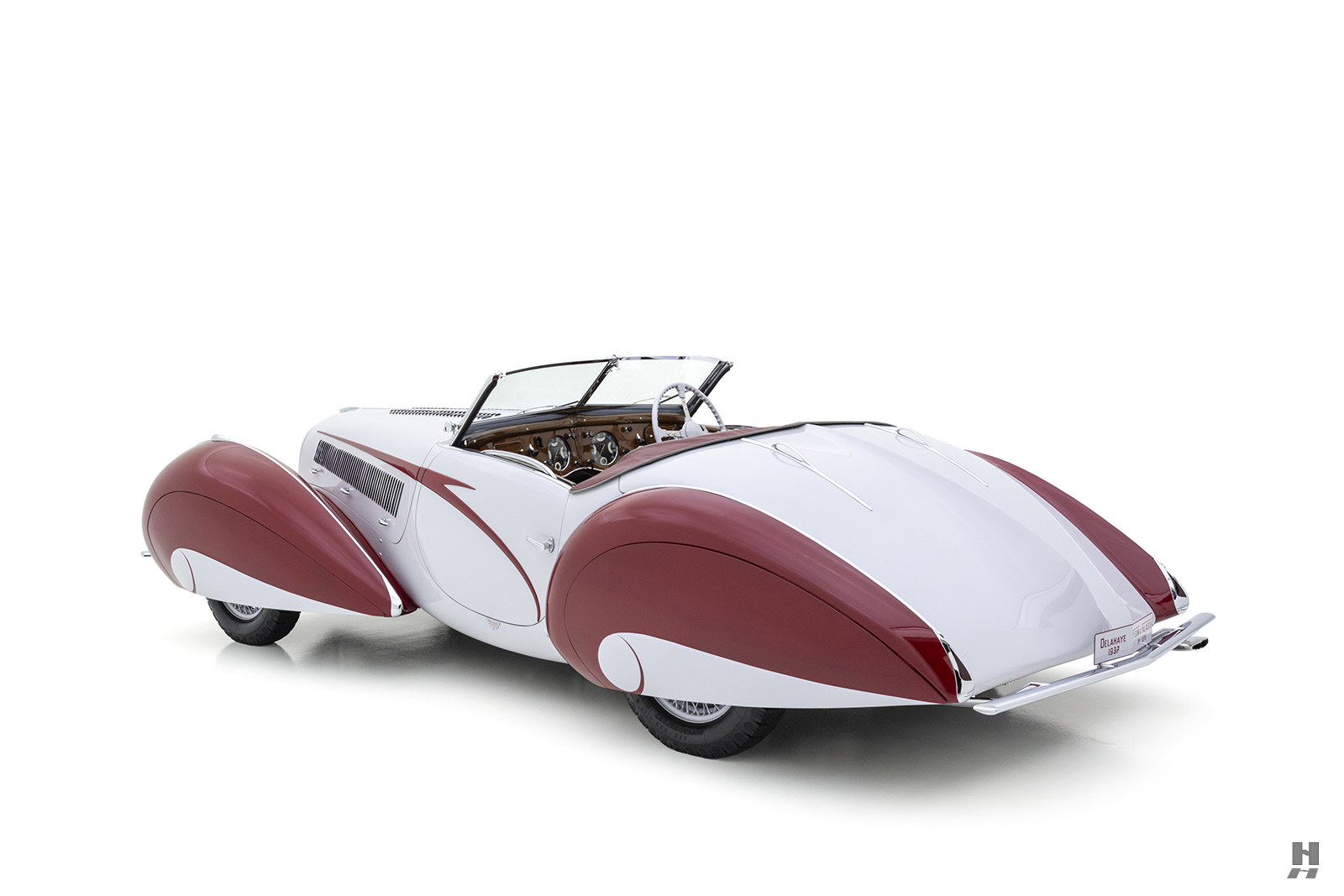
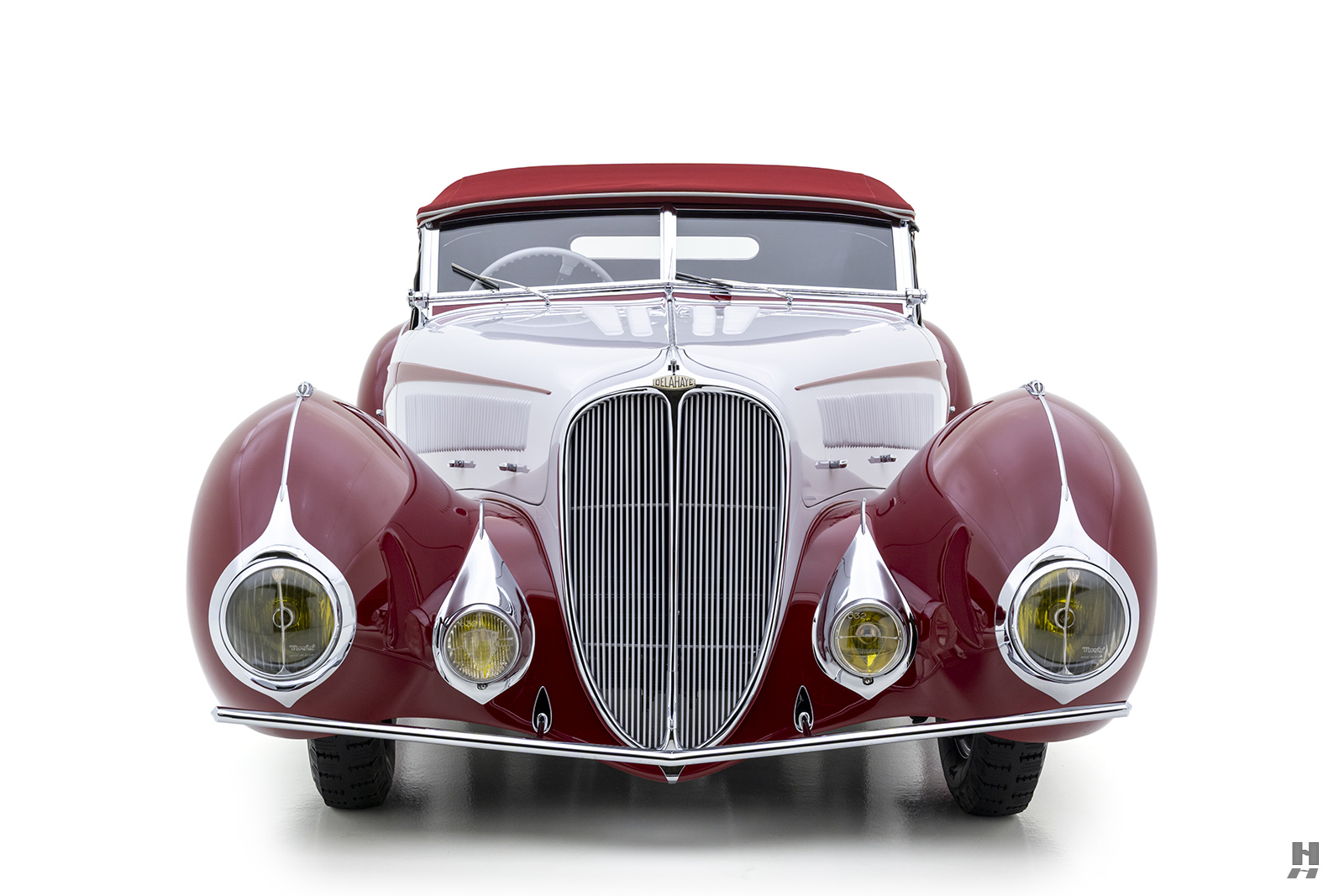
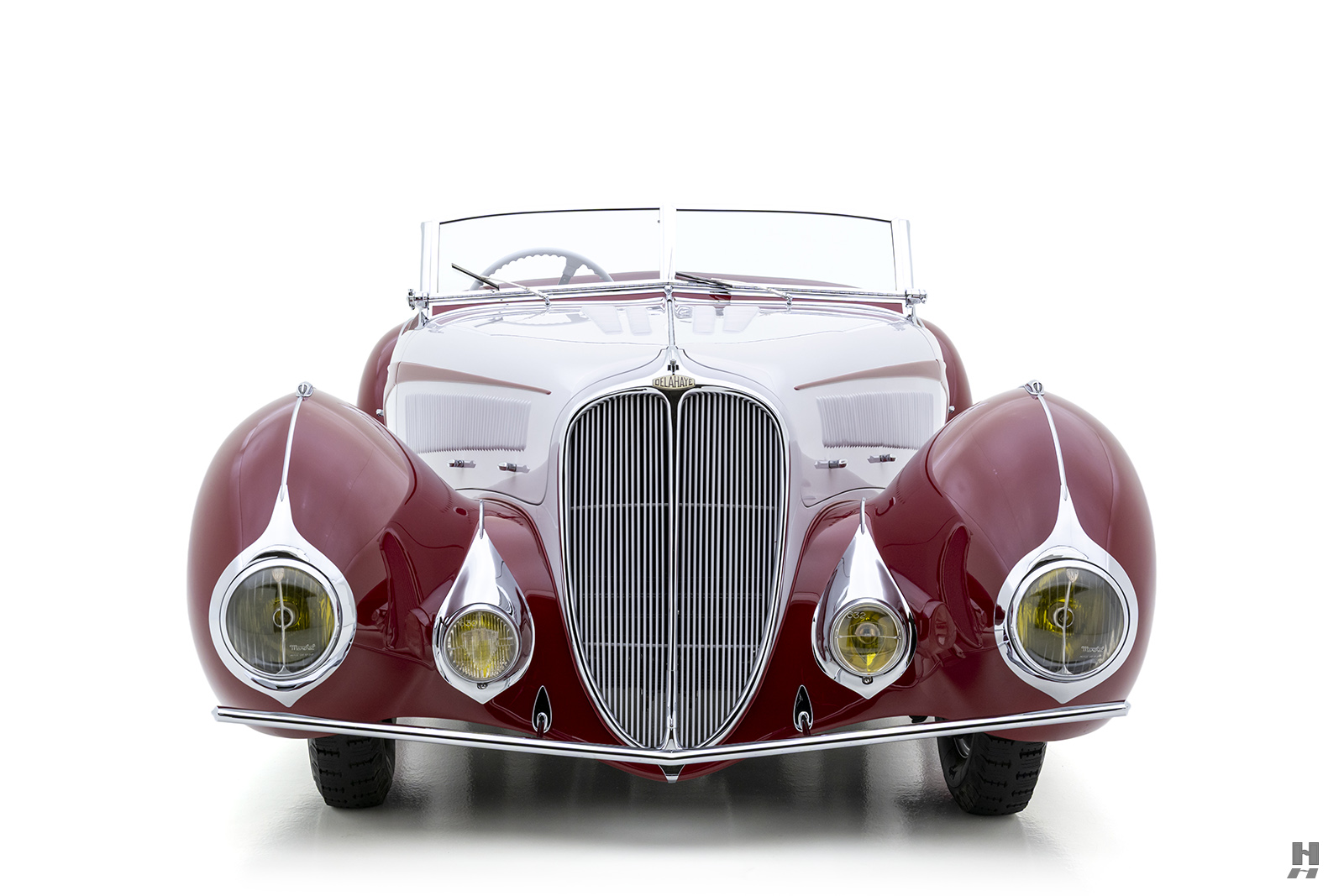
The body bore little resemblance to conventional open coachwork of the period. The front fenders swelled outward in great teardrop forms, fully enclosing the front wheels beneath dramatic skirts. The narrow body sat low between them, its proportions exaggerated by the absence of running boards and by a sharply raked, vee-shaped folding windshield. The radiator grille was recessed deeply between the fenders, while Marchal headlamps and auxiliary lamps were incorporated directly into the flowing bodywork rather than mounted conventionally.
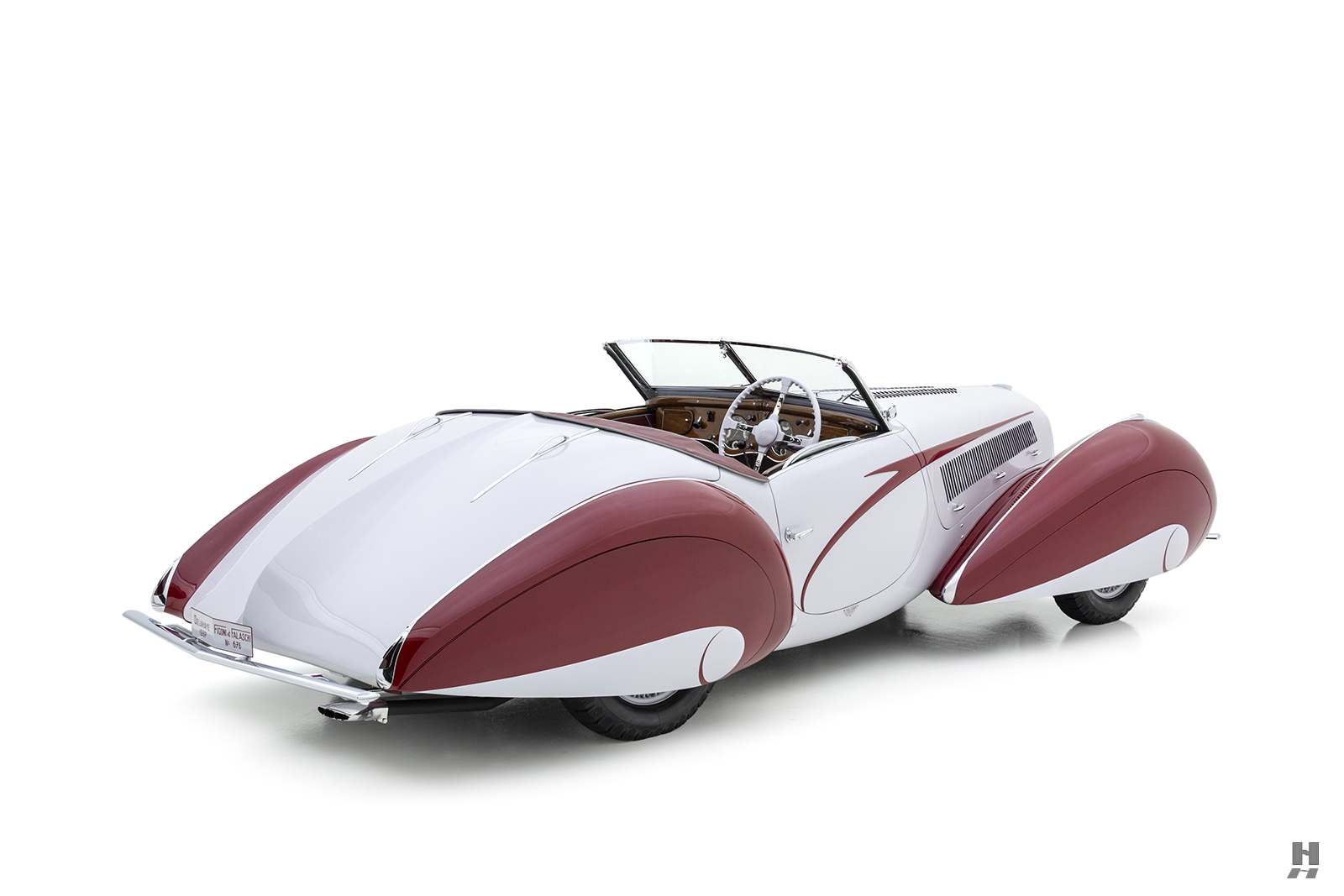
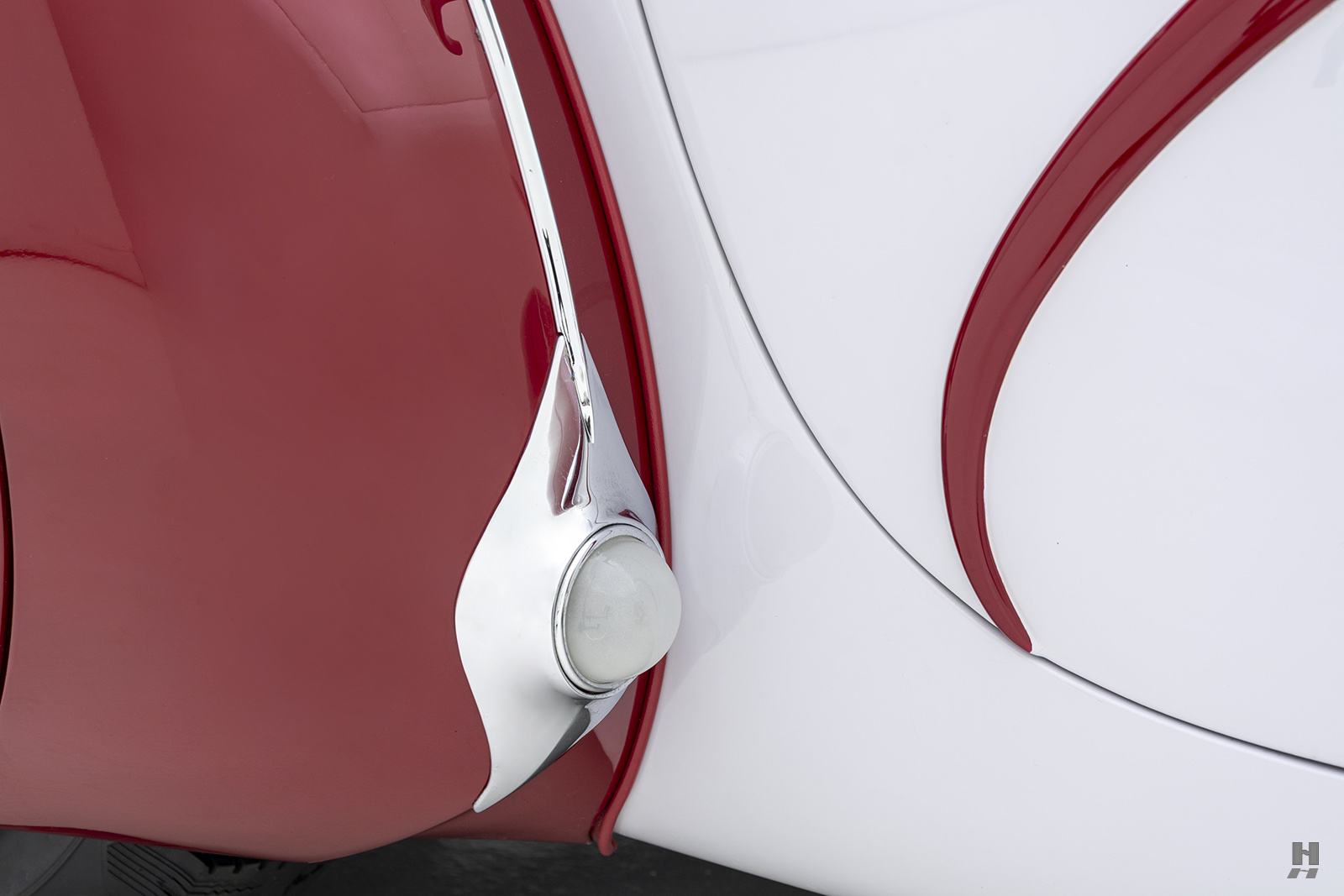
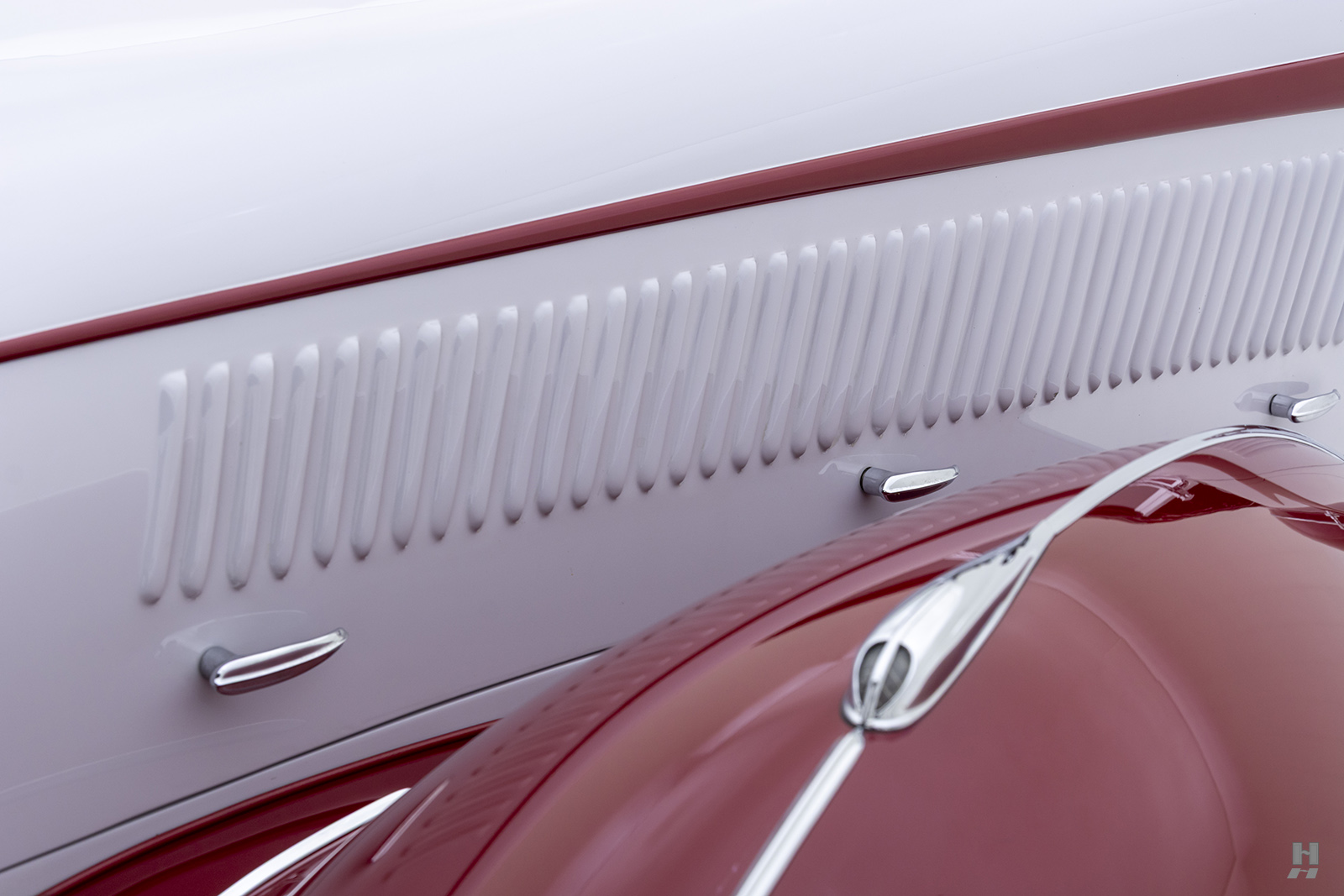
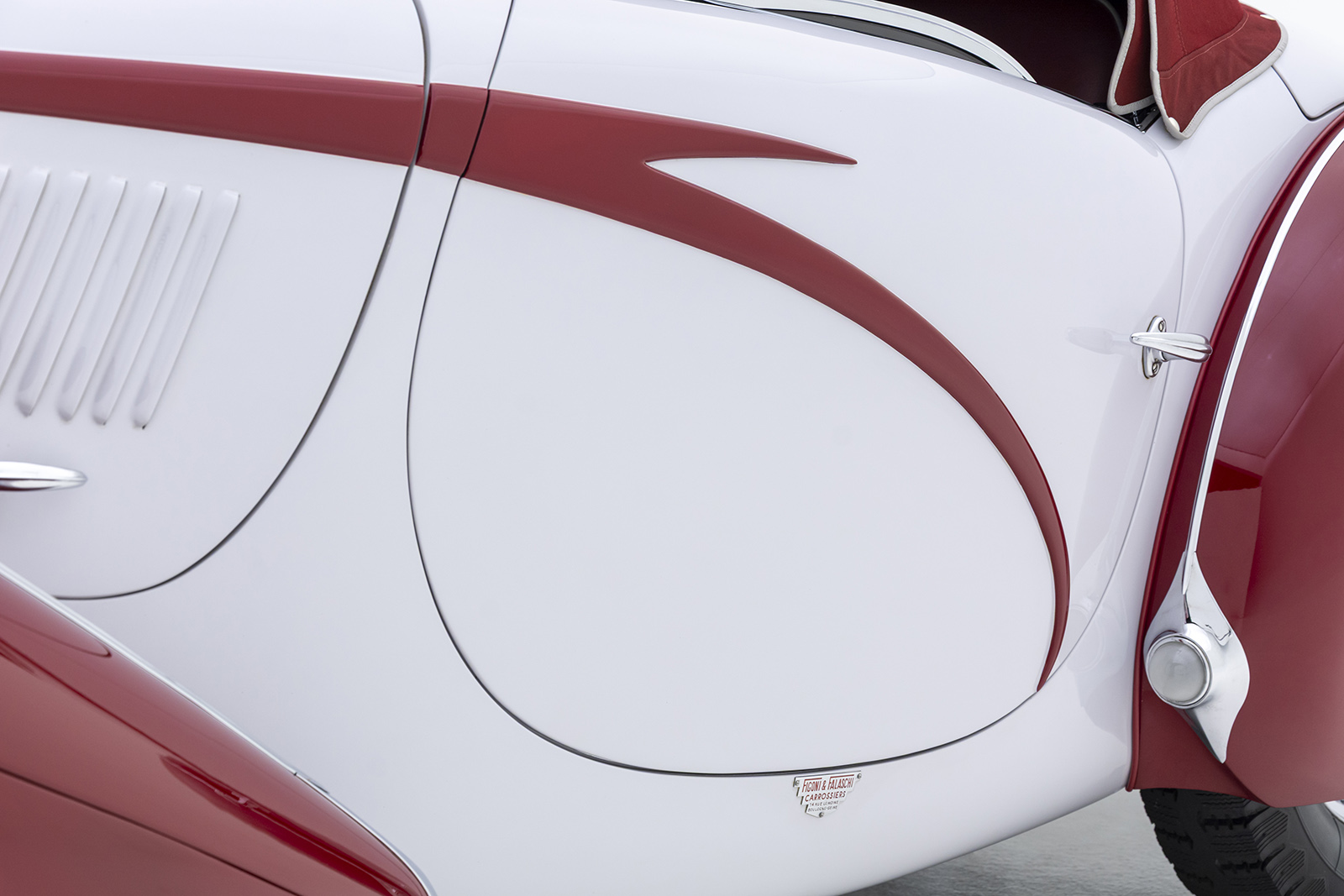
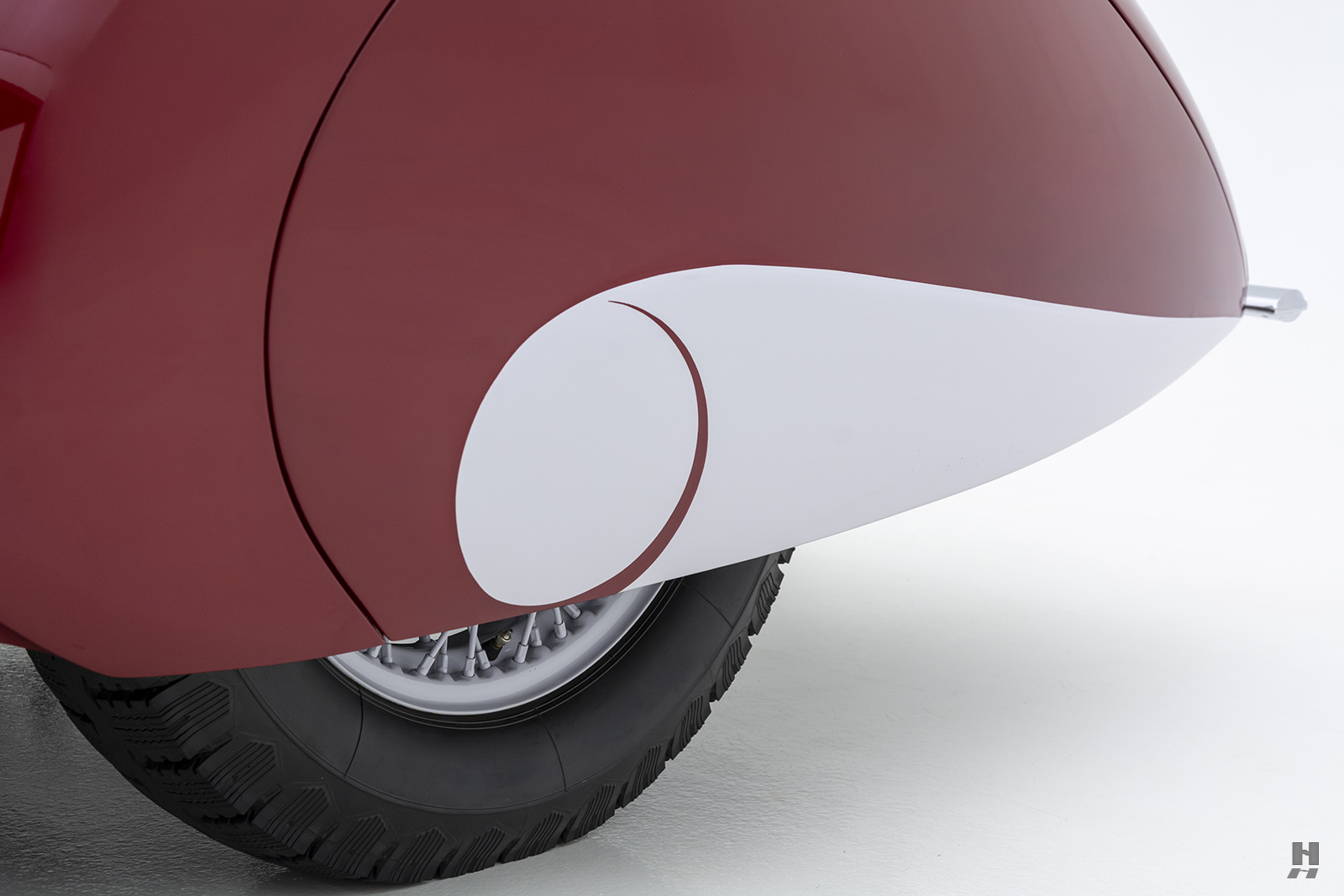
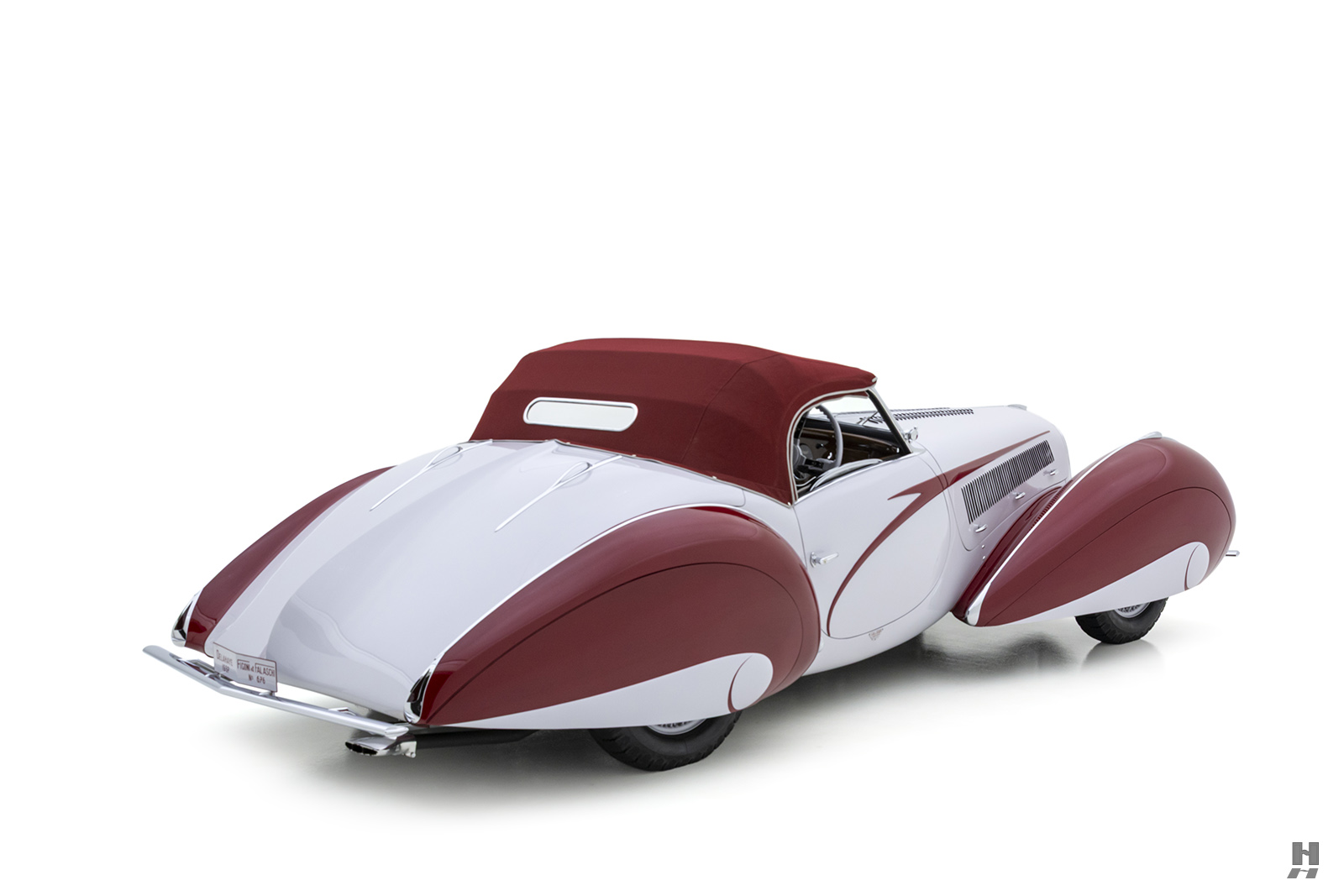
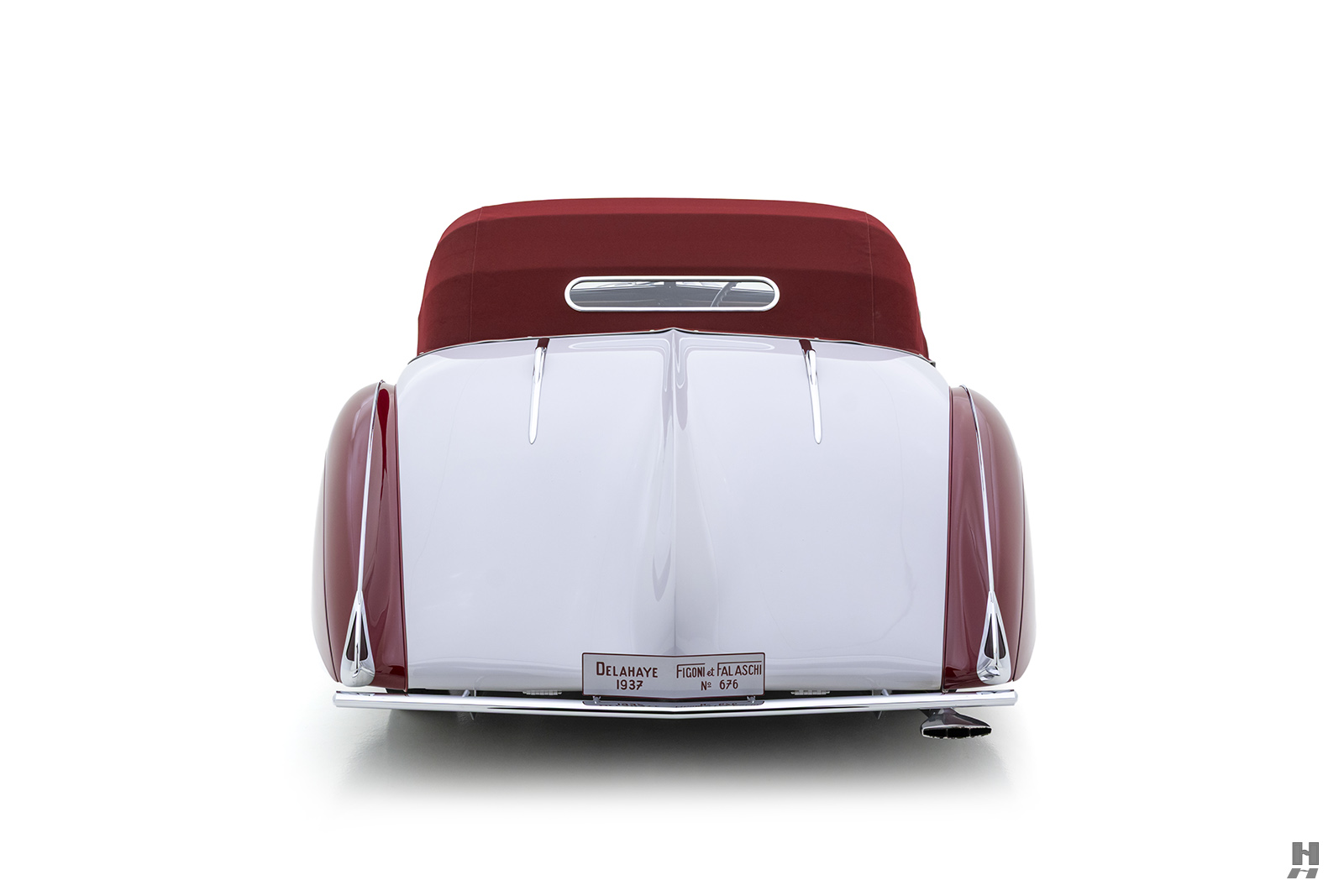
From virtually every angle, the design was shaped by movement. Thin chrome accents followed the peaks of the fenders, terminating in delicate teardrop marker lights. The rear fenders repeated the same forms, incorporating discreet courtesy lamps and brake lights into their sweeping contours. The beltline curved through the doors before dissolving into the rear deck, while the passenger compartment gently fell away behind the cockpit toward a nearly hidden top boot.
Even standing still, the Torpedo Cabriolet appears to be moving.
A few months after the debut of the original Paris Salon car, an order was placed for Figoni & Falaschi body number 676, the car offered here. Chassis 48666 was conceived as a close relation to the Salon automobile, retaining the dramatic short-wheelbase proportions and the most pure expression of Figoni’s teardrop vocabulary. It was completed in 1937 and delivered through Delahaye dealer Hoffman and Huppert, after which it is believed to have been sold to a Mr. Adamek of Bohemia.
That early ownership would place the Delahaye in one of the most turbulent regions of Europe just as the political climate was darkening. Bohemia became increasingly threatened by German expansion during the late 1930s, culminating in the annexation of the Sudetenland and the subsequent occupation of the region. Exotic and expensive automobiles were frequently seized during the war, yet Adamek apparently succeeded in concealing the Delahaye, allowing it to survive a period that claimed countless important European cars.
The Type 135 emerged again during the 1950s and later made its way to Prague, where it remained through the 1960s. Remarkably, it continued to be used and photographed during those years. Repairs and repainting were carried out as necessary, but the difficult conditions of postwar Eastern Europe may ultimately have helped preserve the car. Replacement components of this type were virtually impossible to obtain, encouraging the retention of original material rather than its casual substitution.
By the time the car was eventually disassembled in anticipation of restoration, it still retained an extraordinary amount of its original fabric. When rediscovered in 1997, its body, trim, engine, gearbox, and numerous other components remained with the car, many packed away in boxes and cartons but still present.
Its rediscovery marked the beginning of the second great chapter in the life of chassis 48666.
The car was brought to the attention of noted French-car authority and collector Jacques “Frenchy” Harguindeguy, whose experience with important Figoni-bodied Delahayes made him uniquely qualified to understand both the significance of the discovery and the challenges ahead. Rather than immediately beginning work, Harguindeguy approached the project with considerable caution, spending months researching the car and consulting those with firsthand knowledge of Delahaye and Figoni & Falaschi.
Most important among them was Claude Figoni, son of Joseph Figoni and his successor at the family firm. Claude brought not merely memories, but access to surviving archival material, giving the project a degree of historical continuity almost impossible to achieve decades after a coachbuilt automobile had left the atelier. Delahaye specialists including Richard Adatto, André Vaucourt, and Xavier Tassel further contributed their expertise.
Only after this research had been completed did restoration begin.
The work was entrusted to Brian Hoyt’s Perfect Restoration in Hayward, California, while the interior was executed by Ken Nemanic. Every effort was made to return the Delahaye not simply to an attractive appearance, but to the form in which Figoni & Falaschi had originally delivered it.
Its extraordinary original color scheme was painstakingly recreated. The body was refinished in Gris Lumière, a soft light grey, contrasted by Rouge Foncée, a deep red metallic used across the dramatic fenders and body accents. The combination highlights Figoni’s forms brilliantly, allowing the red surfaces to accentuate the sweeping volumes of the coachwork while the pale center body emphasizes its narrow, low profile.
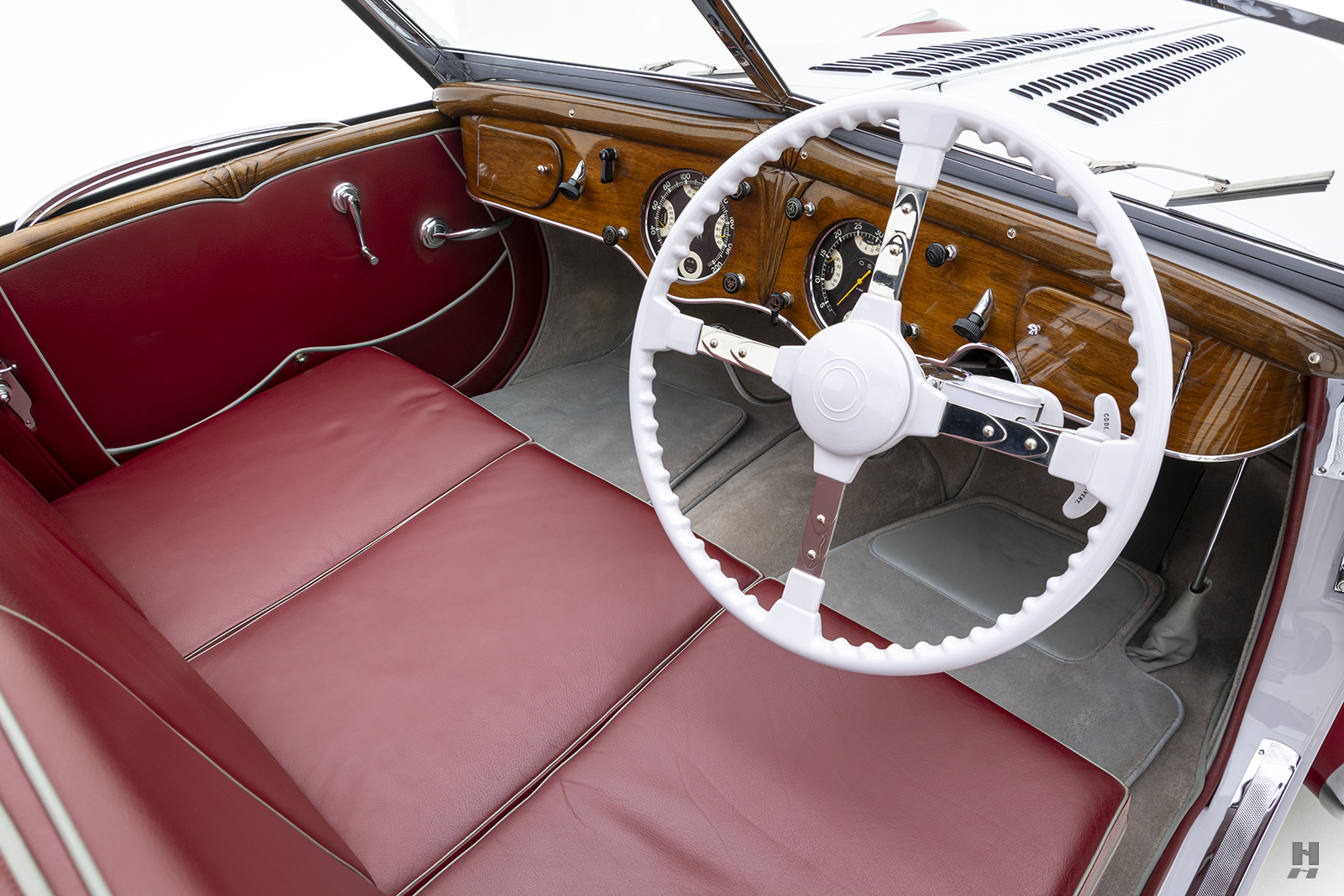
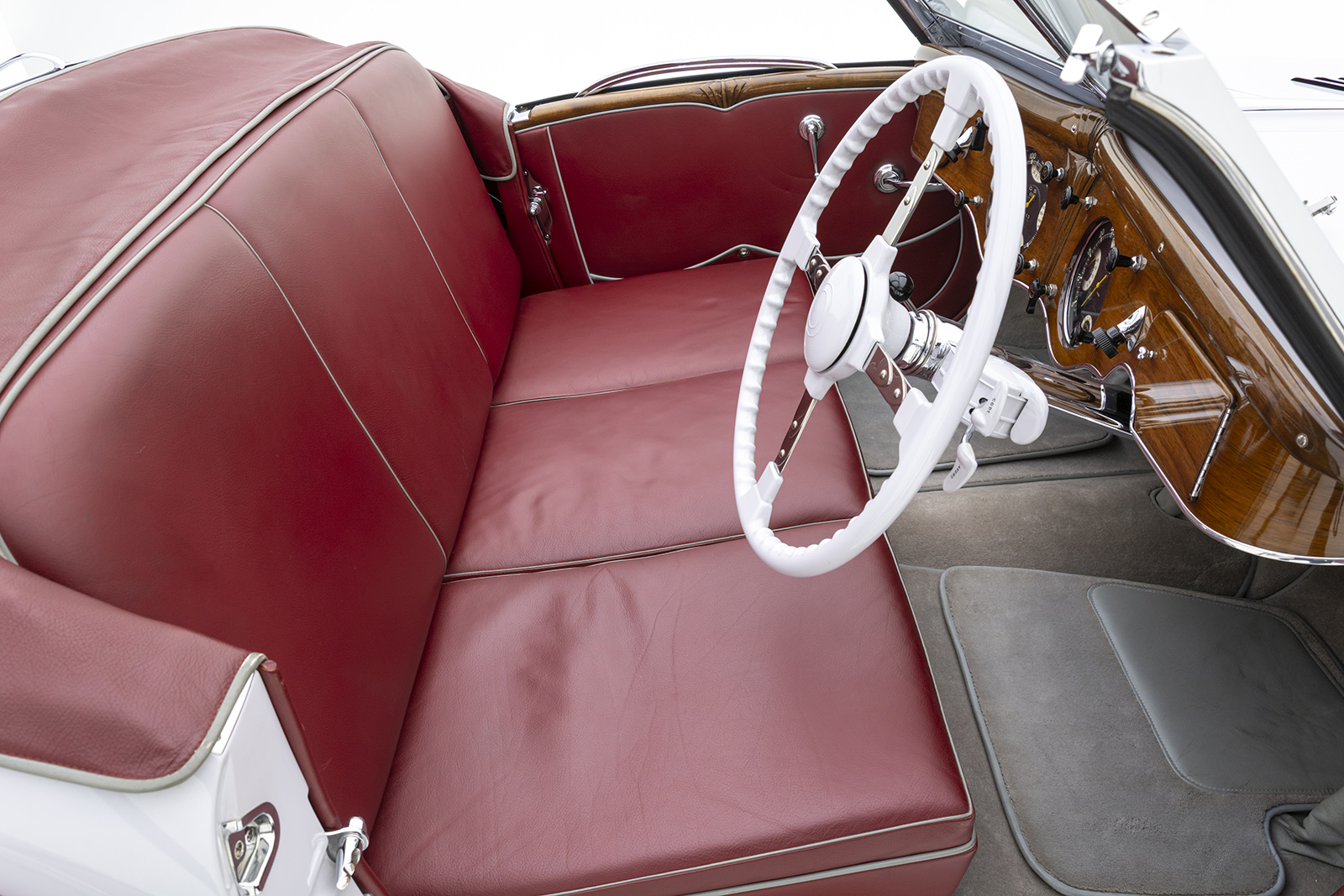
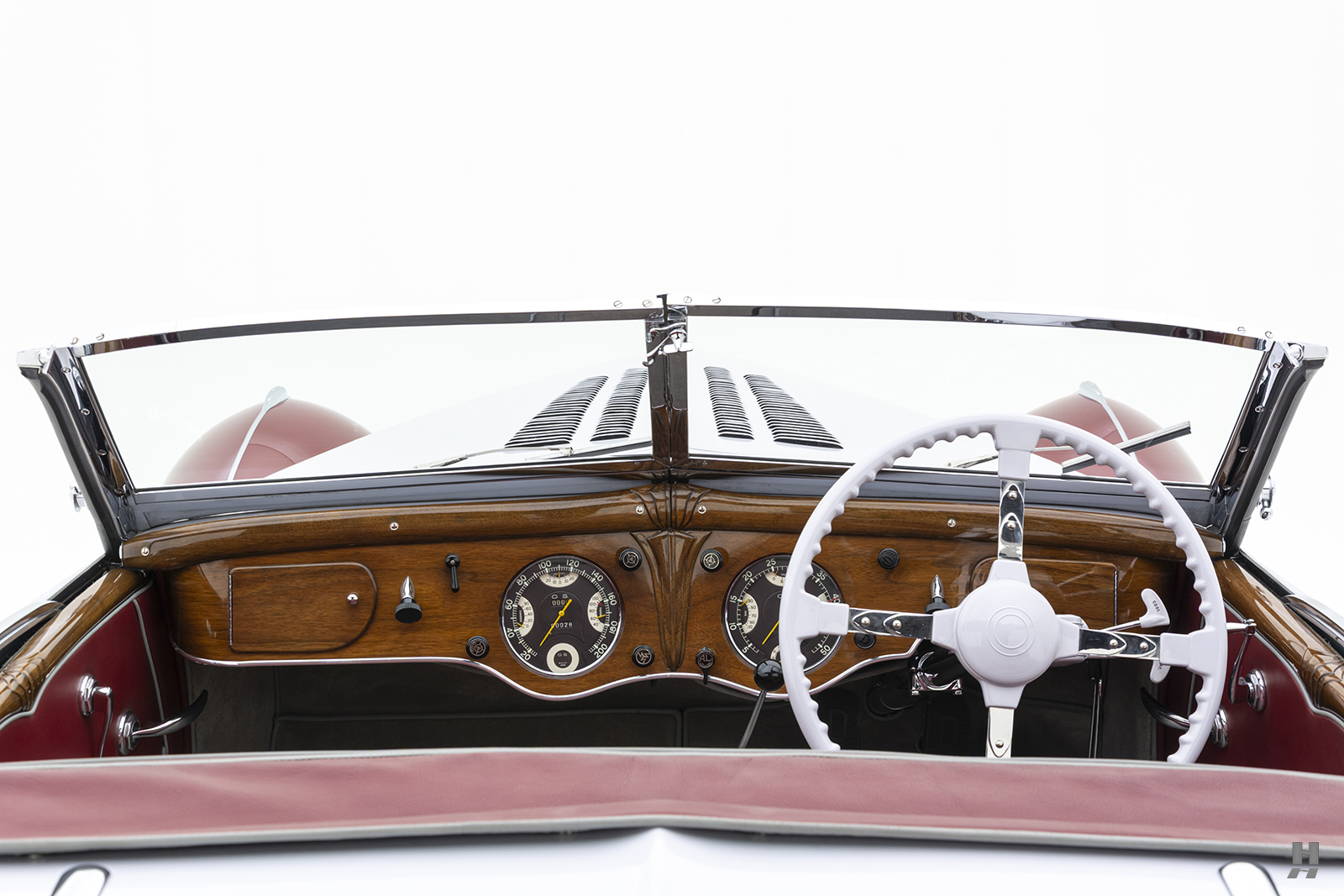
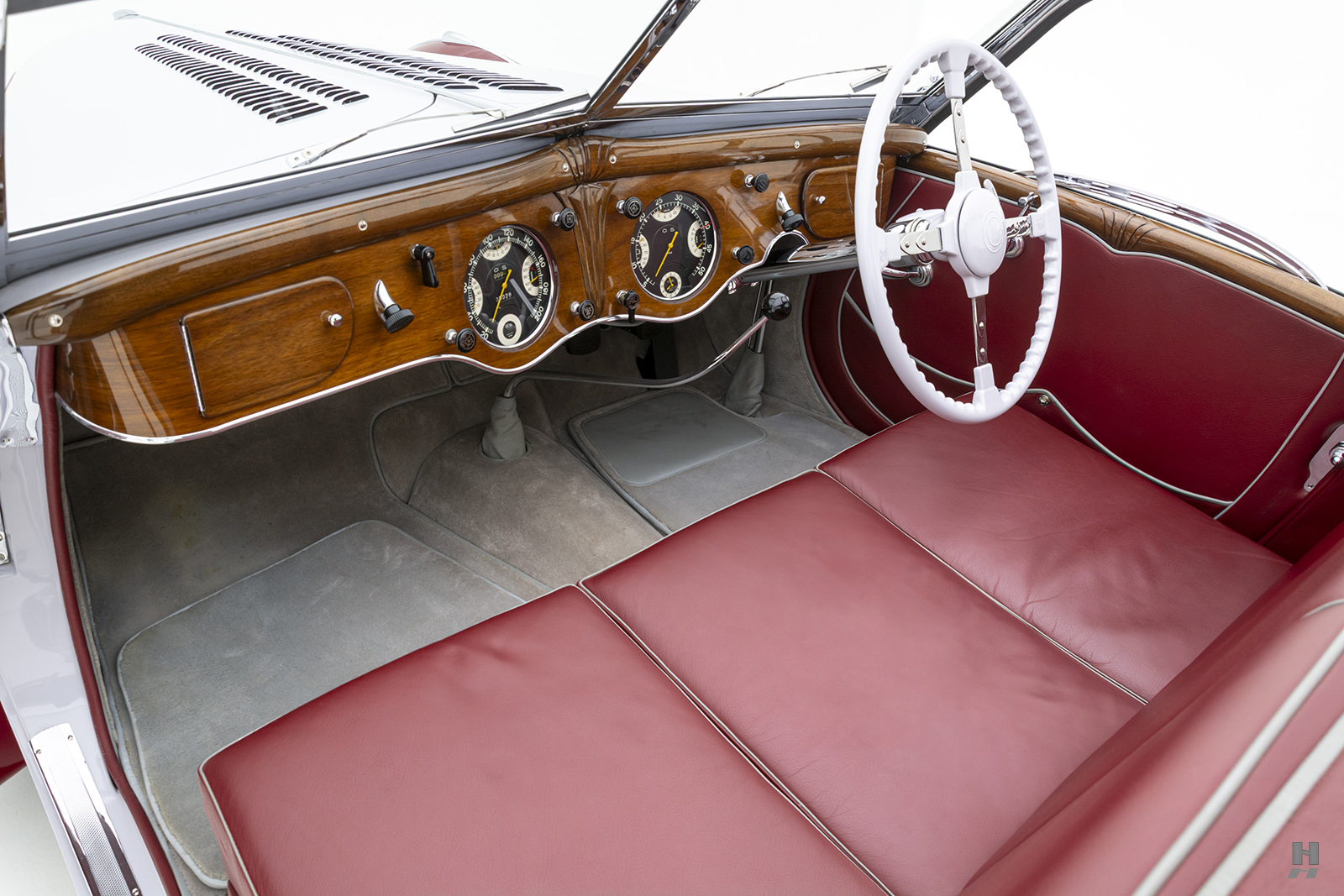
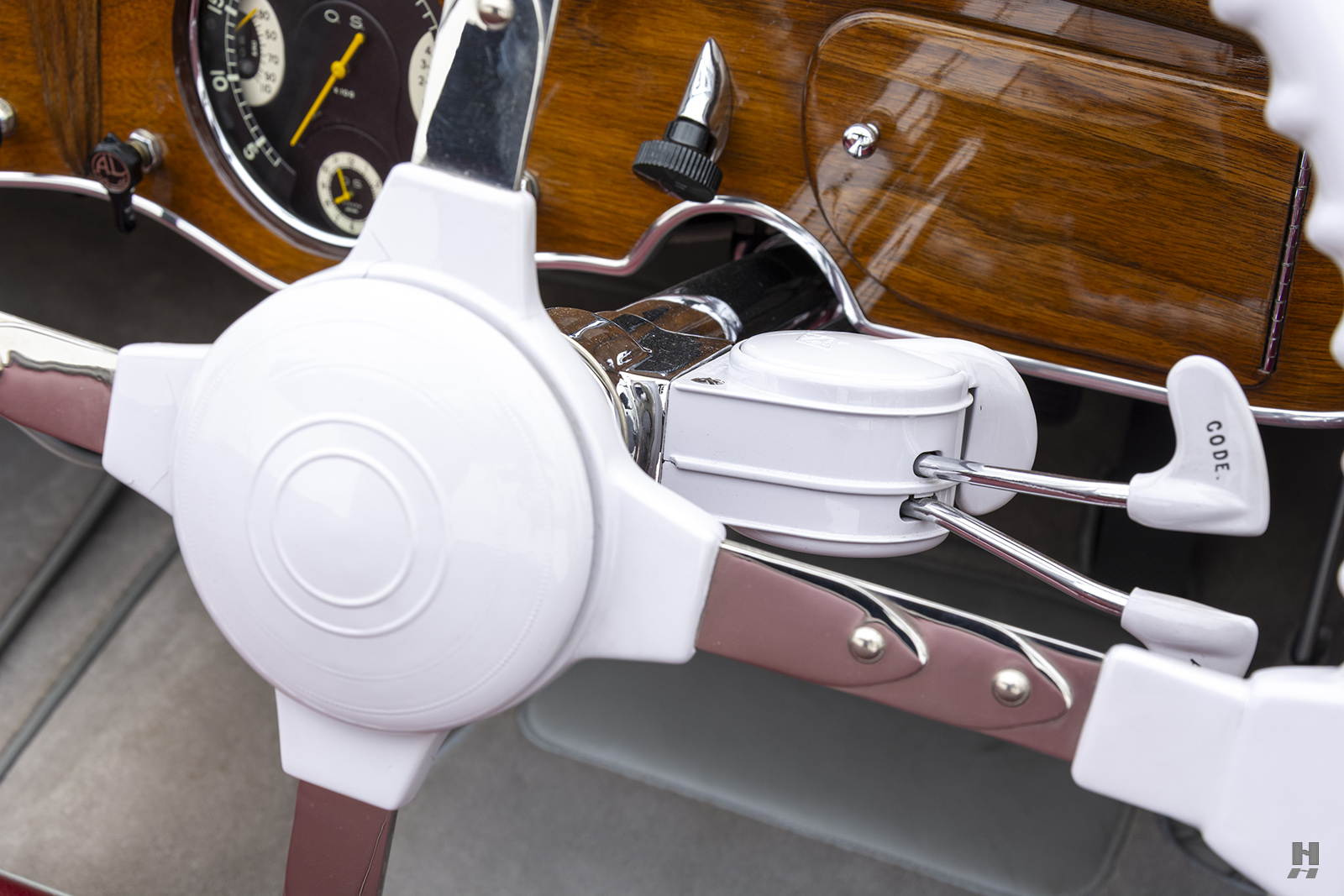
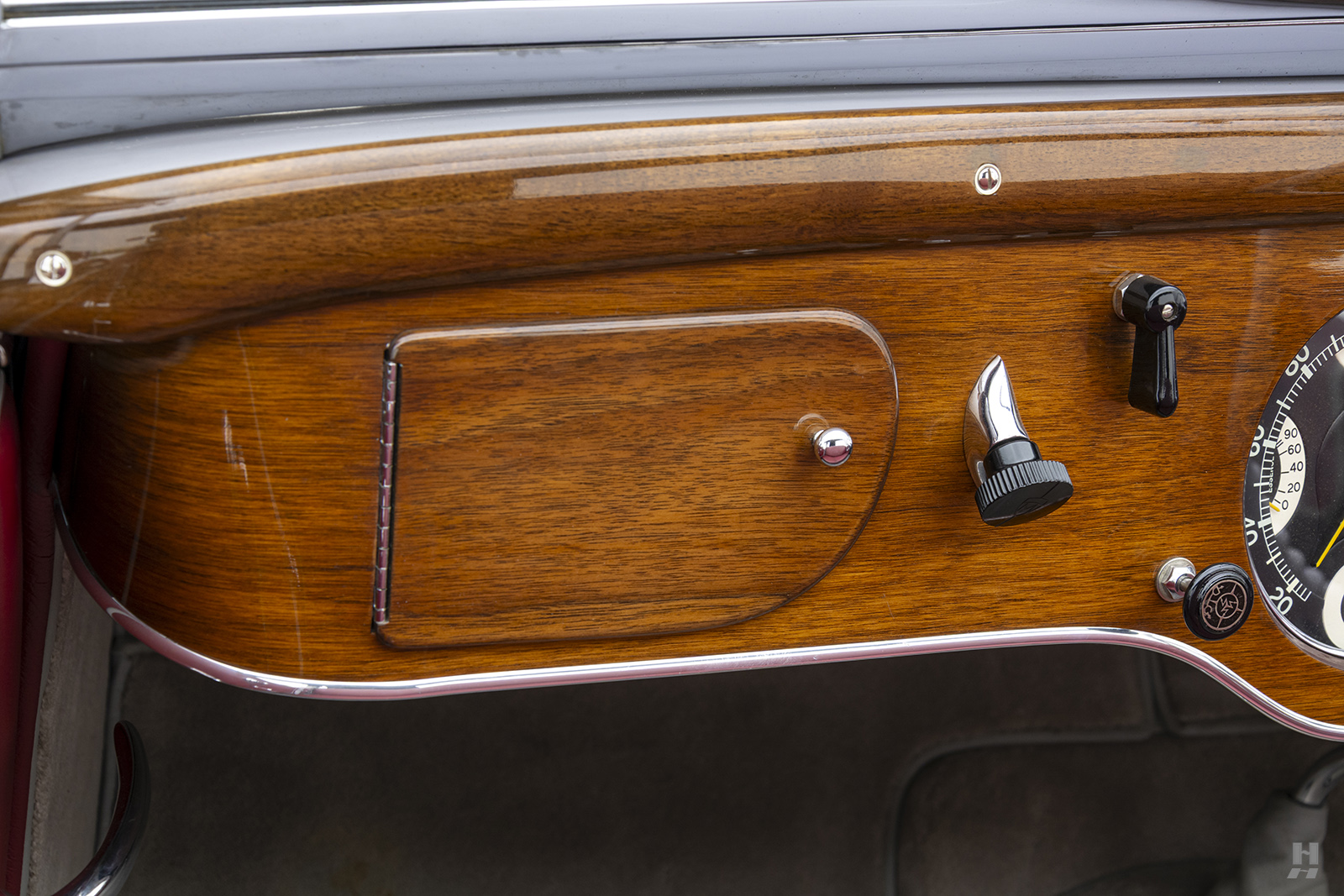
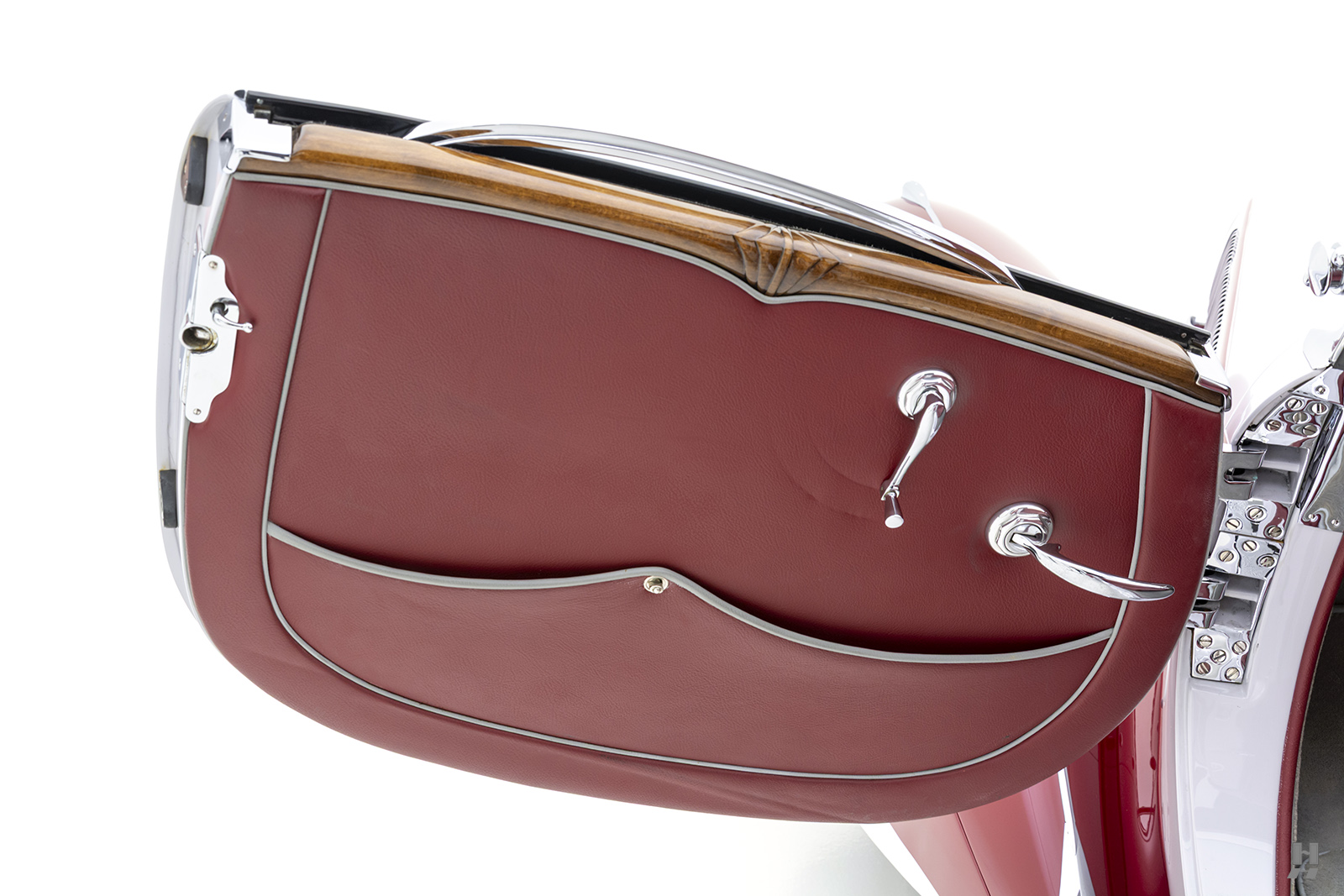
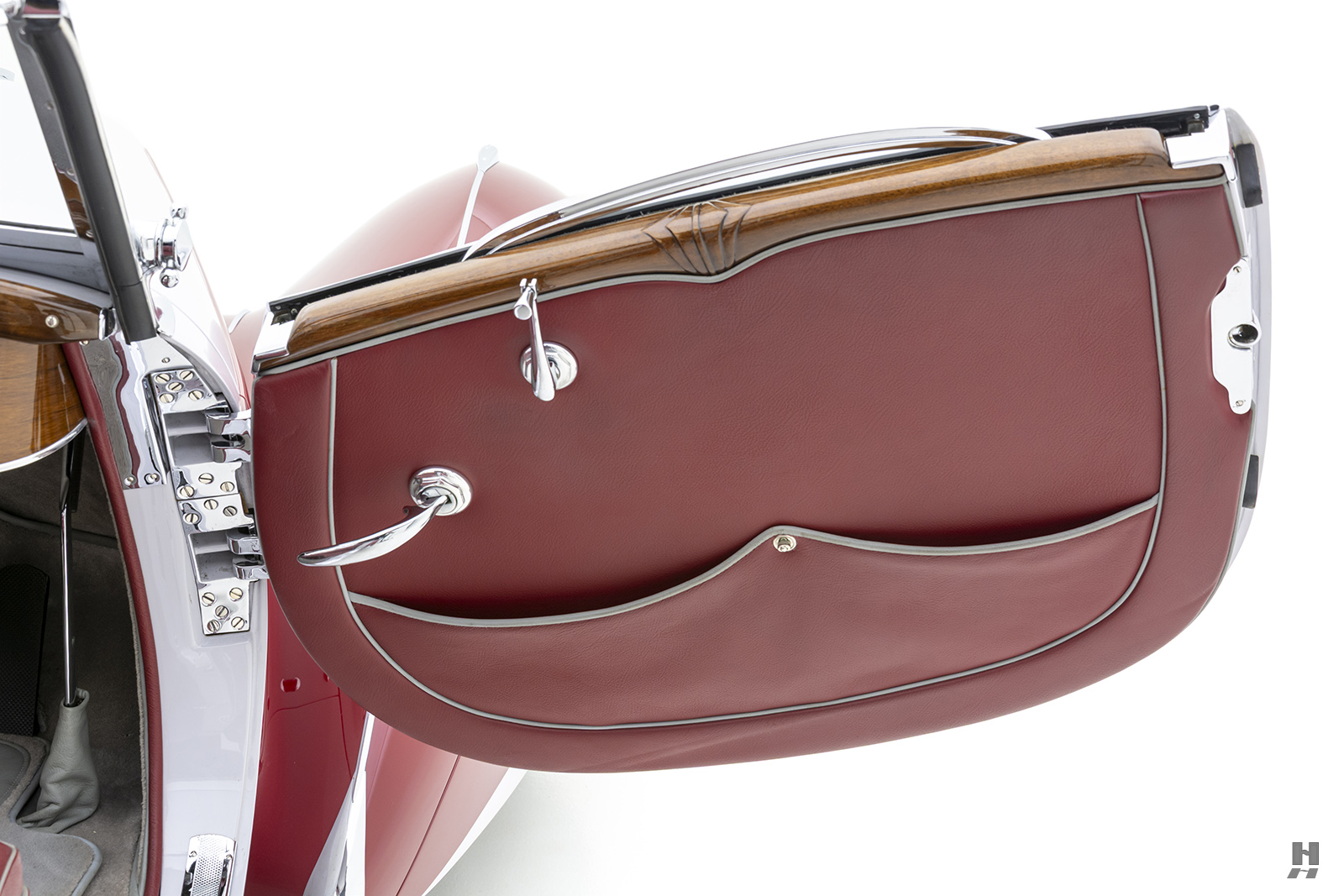
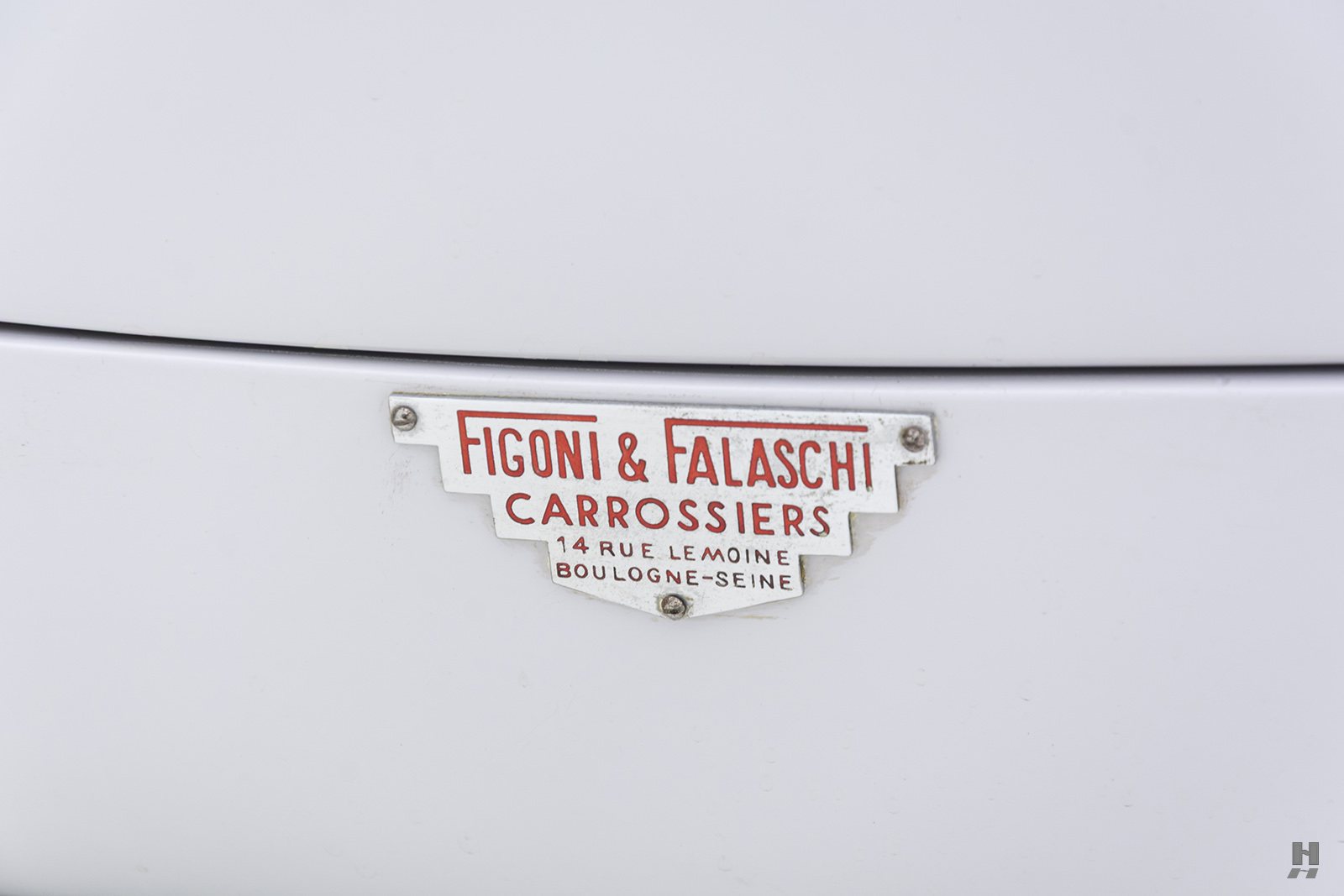
Inside, the three-place bench seat was retrimmed in deep red leather with light grey piping, accompanied by a red cloth top and matching leather top boot. The light grey steering wheel and controls for the Cotal electro-mechanical gearbox were likewise recreated, while the dashboard and door cappings were finished in richly grained polished wood. Figoni’s distinctive Art Deco vee motif appears throughout, echoing the form of the coachbuilder’s own badge.
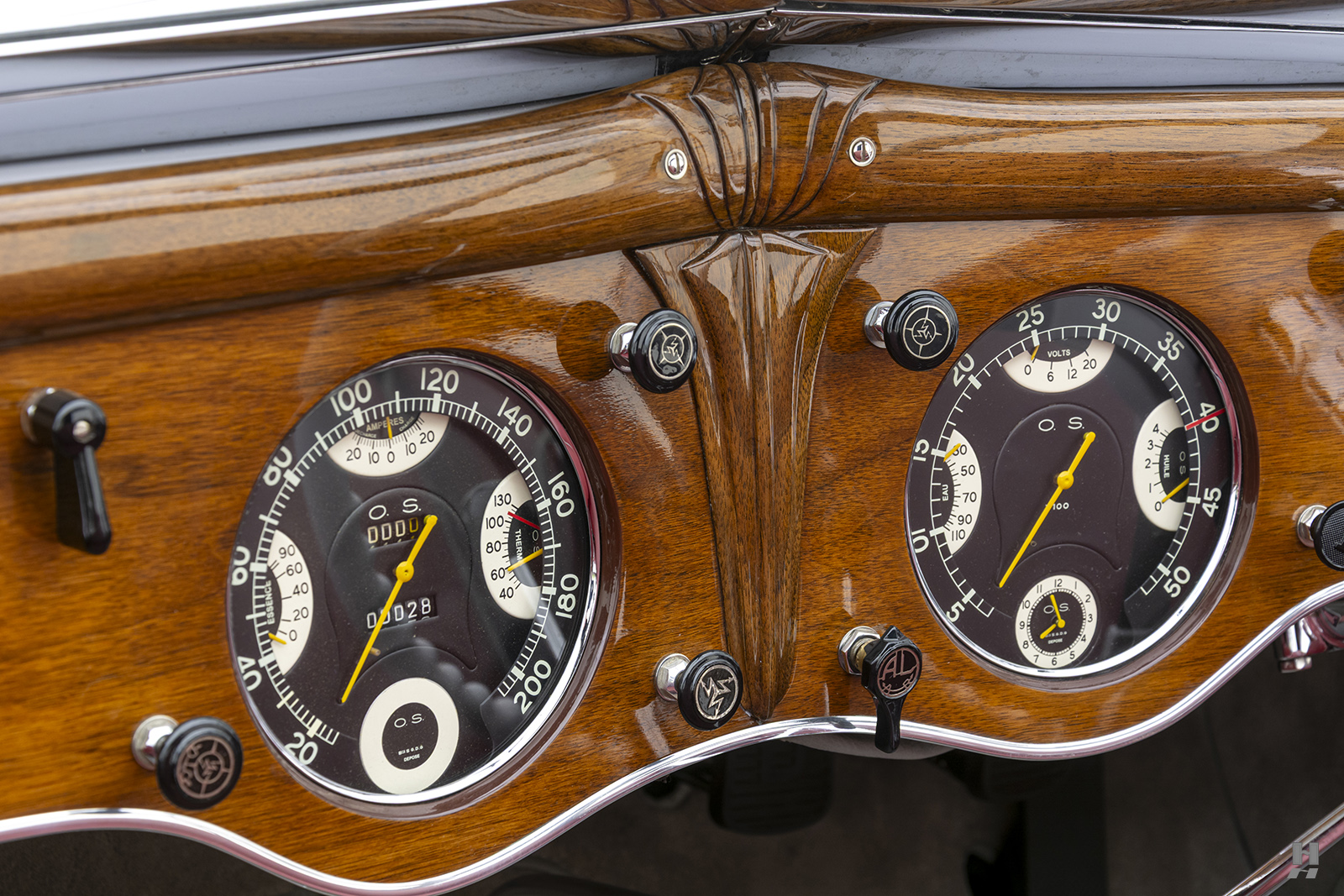
The original right-hand-drive cockpit remains as fascinating as the exterior. Two round O.S. instrument clusters divide the primary gauges between driver and passenger, the tachometer positioned near the steering wheel while the speedometer and auxiliary instruments occupy the opposite side. Folding window cranks operate beautifully machined racks, a small detail perhaps, but one indicative of the care lavished on the car when new.
The restoration required approximately fifteen months and was completed in the summer of 2000. Its public debut could hardly have been more appropriate: the 50th Anniversary Pebble Beach Concours d’Elegance.
There, surrounded by many of the world’s finest automobiles, chassis 48666 received the ultimate endorsement. Claude Figoni, seeing his father’s work restored before him, remarked that it had been done so well that it looked as if they had just built it.
The judges agreed.
The Delahaye was selected as Best in Show at the 2000 Pebble Beach Concours d’Elegance, one of the highest honors an automobile can receive. Jacques Harguindeguy drove the car onto the podium accompanied by Claude and Elianne Figoni, a remarkable moment linking the restored automobile directly to the family responsible for its creation more than six decades earlier.
The accolade was not simply a reward for beauty. It recognized the exceptional originality of the surviving car, the depth of research behind the restoration, and the quality with which that work had been executed.
In the years that followed, chassis 48666 became one of the most widely recognized surviving Delahayes. It was featured in numerous publications, including Richard S. Adatto and Diana E. Meredith’s Delahaye Styling and Design, and was photographed extensively by Michael Furman. In 2004, it was acquired from Jacques and Betty Harguindeguy by a significant collector of French automobiles through Hyman Ltd.
After more than two decades after its landmark Pebble Beach appearance, the restoration has been preserved with extraordinary care. The car today remains stunning. The finish retains remarkable depth and clarity, with the Gris Lumière and Rouge Foncée combination still accentuating every contour Figoni intended. The chrome remains brilliant, the Art Deco detailing crisp, and the dramatic fender forms beautifully defined. The interior has likewise been exceptionally preserved, with the rich red leather, polished wood, and carefully recreated fittings presenting with a level of freshness rarely encountered in a restoration of this age.
Perhaps most impressive is that the car has not lost the delicacy that made it so compelling in period. Restoration can sometimes sharpen an automobile to the point where its original character becomes secondary to the finish itself. That has not happened here. Chassis 48666 remains visually light, fluid, and almost impossibly graceful. The restoration serves the design rather than overpowering it.
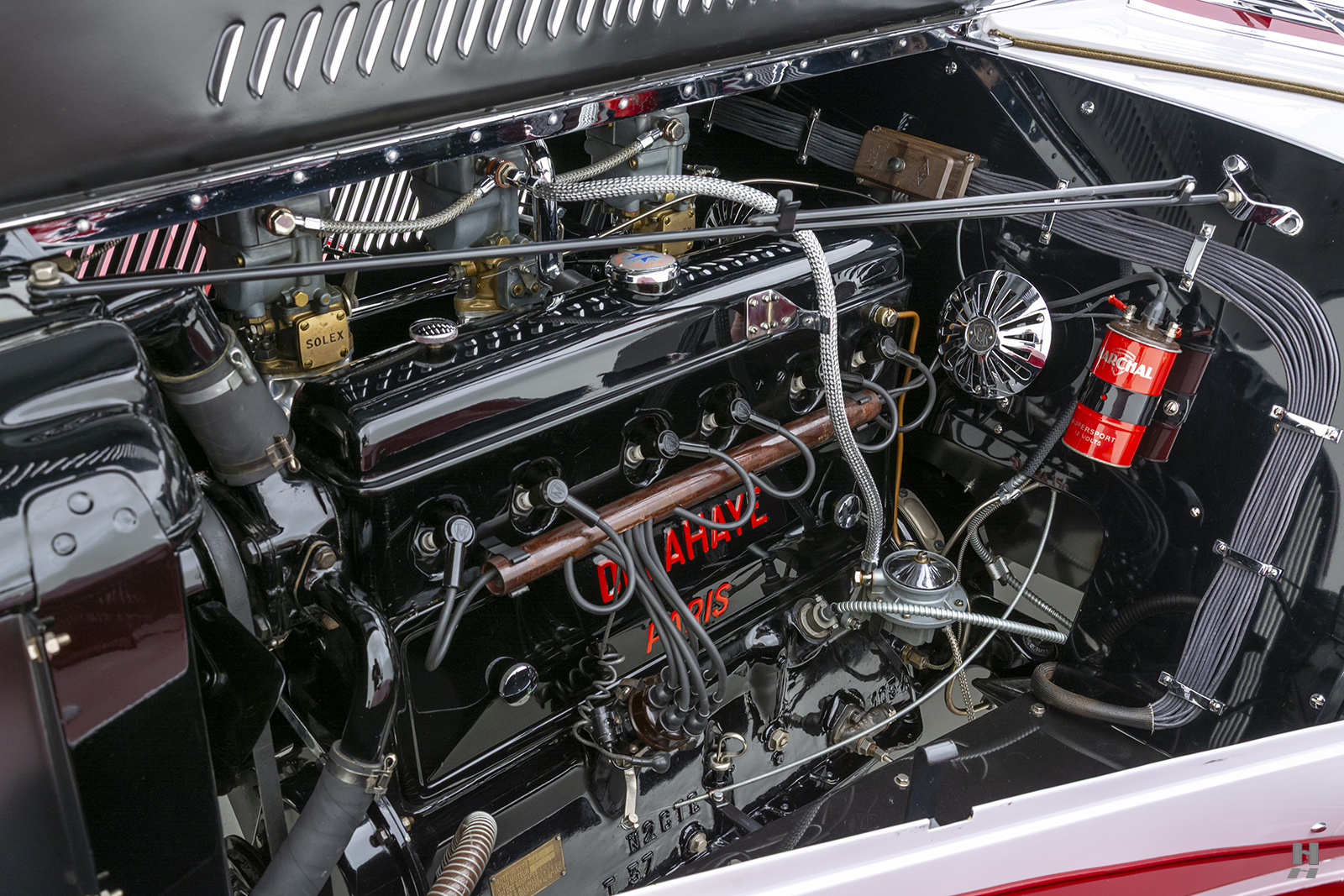
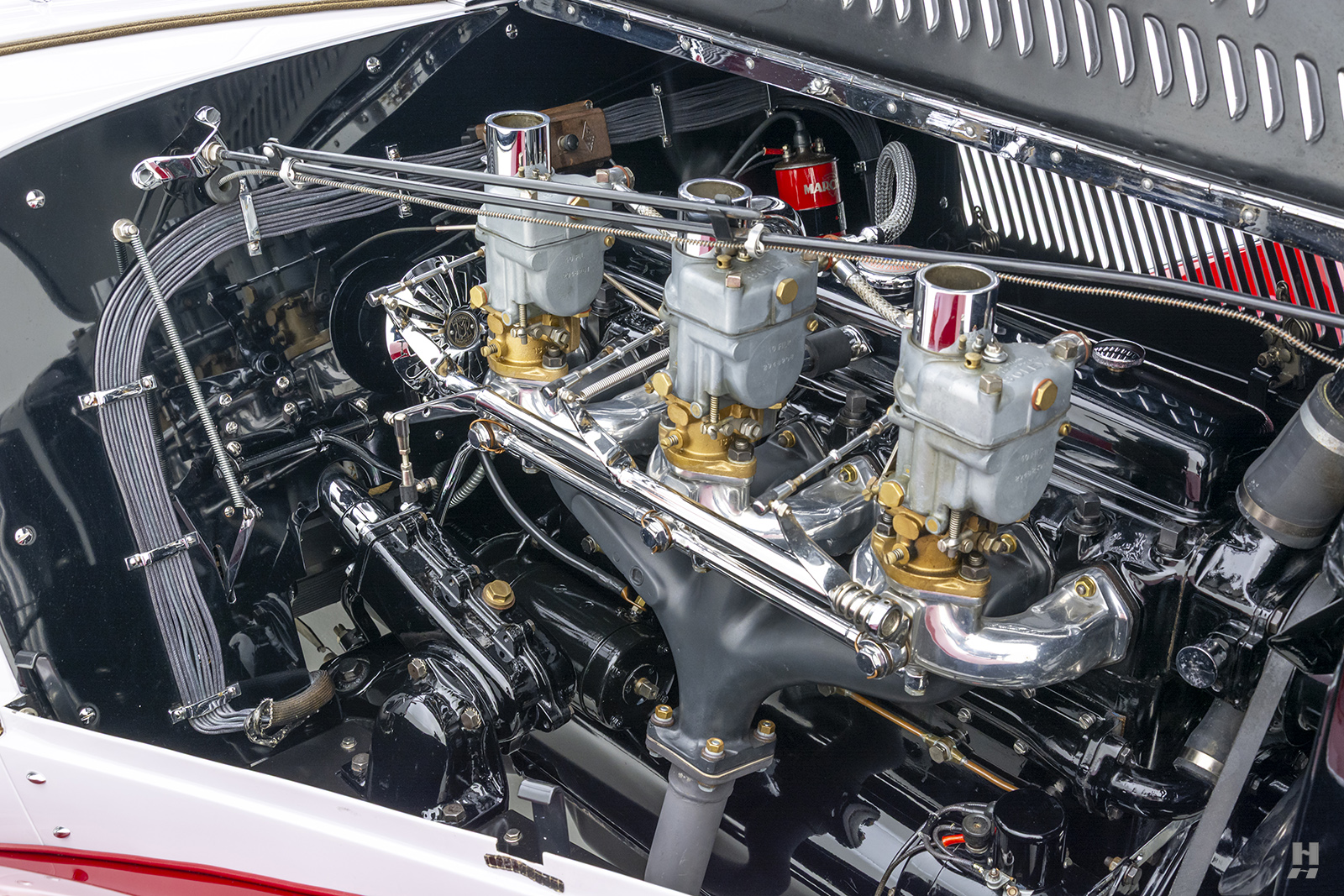
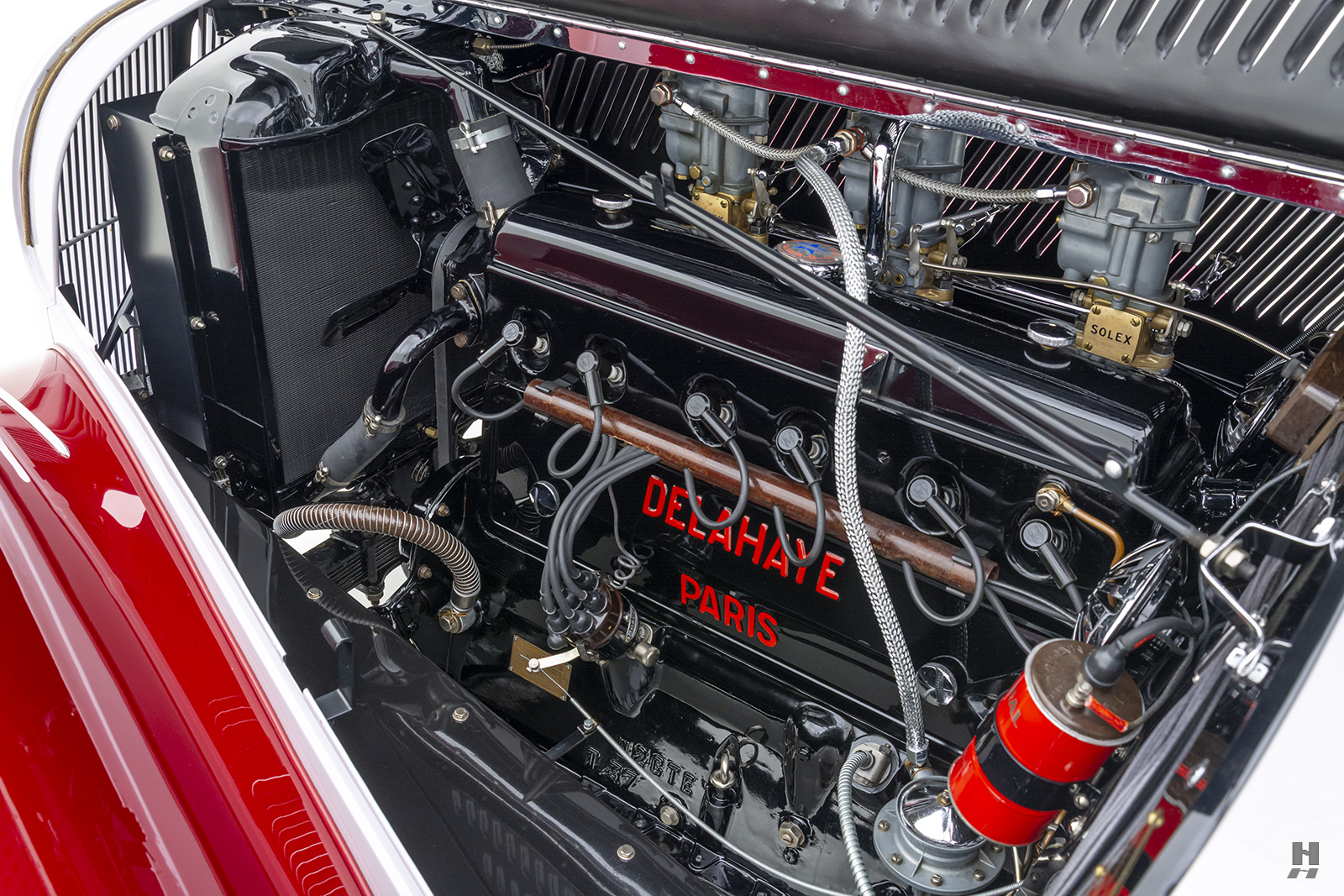
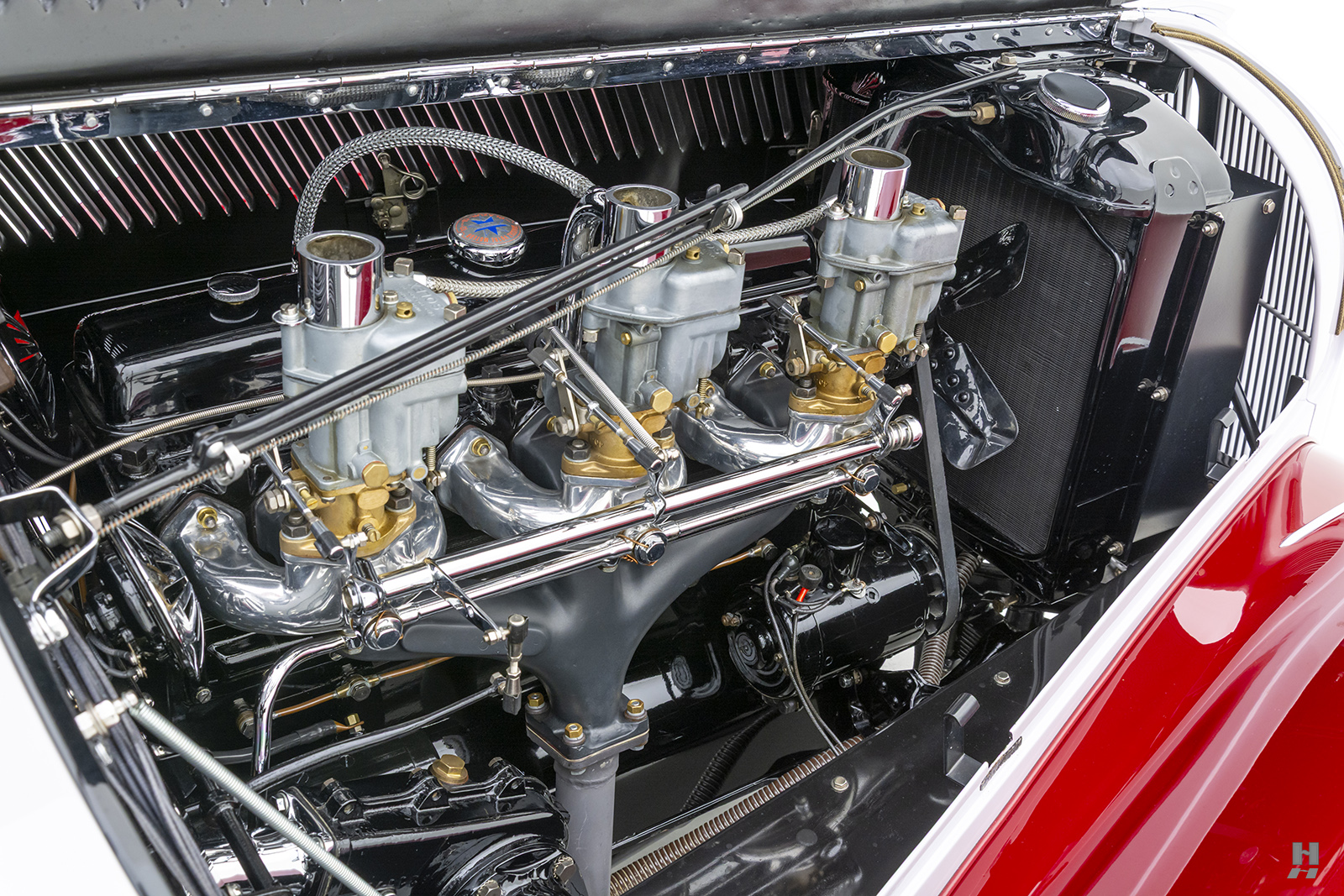
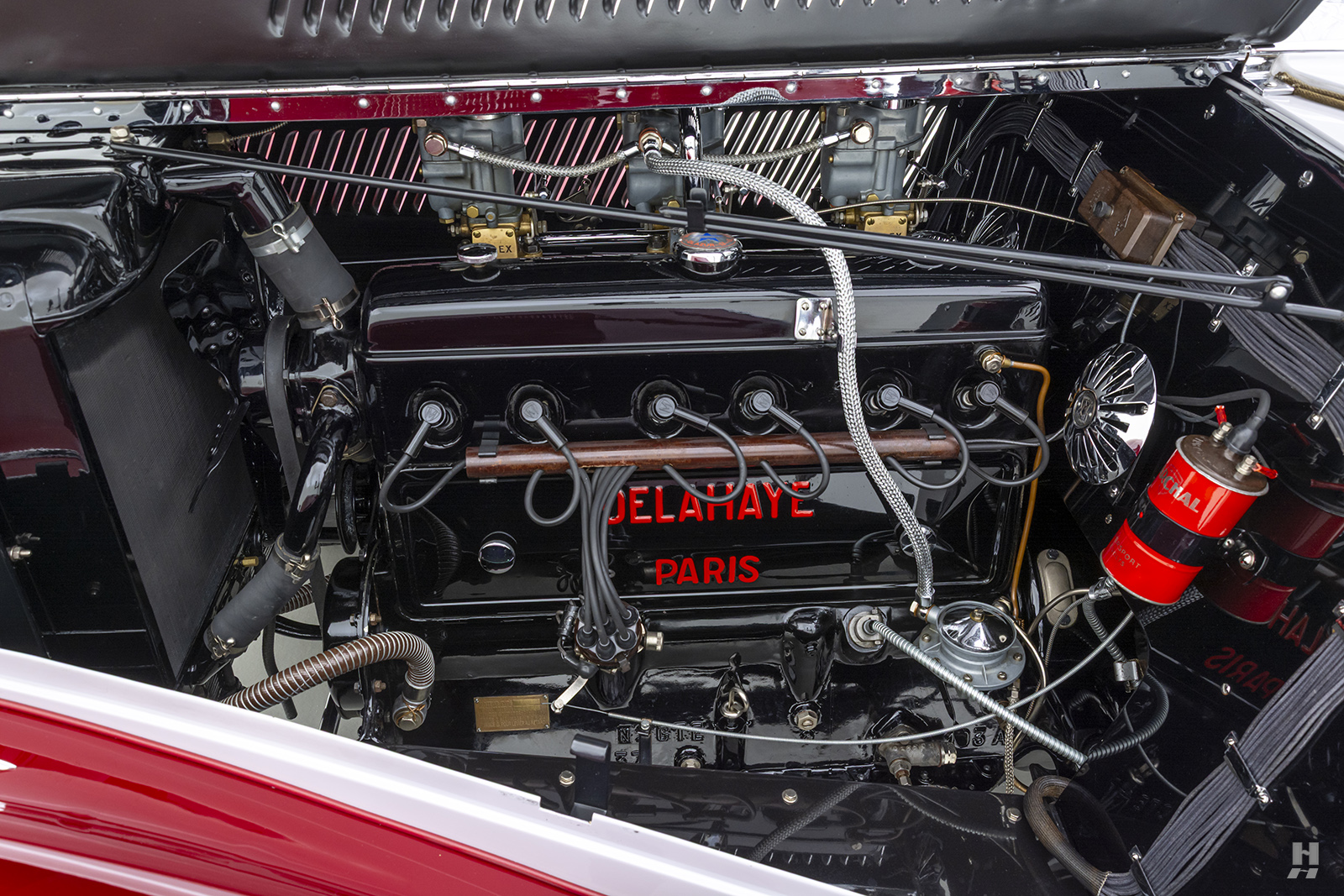
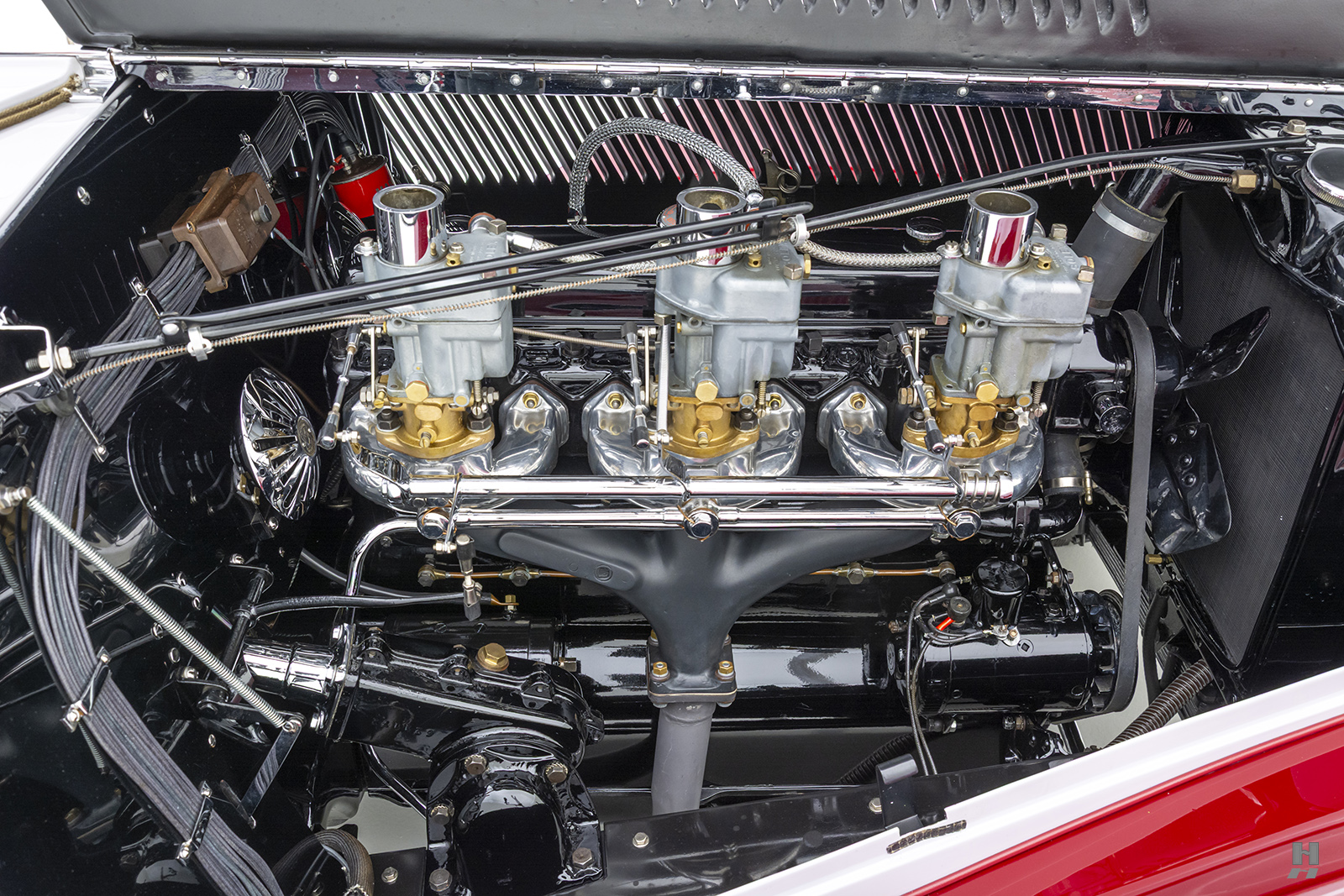
Mechanically, the car retains the defining elements that make the Competition Court so special: the short-wheelbase Type 135 chassis, independent front suspension, overhead-valve six-cylinder engine with triple carburetion, and Cotal gearbox. Combined with Figoni’s lightweight open coachwork, these components gave the car not only its extraordinary appearance but the roadgoing sophistication expected of one of Delahaye’s most sporting chassis.
The importance of chassis 48666 is difficult to reduce to any single element. It is one of only eleven Torpedo Cabriolets built by Figoni & Falaschi. It is one of only three constructed on the short Competition Court chassis, and one of only two of those known to survive. It retains remarkable original material, including its engine, gearbox, body, and trim. It survived wartime Europe, decades behind the Iron Curtain, and years of partial disassembly. Its restoration was guided by Joseph Figoni’s own son and executed with an exceptional degree of historical scholarship. And at its return to public view, it was judged the finest automobile at the 50th Anniversary Pebble Beach Concours d’Elegance.
Yet even that remarkable list of achievements does not fully explain the car.
Its significance is ultimately visible in the object itself. The swelling fenders, narrow body, deeply recessed grille, low windshield, delicate chrome accents, and extraordinary play of curves are the product of a moment when the automobile could still serve as a canvas for an individual designer’s imagination. Joseph Figoni did not simply clothe the Delahaye chassis; he transformed it.
Chassis 48666 stands today as one of the great surviving monuments to that era.
Beautifully preserved since its Pebble Beach-winning restoration and still presented in breathtaking condition, this 1937 Delahaye 135 Competition Court Torpedo Cabriolet represents French coachbuilding at its most imaginative, Delahaye engineering at its most sporting, and the restoration art at its most scholarly.
And for us, Hyman Ltd., it is more than another important automobile. It is a genuine crown jewel: a car of profound beauty, extraordinary rarity, exceptional provenance, and lasting historical significance.
Offers welcome and trades considered.
inquire for price
Stock number 8184
For immediate assistance please call us at +1-314-524-6000 or please fill out the following form and a member of our team will contact you.